The Living Time
For Aymara writer Fernando Huanacuni Mamani, a single word—pacha—encompasses time and space. But pacha is not an empty container in which one is placed: it is a living whole in which one participates.
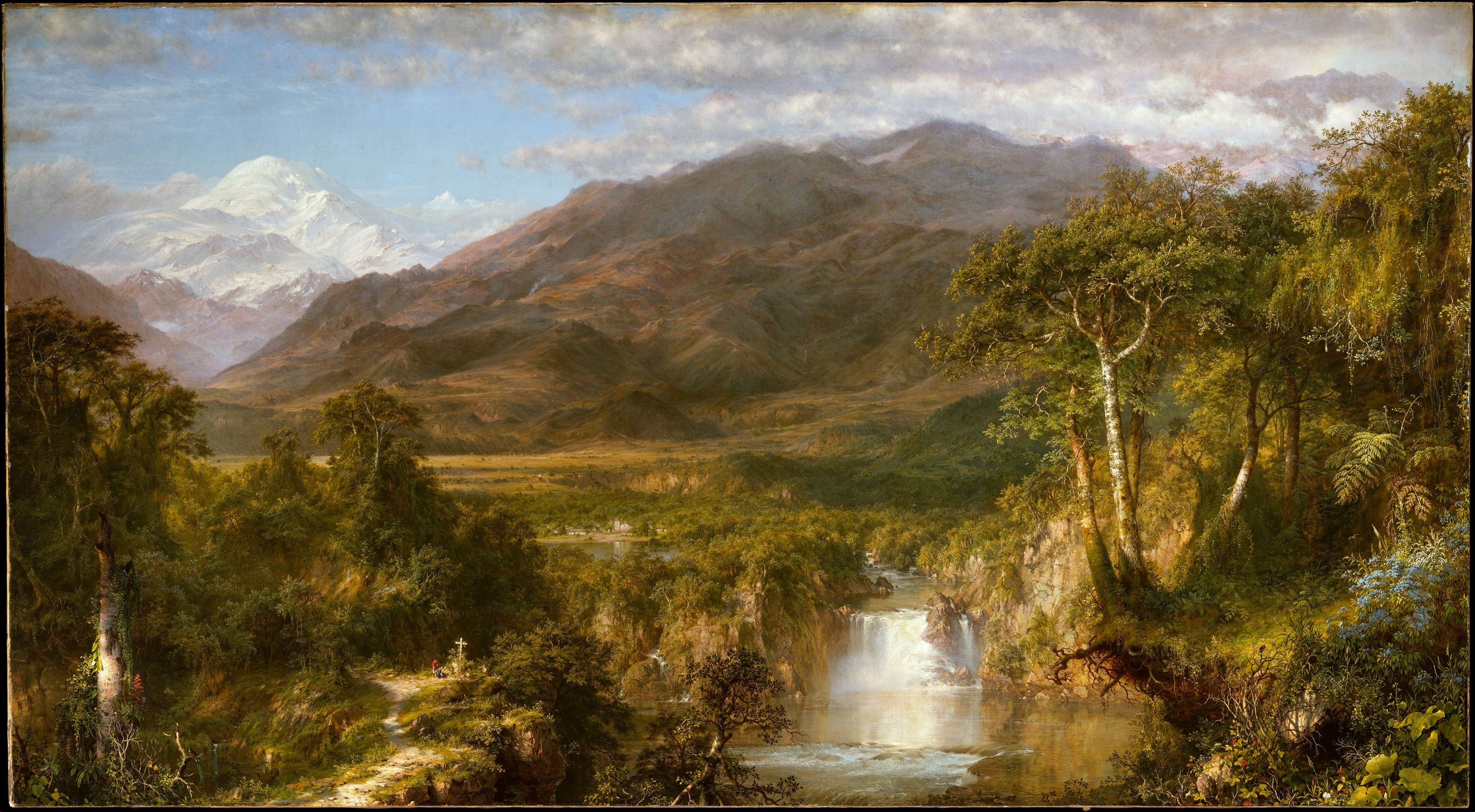
We say time passes, and things are in space. Two words for two empty measures: a flow that carries us away, a box in which we are placed. The first is read on a clock, the second measured with a ruler; neither expects anything from us but to be counted. In the Andean highlands, a single word holds both together—and refuses, precisely, to be a container.
The Aymara jurist and writer Fernando Huanacuni Mamani, who compiled Andean thought on living well for an Indigenous organization, the CAOI, pauses on this word, pacha, which translators render in one stroke—“time and space.” He warns that the stroke is too short.
Spanish Según la traducción de los lingüistas, hace referencia sólo a tiempo y espacio, pero para el ser Andino esta palabra va más allá del tiempo y del espacio, implica una forma de vida, una forma de entender el universo que supera el tiempo-espacio (el aquí y el ahora). Pacha no sólo es tiempo y espacio, es la capacidad de participar activamente en el multiverso, sumergirse y estar en él.
English According to linguists’ translation, the word refers only to time and space; but for the Andean being, this term goes beyond time and space—it implies a way of life, a manner of understanding the universe that surpasses time-space (the here and now). Pacha is not merely time and space: it is the capacity to actively participate in the multiverse, to immerse oneself in it and belong to it.
Linguists are not wrong; they have too little. Pacha does name time and space—but no sólo, not only. The word that follows shifts the entire meaning: capacidad, a capacity. Not a frame, but a power; not what one is placed in, but what one does. Our time and space are things in which we are positioned, passive no matter what we do; pacha is something we enter. We do not cross it as we cross a room: we immerse ourselves in it (sumergirse) and dwell within it (estar en él). The word does not describe a stage on which life unfolds; it names life’s active belonging to the whole.
The etymology he offers already rejects the container. Pacha is not a neutral framework preexisting what fills it: it is the union of two forces whose collision is life. Andean time-space is thus not the empty, prior condition of beings; it is the very weaving where the visible and invisible hold together. There is no pacha first, and living beings afterward: beings and their time-space come into the world in the same gesture. The word does not situate life—it is its fabric.
This is where we must separate before attempting to reconcile. Our modern time and space were conquered by being emptied: for exact measurement, time had to flow uniformly, indifferent to all else, and space had to be equally indifferent to what it housed—two containers all the more precise for participating in nothing. Pacha follows the opposite path. It does not gain reality as it is emptied, but as it is inhabited; its truth is not that of measurement, but of participation—it is true in exact proportion to one’s presence within it. Two conceptions of time and space, not two versions of the same: one is verified by withdrawing from the living, the other by entering into it.
Reclaiming the word is enough to shift perspective. As long as time “passes” and space “contains,” we remain on the sidelines—spectators of a backdrop unfolding without us, accountants of a course that eludes us. Pacha does not unfold before us: it is participated in. It does not ask to be occupied, but to be entered.
Sources cited
- Fernando Huanacuni Mamani, Buen Vivir / Vivir Bien. Filosofía, políticas, estrategias y experiencias regionales andinas, ed. Coordinadora Andina de Organizaciones Indígenas (CAOI), Lima, 2010, trans. texte original espagnol ; rendu français maison.