The All and the Nothing
John of the Cross empties the soul of all appetite so it may be all in God; the Dhammapada empties the boat toward extinction. The same gesture of stripping away, two horizons: a plenitude, a peace.
 The soul that wants everything—everything to taste, everything to know, everything to possess, and above all to be something—believes itself on the path to plenitude. John of the Cross, who climbed Mount Carmel only to bring nothing back, reverses the journey. To reach the all, he proposes, take the path exactly opposite to appetite.
To taste all, one must taste nothing; to know all, one must desire to know nothing; to possess all, one must wish to possess nothing; to be all, one must will to be nothing.
Each line overturns a desire. The object reveals itself only to those who cease to grasp it as a possession. The strangest is the last, for it no longer concerns what one holds but what one is: to be all, one must will to be nothing. Not to possess less, but to desire to be no one. The Spanish word for this path is nada, nothing—the chosen dispossession, that “quadruple night” of the senses and the mind “into which one must plunge to attain the light of the all.”
This nothing is no void. It hollows out so that something else may enter: the emptied soul is a space made ready, and the void awaits its guest. The dispossession others have carried on the slope of having—owning nothing—John of the Cross leads to the slope of being: not only to hold nothing, but to be nothing. Vanity is the last appetite, the most stubborn; the longing to be something in the world outlasts the renunciation of pleasures and goods, and it is this that must be laid to rest in the night.
Why must one “be nothing” to be all?
Because the appetite that seeks to seize the all misses it: it stops at each thing and takes it for the end. To empty the soul of every partial object—no longer even wishing to be someone—leaves it vacant for what cannot be possessed as a thing is possessed. The nothing is not the end of the path, but its threshold.
Another tradition also empties, without naming the same beyond. The Dhammapada, in its chapter on the mendicant monk—the Bhikkhu—reprises this imperative of stripping away, and names its horizon.
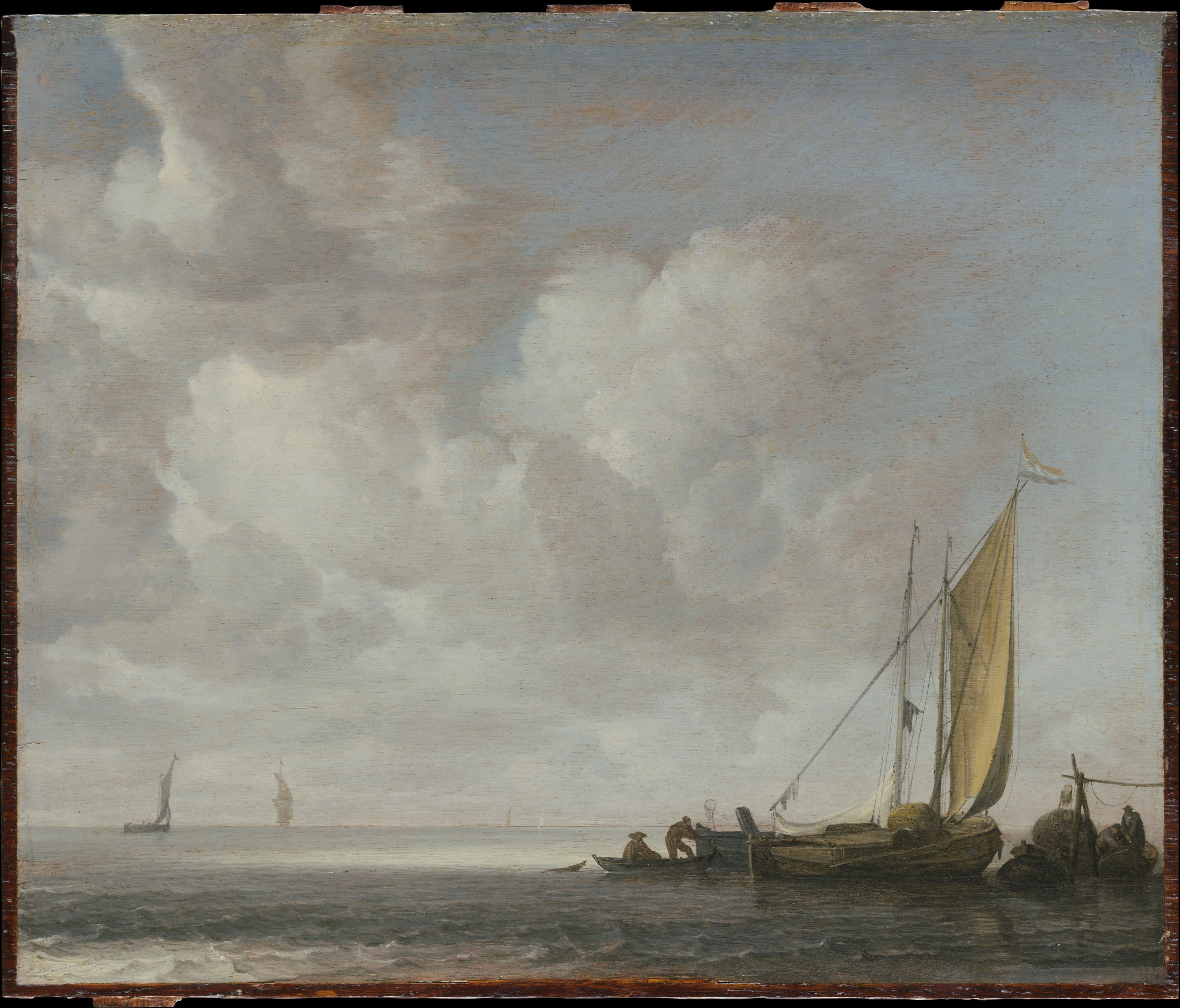
O Bhikkhu, empty this boat! Emptied, it will sail lightly. When you have uprooted passion and hatred within, you will reach Nirvāṇa.
The gesture is the same unclenching: to lighten, to cut the moorings, to no longer weigh down the boat. But the open sea where it sails is not an All. Nirvāṇa is the extinction of a fire deprived of fuel; what ceases is not being, but the thirst that consumed it and perpetuated rebirths. The same chapter pushes dispossession further than possessions, all the way to the subject itself. A Bhikkhu, says the verse, is one who holds thus: “He who regards neither ‘name’ nor ‘form’ as belonging to him.” Neither having nor self: no self to fill, no Other to fill it. The emptied boat awaits no passenger; it reaches the shore where the crossing itself comes to an end.
Here the two waters part, and this must be said before they meet again. John of the Cross empties so that it may be filled: the nada is hollowed for a guest, the void is a place, and its end is union with a God who is the All. The Bhikkhu empties so that it may be extinguished: the void awaits no one, it is the stilling of the fire. One nothing opens onto an All; the other closes upon a peace where nothing rekindles. The Carmelite would not recognize a deliverance where no one receives the soul; the monk needs no All—nor any self—to be free. These are not two names for the same void.
And yet the same hand loosens its grip. What binds a life is not things, nor even having: it is the clutch of wanting-to-be-something, that fist closed around a self that holds. Both paths find the chain at the same link—the appetite that wants to be all keeps one small, shackled to each thing it clutches—and both open the same fist. The threshold is one: to cease wanting to be something. The beyond is two: a plenitude on one side, an extinction on the other. We hold the two and the one—same door, two skies.
The nothing is the same door. What changes is what one glimpses when it opens.
Sources cited
- Jean de la Croix, La Montée du Mont Carmel, ed. Les Œuvres spirituelles du Bienheureux Jean de la Croix, 1834, t. I (p. 112-114), trans. Jean Maillard.
- Bouddha (attrib.), Dhammapada, ed. Ernest Leroux, 1878 (Bibliothèque orientale elzévirienne, XXI), trans. Fernand Hû.