Falling with Hands Full
Robin Wall Kimmerer, of the Potawatomi people, opens her book with a woman falling from the sky clutching seeds. Beside her, another woman fallen from a garden—Eve. The two falls gaze upon the earth in opposite directions.
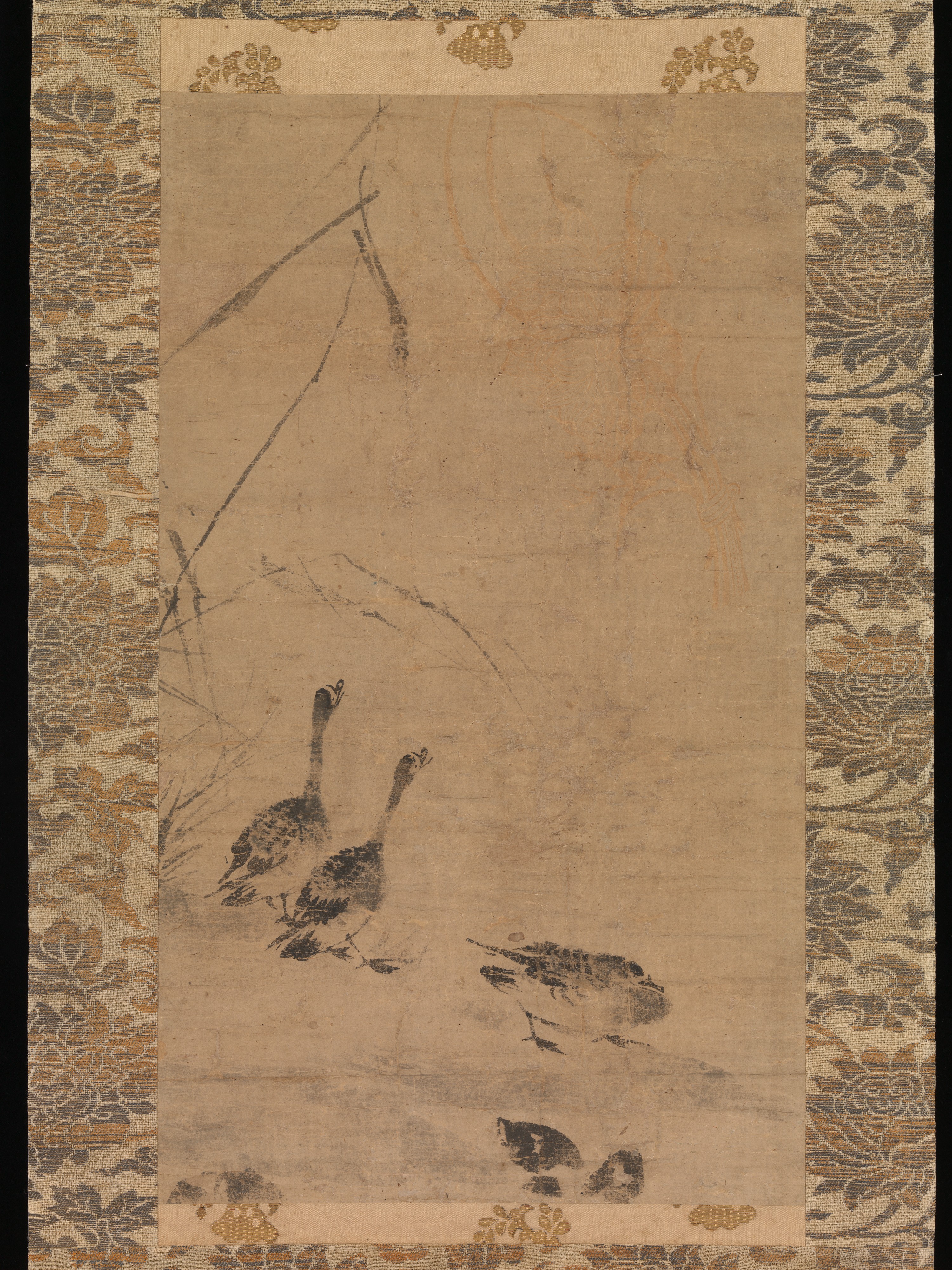
She keeps falling, in the story the botanist Robin Wall Kimmerer, of the Potawatomi people, places at the very beginning. A woman topples through a hole in the world above, toward a black, shoreless water. She spiraled down like a maple samara carried on the autumn breeze, Kimmerer writes; and, she says, fear—or perhaps hope—made her clench her hands around a tiny bundle. She does not fall empty-handed. Below, geese rise from the water to break her fall; a turtle offers its back; the animals dive in turn to fetch a little mud from the depths, and it is on this mud spread across the shell that the first earth begins to grow. Kimmerer holds this story from the peoples of the Great Lakes and carries it as one carries a directive—according to Kimmerer, never “the Potawatomi say.”
The tiny bundle is what she managed to snatch as she fell: fruits and seeds from the tree of the world above. She sows them on the new earth, dances, and the ground turns green beneath her feet. The world we live in was not made for her by a separate god; it was made with her, and with the animals that dove, the turtle that lent its back, the goose that bore her. Creation here is a shared labor and a thanksgiving: we receive the earth from other beings, and we give back by making it grow. Later, from her daughter laid in the earth, the plants that nourish humans will spring. What the first ancestor passes on to her descendants is not power over the world, but a debt: a world given, to be returned.
This is where the word this article offers comes from. Skywoman—Skywoman in Kimmerer’s English—is not a goddess who commands from above: she is a gardener and a guest, arriving below with hands full and setting to work. The name speaks of a way of coming into the world.
Kimmerer then places her beside another woman who, too, leaves a garden and a sky. But the two falls do not say the same thing, and the difference comes before any comparison. Eve falls as punishment: cast out, she receives the earth as a sentence—thorns and sweat—a place of passage where her true home would lie elsewhere, in heaven. Skywoman falls and the earth becomes her gift and her work, greened by her hands, the dwelling of her children. Two women, two falls; but one leaves behind a world-exile to be endured while waiting to leave it, the other a world-home to be tended and thanked.
English One story leads to the generous embrace of the living world, the other to banishment. One woman is our ancestral gardener, a cocreator of the good green world that would be the home of her descendants. The other was an exile, just passing through an alien world on a rough road to her real home in heaven.
English Of these two conceptions of Creation, one leads to generous inclusion in the living world, the other to its exclusion. Skywoman is our Primordial Gardener, co-creator of a green and bountiful earth, future home to all her descendants. Eve is an exile, passing through a foreign world in laborious search of her only true home, the Kingdom of Heaven.
The word does not ask that we swap one story for another. It asks, more simply, that we hear what a cosmology deposits, often unnoticed, in our relationship to the soil: depending on the story that made us, the earth is either a temporary dwelling to endure, or a gift received from other living beings and to be returned to them. Skywoman is not a Potawatomi word—it is the name Kimmerer gives, in her writing language, to a figure carried by the peoples of the Great Lakes. What it brings into ours is not one more deity, but a way of arriving: falling with hands full, as a guest who will have to give back.
Sources cited
- Robin Wall Kimmerer, Tresser les herbes sacrées (Braiding Sweetgrass), ed. Le lotus et l'éléphant, 2021 — éd. originale Milkweed Editions, 2013, trans. Véronique Minder.