Rivers Are a Fallen Tree
In the origin story told by Humberto Yumbato and Alberto Coello of their people, the world was dark because a giant tree, Wone, covered it. Twin brothers fell it—and the felled tree became the rivers.
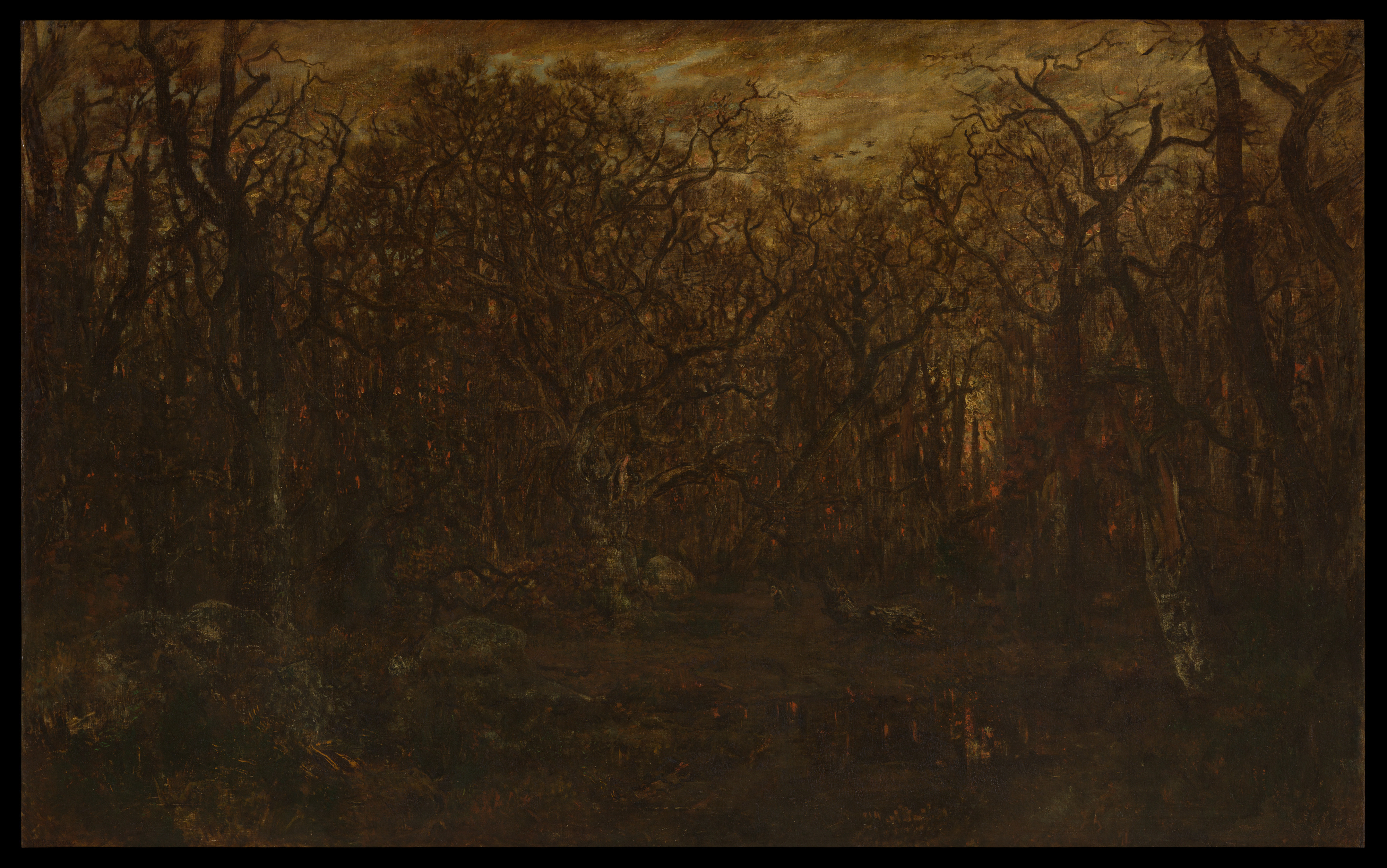
Before the rivers, there was a tree. On the upper Amazon, where Peru meets Colombia and Brazil, Humberto Yumbato Bereca—Yaurekü in Tikuna, the unripe fruit of a vine—recounts the world as his mother told it to him, in the evening, at rest’s hour. With him speak Alberto Coello López, from the community of Cushillococha, and Mercedes Serra, who drew its images. Together, they tell how the earth took shape. In the beginning, they say, all was dark—not for lack of sun, but because a tree covered the entire world.
Spanish …era todo oscuro porque lo tapaba Wone (lupuna), un árbol grande.
English …everything was dark because Wone (the lupuna), a great tree, covered it.
Wone, the lupuna: the giant kapok of the Amazon, the tallest tree in the forest. But here it is not a tree in the world—it is the tree that is the world’s lid. Its outspread crown keeps daylight out. A sloth, clinging to the sky with its claw, holds it in place. The first state of things, then, is not emptiness: it is a covering. A living roof of branches, beneath which all that already exists—the beasts, the first man—waits in the dark.
Then come the twins, Yoxí and Ípi, endowed with powers since childhood and weary of so much darkness. They wish to fell the tree; the sloth holds it fast. They send the squirrel to fling chili into the beast’s eye, which lets go; then they bring Wone down.
Spanish El árbol grande cayó y se convirtió en ríos, cochas, quebradas y así hubo ríos para los tikuna.
English The great tree fell and turned into rivers, lakes, streams; and so the Tikuna had rivers.
The story says something our languages keep apart. The river is not something other than the tree: it is the tree—its fallen body, undone, scattered into arms of water, set to flow. Where we sort water into one kind of thing and wood into another, the Tikuna tale makes the river the very flesh of the kapok, laid low. Forest and water are not neighbors; they are a single body in two states—standing, then flowing. To drink from the river, to sail upstream, is still to touch the tree, but the tree turned liquid.
We, too, know a great tree at the world’s center. But ours stands upright: a vertical axis joining sky, earth, and the depths below, a pillar of order gazed upon from below. Wone is its opposite, point for point. It does not stand: it lies. It does not order the world by rising; it imprisons it by covering. And the world does not begin when the tree stands tall, but when it is cast down—its fall is not loss, but the very birth of waters and daylight. For us, felling the great tree would be disaster; here, it is creation. The word the Tikuna storytellers leave in our language is not the image of a column to revere, but of a body that had to be laid low for water to flow: Wone, the tree felled so there might be rivers.
Sources cited
- Humberto Yumbato Bereca (Yaurekü) & Alberto Coello López, El ojo verde. Cosmovisiones amazónicas, ed. FORMABIAP/AIDESEP, 3ᵉ éd. corrigée et augmentée, 2025 (1ʳᵉ éd. 2000), trans. texte original en espagnol (cosmovision tikuna recueillie auprès de voix nommées) ; rendu français maison.