The Flower and the Filth
The Dhammapada brings forth the pure lotus from the heap of refuse; Zhuangzi places the Principle even in the muck. Rising above the vile, or dwelling within it—two ways of holding nothing as waste.
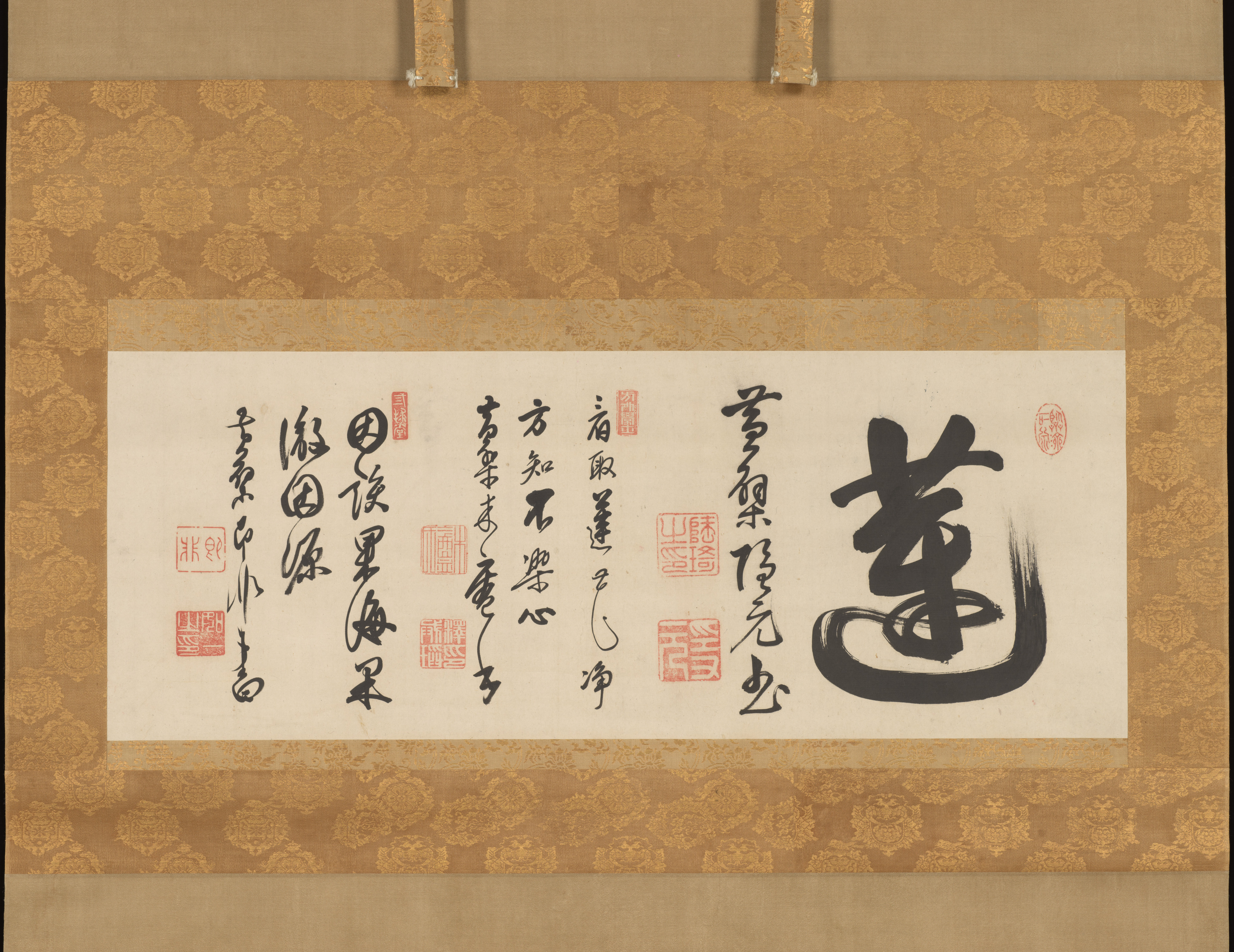
 Along the great road lies a heap of refuse. The eye passes, glances, does not linger: it is waste, what we discard. Yet it is precisely here, on what the hurried gaze turns away from, that two distant traditions—one in ancient India, the other in China—have fixed their gaze, to see what no one seeks in such a place.
Just as from a heap of refuse cast upon the great road a ravishing lotus may arise, pure of scent,
So too, amid the refuse of humanity, amid this blind throng, shines forth, through Perfect Knowledge, the disciple of the Fully Awakened One (Buddha).
The chapter is called The Flower, and nothing is more carefully held together than the flower and the filth. The lotus does not grow in spite of the heap of rubbish: it is born from it. The mud is the soil from which it draws its sap, the condition without which no corolla. But its glory lies in retaining nothing of it—rising ravishing, pure of scent, untouched by the rot that nourished it. The precious ascends from the vile, and is valued for having left it behind.
The Dhammapada thus offers a figure of awakening: not a state reserved for those born pure, but a clarity that emerges precisely where all seems lost, amid this blind throng. The disciple does not flee human filth; he shines within it. And he traverses it like the bee:
Like the bee, which respects the colors and fragrance of flowers, taking only their nectar, so must the muni move through the village.
To take the nectar without wounding the flower, to feed on the mud without remaining stained: the gesture is the same. Wisdom, here, refines. It separates the pure from the impure by rising above the one from the other.
Where Does the Taoist Place the Principle?
Everywhere, and without hierarchy. When asked where the Tao resides, Zhuangzi answers: in the ant; then, lower still, in the blade of grass, the tile, the muck. The Principle does not dwell only in the noble: it is equally present in the most vile, without any degree separating or elevating it above.
— Where is what is called the Principle? — Everywhere, said Zhuangzi. — For example? asked Tongguo Zi. — For example, in this ant, said Zhuangzi. — And lower? — In this blade of grass. — And lower still? — In this fragment of tile. — And lower? — In this dung, in this muck, said Zhuangzi.
The dialogue unfolds as a descent: with each “and lower?”, Tongguo Zi believes he is pushing the sage into a corner, forcing him to concede a floor beneath which the Principle would cease. There is none. And it is the question itself that Zhuangzi rejects:
Do not ask whether the Principle is in this or that. It is in all beings.
To ask “and lower?” is already to see poorly—as does the market expert, the text adds, who assesses a pig by pressing his foot into its fat. To seek the Principle by degrees assumes there would be more and less; yet what is equally in all knows neither summit nor depth. The Tao is not above the world: it is its immanent course, as whole in the muck as in the star.
It would be lazy to conflate the two images. The lotus of the Dhammapada is born from the mud, but breaks free: it rises, and is valued only insofar as it has left nothing behind. The filth remains filth; it is merely the soil. Zhuangzi’s Principle, however, does not rise—it is the muck, on equal footing with the ant. One refines and ascends; the other levels and remains. Two opposing directions: to purify by rising, or to hold nothing as low.
And yet the two perspectives converge in what they refuse: the reflex that, before the heap of refuse, sees only what must be discarded—the inert matter, what serves no purpose, the waste. Where the hurried eye casts aside, both see the essential at work. For the Dhammapada, the soil without which no flower blooms; for Zhuangzi, the full and unqualified presence of the Principle. To rise pure from the vile, or to dwell within it as an equal, are indeed two paths; but the place they lead to is one—a gaze that can no longer hold anything as mere refuse. What was thought to be matter for discarding is the very place where something precious resides.
The heap of refuse still lies along the road. Nothing has changed, except the eye that passes—and this time, does not cast it aside.
Sources cited
- Bouddha (attrib.), Dhammapada, ed. Bibliothèque orientale elzévirienne XXI, Ernest Leroux, 1878 (Wikisource), trans. Fernand Hû.
- Tchouang-Tseu, Œuvre de Tchoang-tzeu, ed. Les Pères du système taoïste, Imprimerie de Hien-hien, 1913 (Wikisource), trans. Léon Wieger.