The Land That Paints Its Own Story
David Mowaljarlai and the Living Archive of Wunggud
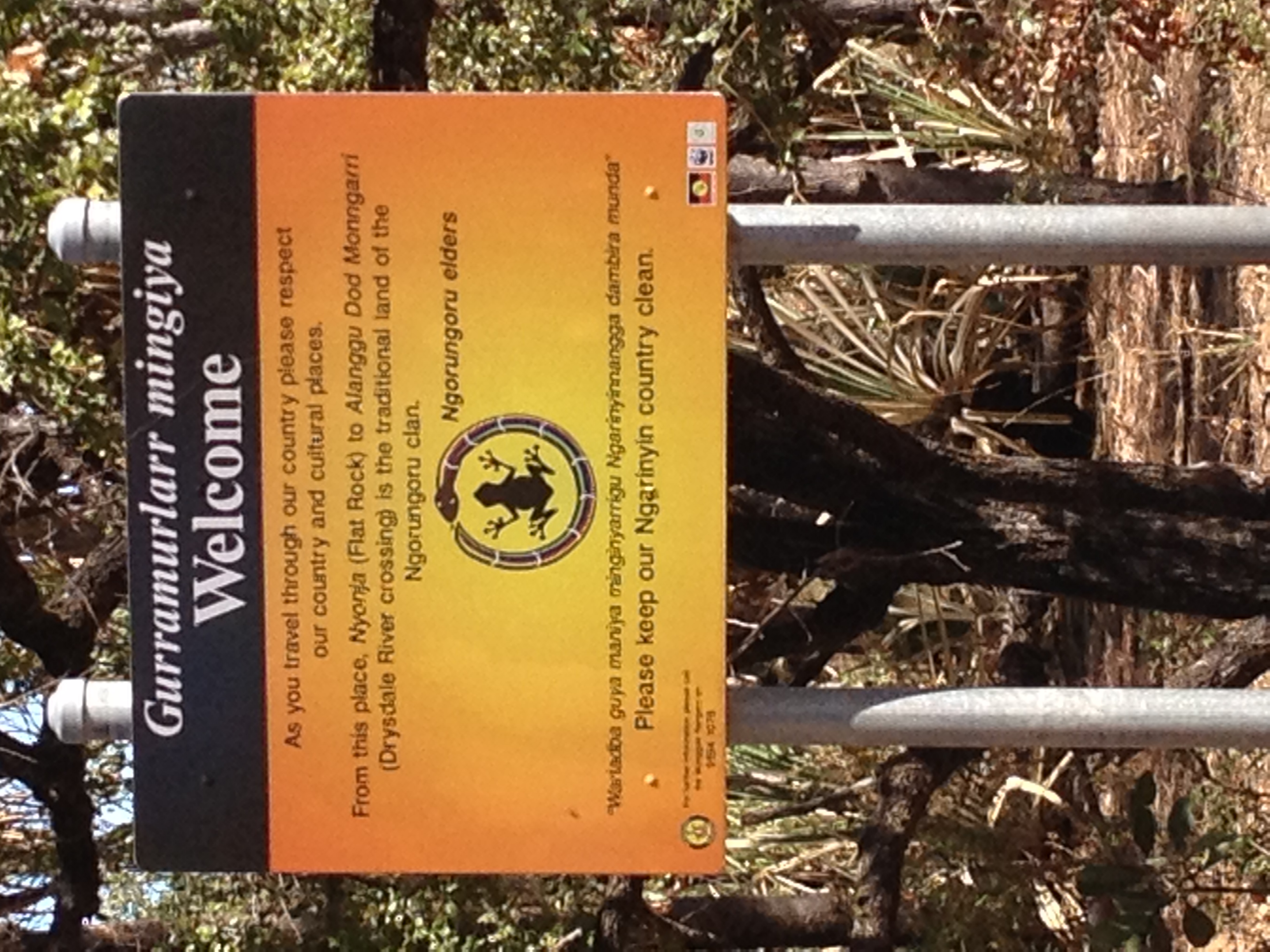
he land of Alwayu is no backdrop. It is a page upon which the story of light and darkness has been written since time immemorial. For David Mowaljarlai, this place where the waters of the Drysdale unfold like mirrors between pandanus and eucalyptus does not belong to maps, but to a time when the forces of the Dreaming still speak. The terraces of the waterfall, the trembling reflections in the ponds—all of it forms an open book: the sacred painting of the Python Widow, etched onto an inaccessible rock, tells how day and night learned to coexist. Night, he says, was not an absence, but an active presence, a consciousness that struggled to make way for dawn. And this struggle is no ancient myth—it is a lesson the land repeats, every morning, to those who know how to listen.
The Archive That Breathes
David Mowaljarlai observes that sacred patterns are not relics, but teachers. The painting of the Python Widow, for instance, is not merely a story: it is a demonstration of how opposing forces—light and darkness—ultimately unite. Day does not banish night; it emerges from it, like an answer to its call. This dynamic is no metaphor, but a physical and spiritual reality embodied by the landscape. The Wandjina, those ancestral beings, placed these narratives in the earth so that humans might become their guardians. Their role is not to preserve stories, but to bring them to life, perpetuating the gestures, songs, and bonds that maintain balance.
For Mowaljarlai, this responsibility is no burden, but an inheritance. The Ngarinyin of today are the direct descendants of these ancestors, and their task is to ensure that the Idea of the Wandjina—that organizing principle of the world—continues to unfold. This means creation is not a past event, but an ongoing process. The term Yorro Yorro, which he uses, designates this perpetual vitality: everything that exists is in the act of standing up, of renewing itself. The land is no museum, but a classroom where every stone, every stream, every shadow carries a lesson.
Two Laws in the Mirror
The encounter between Ngarinyin traditions and colonial laws is described by Mowaljarlai as a confrontation between two Wunggud—two spaces of power, two ways of understanding the universe. He uses a striking image to illustrate this tension: an ashtray representing England, placed beside another symbolizing Australia. Each bears its own rules, its own laws, and each reflects its order in the sky. But according to him, these two systems cannot coexist without dialogue. The descendants of settlers, born on this land, often ignore the spiritual laws that govern it. They have inherited British laws, but not the consciousness that binds them to this territory.
Mowaljarlai does not reject these foreign laws. Instead, he proposes a form of complementarity: to fully understand Australia, one must accept placing oneself under the Wunggud of this country, that vast force which encompasses and transcends human borders. This is not a question of rejection, but of integration. The Ngarinyin, he says, have had to learn the settlers’ rules; in turn, they must now listen to the land’s teachings. This listening is no mere intellectual curiosity, but a vital necessity. It engages not only the mind, but what he calls powers—those deep capacities, those inner forces that allow one to perceive the world beyond appearances.
The Gift of Teaching
Mowaljarlai’s closing words are a call. He speaks of a gift, an offering the Ngarinyin make to Australia as a whole. This gift is not an object, but a way of seeing, an invitation to recognize that the land is an active consciousness. The elders, like Paddy Neowarra or Laurie Gowanulli, have passed down this knowledge, and now it is their turn to share it. But this sharing can only happen if others agree to place themselves under the Wunggud of the land, to acknowledge that their own laws are not enough.
This school of the bush, as he calls it, is not an alternative to institutions, but an essential dimension of life. It is not confined to theory, but rooted in the direct experience of the landscape. To listen to the land is to learn to see the world as a web of living relationships, where every element—the Python Widow, the waterfall, the reflection of the trees—is a teacher. And this lesson, he says, is always present. It does not belong to the past, but to a present that endlessly renews itself.
English “You’ve got to come also under our Wunggud, the stronger space in the universe, the stronger Wunggud to go with your English Wunggud belonging?” It’s like this ashtray here, this is England and this is Australia.
English You must also place yourselves under our Wunggud, this more powerful space of the universe, this stronger Wunggud to accompany your English Wunggud? Here, like this ashtray, this is England and this is Australia.
Sources cited
- David Mowaljarlai, Yorro Yorro, ed. Magabala Books, éd. revue et augmentée, 2014 (avec Jutta Malnic), trans. texte original anglais ; rendu français maison.