What We Call Dependence
In the accounts of a Pacific microstate, the money Oceanian people send one another across the sea falls under a single line: “dependence.” Tongan thinker Epeli Hauʻofa reads it as precisely the opposite—an ancient reciprocity, the heart of Oceanian cultures; to name it “dependence” is to deny people their dignity.
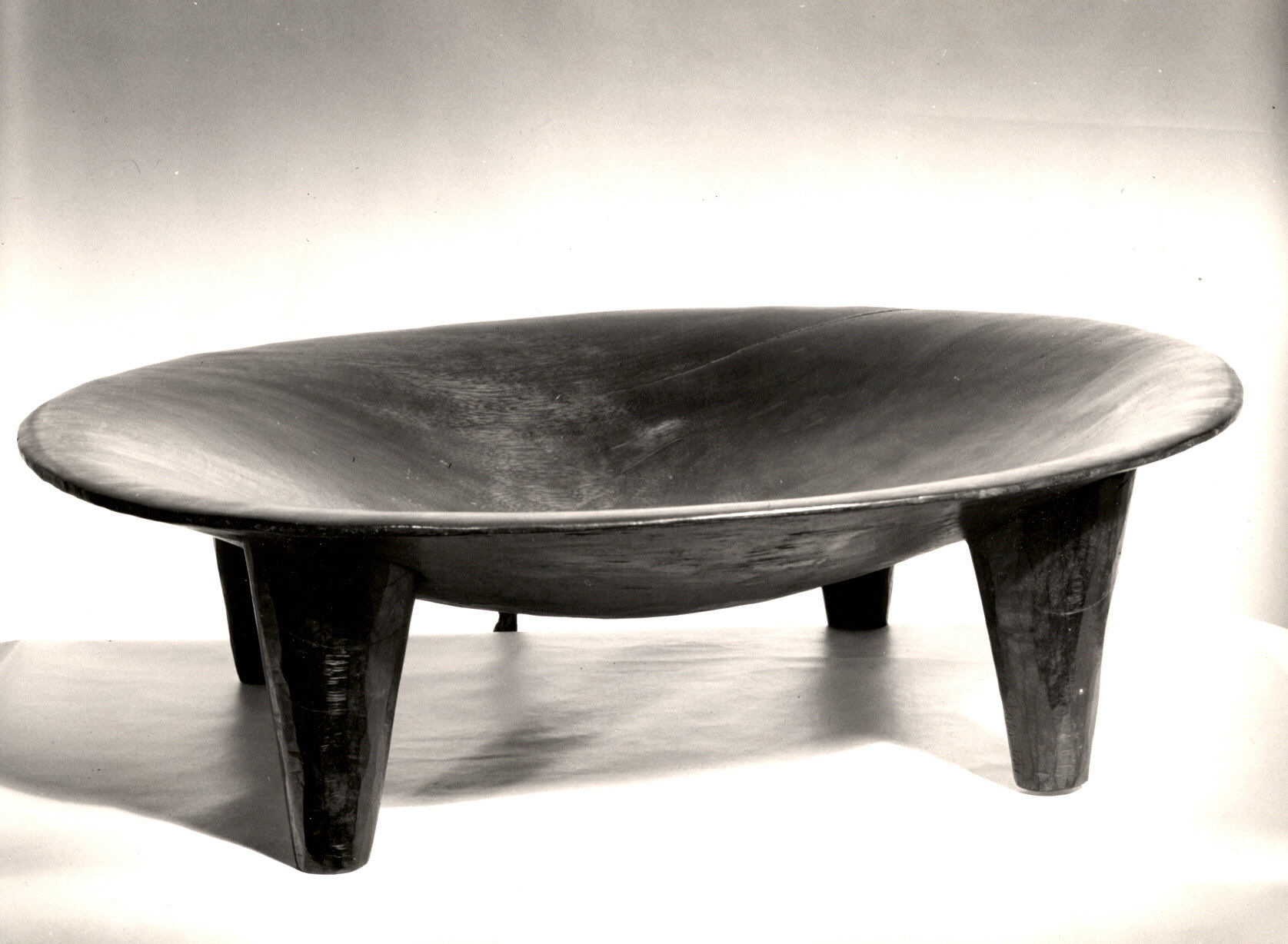
In the balance of payments of a small Pacific state, a single line delivers the verdict: aid and remittance. The economist reads it in one direction only—money flowing from wealthy nations and relatives abroad, without which the islands would collapse. Beneath this line lies an unspoken conclusion: these people live on what others give them. Too small, too poor, doomed to receive.
Epeli Hauʻofa (1939–2009), a Tongan thinker and longtime professor at the University of the South Pacific in Suva, looked at that same line and saw the opposite. He knew one of these so-called “dependents.” A Tongan man he met at Honolulu Airport, twice his size, settled in Berkeley, where he trims hedges and lays driveways. Every three months, the man flies to Fiji, buys eight to ten thousand dollars’ worth of kava, brings it back to California, and sells it from his home; he leaves with a cooler packed with T-shirts for his family in Tonga and the students he hosts in Suva, and fills it with seafood before returning, for the two sons he hopes to send to university. “He has never heard of dependence,” Hauʻofa writes, “and if you told him about it, the word would hold no real meaning for him.” People love him, Hauʻofa adds, because he tells stories well and gives without counting—“but above all, because he is one of us.”
English Economists do not take account of the social centrality of the ancient practice of reciprocity, the core of all Oceanic cultures. They overlook the fact that for everything homelands relatives receive they reciprocate with goods they themselves produce, and they maintain ancestral roots and lands for everyone, homes with warmed hearths for travellers to return to at the end of the day.
English Economists take no account of the social centrality of the ancient practice of reciprocity, the heart of all Oceanian cultures. They overlook the fact that for everything relatives back home receive, they give back goods they produce themselves, and they maintain, for all, ancestral roots and lands—homes with hearths kept burning, where the traveler can return at day’s end.
The ledger sees only a one-way fall: aid descends, islanders receive. Hauʻofa sees a two-way flow. For what the homeland receives—remittances, goods sent from Auckland or the West Coast—it sends back what it produces: woven objects, tropical fruit, dried fish, kava. And it holds up its end of the bond, the part no balance sheet records: the land kept, the hearth tended, the home to which one can return. What the economist classifies as proof of weakness is, in this reading, the visible thread of an ancient reciprocity, an “informal movement along ancient routes traced in blood ties”—across this sea of islands that, for the peoples of the ocean, connects rather than divides. The gift is not alms received from above: it is a relationship that runs both ways.
Here, Hauʻofa raises the stakes—and stops arguing over numbers.
English This is not dependence but interdependence, which is purportedly the essence of the global system. To say that it is something else and less is not only erroneous, it denies people their dignity.
English This is not dependence, but interdependence—the very essence of the global system, as we are told. To call it anything else, and lesser, is not just wrong: it is to deny people their dignity.
The word does more than misdescribe; it diminishes. “Dependence” ranks the two poles of the bond one beneath the other—the receiver below the giver—whereas the relationship itself moves between equals, each giving in turn. And Hauʻofa notes the asymmetry of the vocabulary: the same global economy that celebrates interdependence when speaking of nations denies the word to islanders and calls their version “dependence.” Naming, here, is power: the chosen word decides who is a beggar and who is a partner.
To the same verdict from outside, Hauʻofa does not respond uniformly. Against “too small,” he expanded the frame: the Oceanian world is vast, it stretches, it grows. Against “dependent,” he does not plead grandeur this time—he changes the nature of the bond: what rises and falls from one shore to the other is not alms, but reciprocity. An expanse on one side, a relationship on the other: two distinct answers to two distinct measures, which we would be wrong to merge into a single refusal.
The economist and Hauʻofa look at the same cooler of kava and T-shirts crossing the Pacific. One counts a net inflow and calls it dependence; the other traces the thread of reciprocity along a sea that, since time immemorial, connects. The numbers might be identical: the two readings are not, and they are not two shades of the same truth. They diverge on what these people are. The question the ledger never asks remains: when we call a relationship “dependence,” are we measuring it—or classifying it, and who gave us the right to place the receiver beneath the giver?
Sources cited
- Epeli Hauʻofa, Our Sea of Islands, ed. A New Oceania: Rediscovering Our Sea of Islands, University of the South Pacific, Suva, 1993, p. 12-13 ; repris dans The Contemporary Pacific 6/1, 1994, trans. texte original anglais ; rendu français maison.