From Whom the World Descends
Among the Māori, whakapapa is not a family tree that ends with a few ancestors: traced to its source, it descends from Sky and Earth. The first ancestor is not a man.
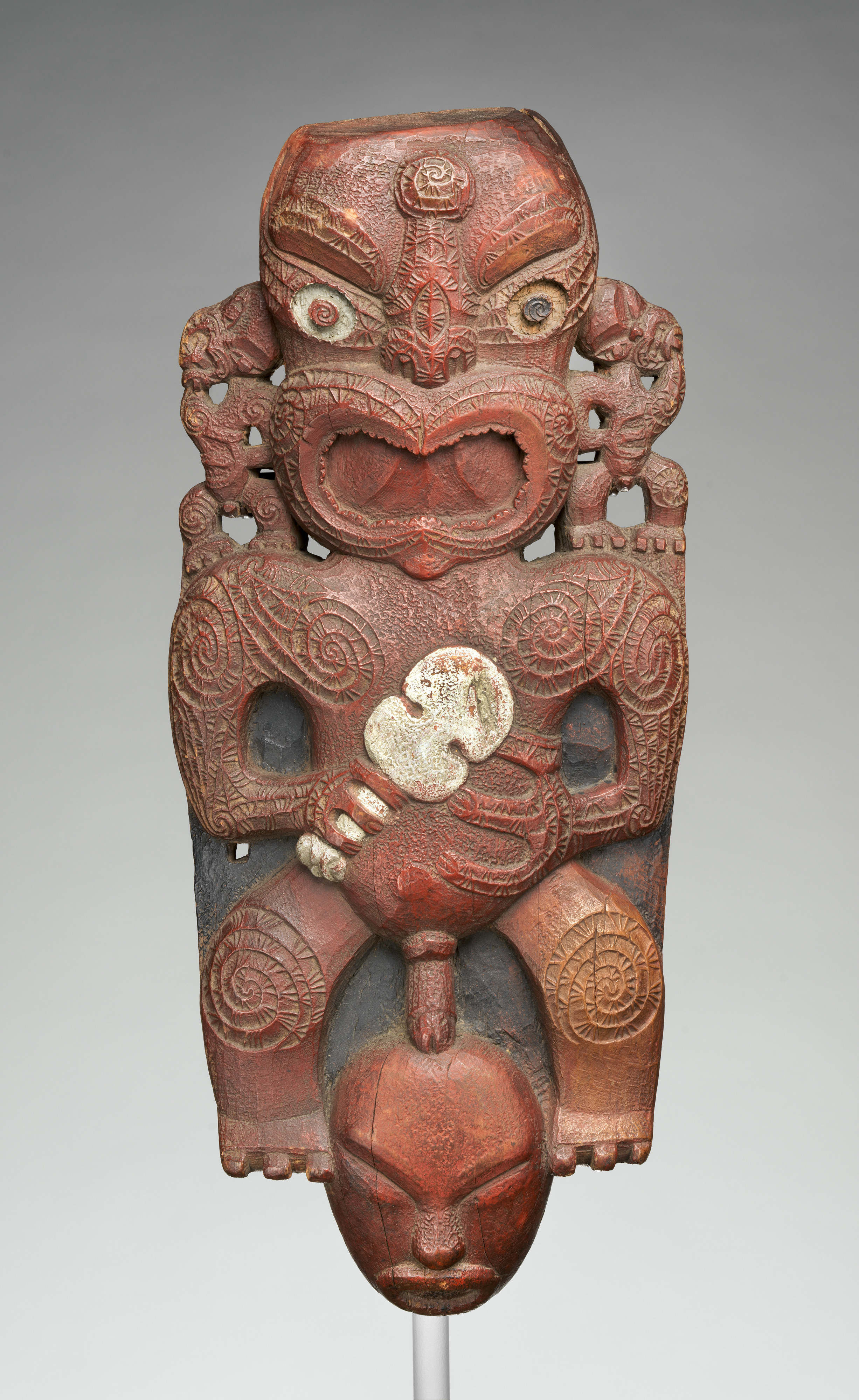
Ask someone who they are. In French, the answer often comes as a profession, an age, a city. On a marae in Aotearoa, the reply begins elsewhere: with a lineage. Hirini Moko Mead, elder and professor of Ngāti Awa, describes whakapapa as a gift received at birth—each person inherits two lines, their mother’s and their father’s, and either one is enough to secure their place within the tribe. This is what allows one to say, without fear of contradiction: I am Ngāti Awa. Whakapapa, he writes, is belonging; without it, the individual remains outside looking in—shut out, gazing inward.
One might assume this is just another word for a family tree. Mead dispels the comparison at once, not by expanding the family, but by extending it where ours comes to a halt.
English …ira tangata descend from ira Atua, the Gods. The first woman was created by the Gods and the seed of human life was planted by Tāne, son of Rangi and Papa, the primeval parents of the Māori cosmos.
English …the ira tangata descend from the ira Atua, the gods. The first woman was created by the gods, and the seed of human life was planted by Tāne, son of Rangi and Papa, the primordial parents of the Māori cosmos.
The sentence is brief, yet it shifts everything. The whakapapa that situates you within your hapū is the same line that, traced far enough, reaches the gods—and through them, Rangi and Papa, Sky and Earth. Your genealogy does not end with a founding ancestor, a name from which all else springs: it continues beyond humans, to the forces that shape the world. To recite one’s whakapapa is thus to unspool a single, unbroken descent from oneself back to Sky and Earth. The first ancestor is not a man.
Hence the weight of the word belonging. It does not merely mean having a place within a tribe, but being kin to the world. If Earth is the ancestor from whom one descends, she is not scenery or a stockpile of resources: she is kinship. The distance we ordinarily place between humans and nature—people on one side, things on the other—does not hold in a language where the same line connects a child to their mother, their mother to her ancestors, and those ancestors to the sky. All is held by descent, not separation.
This is where the distinction must be made, lest we confuse two opposing gestures. Our family tree is a closed, recent lineage: it stops at a few centuries of records, and it links only humans to one another. Whakapapa never seals itself at the top—it joins the primordial parents of the cosmos. And where taxonomy classifies beings from without, from above, sorting life into species and kingdoms through a gaze that believes itself outside the frame, whakapapa does the opposite: it connects from within, by blood, without the possibility of detachment, for the one reciting descends from what they name. One separates to order; the other relates to situate.
What remains is what the word leaves in our language, where it is lacking. Not “origin,” not “ancestry”—whakapapa: the descent that, followed to its end, makes Sky and Earth our oldest ancestors. To know where you come from is not to trace back to a first man. It is to realize that by birth, you are kin to the world.
Sources cited
- Hirini Moko Mead, Tikanga Māori: Living by Māori Values, ed. Huia Publishers, 2003, trans. rendu français maison (œuvre en anglais, courtes citations attribuées).