A Sky That Can Grow Old
In the High Altai described by the Tuvan writer Galsan Tschinag, the sky is not an outside: it is addressed like a father, prayed to, wept over—and an overwhelmed elder may reproach it for having grown so old it no longer hears.
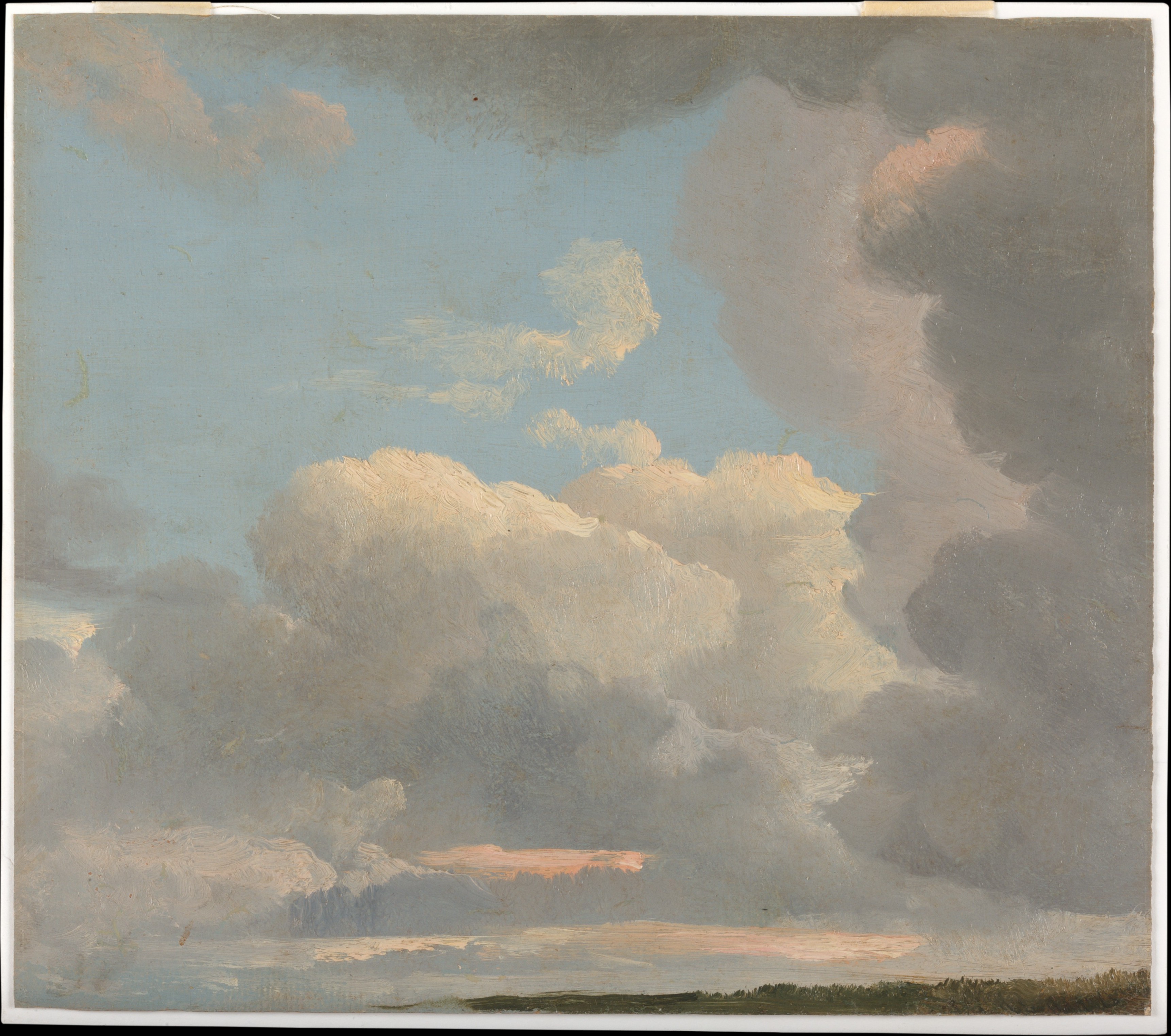
Two beings worn down by misfortune, somewhere in the High Altai: a man kept awake by pain, and the woman keeping watch beside him. He complains, asks why so much suffering has fallen to him. She offers no consolation; she tells him whom to address. It is the Tuvan writer Galsan Tschinag—a shepherd turned German-language novelist—who recounts the scene, from the nomadic world of his childhood.
English “Don’t ask me. Ask the Blue Sky.”
“The Blue Sky no longer listens. He must have gone deaf from old age.”
English « Don’t ask me. Ask the Blue Sky. »
« The Blue Sky no longer listens. It must have grown deaf from old age. »
Let us pause at what this exchange takes for granted. One may ask the sky: it is among those one speaks to, an interlocutor, not a backdrop. It listens—or no longer does. And above all: it can grow old, tire, turn deaf like a grandfather by the hearth. This is no poet’s metaphor; it is the ordinary grammar of a world where the Blue Sky is a kinsman, bound in the same web of relations as the living, not an expanse of air above them.
The place of this sky is measured by how one invokes it. When Tschinag’s young hero sings the ritual chant he has sung « a hundred times, » it « calls upon Father Sky and Mother Earth »—he summons Sky-Father and Earth-Mother. Sky and earth are named as father and mother: not two forces, but two parents to whom one speaks, gives thanks, pleads. One does not pray to an atmosphere. One prays to someone.
That this sky is a close relation is proven even more by rebellion than by prayer. After a « bad year, » the child rose up against it.
English It ended with me rising up against the sky and flinging at him my best weapons—my words. I denounced him. Instead of replying, Father Sky stayed as unreachable and invulnerable as ever.
English It ended with me, standing against the sky, hurling my best weapons—my words—at it. I accused it. In reply, Father Sky remained as untouchable and invulnerable as ever.
One does not accuse a void. One resents only someone. That the child denounces the sky, that he flings his words like weapons, makes clear he takes it for a presence capable of answering, of keeping silent, of deserving reproach. And it is the silence that follows—the sky left « untouchable and invulnerable »—that opens, within the very relation, the modern question: « What, exactly, was the sky? I had to know. » The doubt that will turn our sky into an object begins not when we stop looking up, but when the heights stop answering.
Everything sets this Blue Sky apart from the sky we raise our eyes to see. Ours is an envelope: air, pressure, diffused light, measurable blue. We do not speak to it; it cannot listen or keep silent, for it was never a you. It cannot grow deaf with age—it would first have to have heard. Two skies under one word: one that is pleaded with and accused, the other merely located above.
Then remains the question the Altai elder unwittingly poses to us, who expect nothing from on high. When we look up, what do we encounter: a ceiling of air—or someone old enough, perhaps, to have stopped hearing us?
Sources cited
- Galsan Tschinag, The Gray Earth (Die graue Erde), ed. Milkweed Editions, 2010 (orig. allemand, Insel Verlag, 1999), trans. Katharina Rout (anglais) ; rendu français maison.