Life Is Not Useful
Ailton Krenak, Krenak thinker of the Rio Doce, refuses to measure existence by its yield: life has no utility—it is *fruição*, a cosmic dance to be savored.
For two years now, Ailton Krenak has lived with other families of his people on the left bank of a wounded river, in the Rio Doce valley of Minas Gerais. From a practical standpoint, they should have been relocated from the disaster site, just as the people of Brumadinho or Bento Rodrigues were. The Krenak refused. « Oh, but you have no water! » — So what? « But you could die there! » — So what? The place has become an abyss, he writes, but they are in it and will not leave. It is from there that he observes the logic that sought to save them.
For a rescue operation, he notes, aims to tear the wounded body away, carry it elsewhere, restore it—so that, perhaps, it may later « remain operational in life. » All of this stems from one idea: that life is useful. And it is precisely this idea that he overturns.
Brazilian Portuguese Isso partindo da ideia de que a vida é útil, mas a vida não tem utilidade nenhuma. A vida é tão maravilhosa que a nossa mente tenta dar uma utilidade a ela, mas isso é uma besteira. A vida é fruição, é uma dança, só que é uma dança cósmica, e a gente quer reduzi-la a uma coreografia ridícula e utilitária.
English It starts with the idea that life is useful, but life has no utility whatsoever. Life is so wondrous that our minds try to assign it a purpose, but that is foolish. Life is fruição—it is a dance, except it is a cosmic dance, and we seek to reduce it to a ridiculous, utilitarian choreography.
The word that carries everything is fruição. French hesitates to render it: « jouissance » veers too quickly toward possession, « plaisir » toward consumption, and « fruition » has narrowed, in our usage, to mean only the completion of a project. Krenak means something else: not to extract profit from life, but to savor it as one is in a dance—without regulating it by a goal. The « ridiculous, utilitarian choreography » he rejects is life reduced to a résumé: someone was born, did this, founded a city, invented Fordism, made a revolution, went to space. A little story, he says, that we mistake for life itself.
In place of the résumé, an image returns, marine and serene:
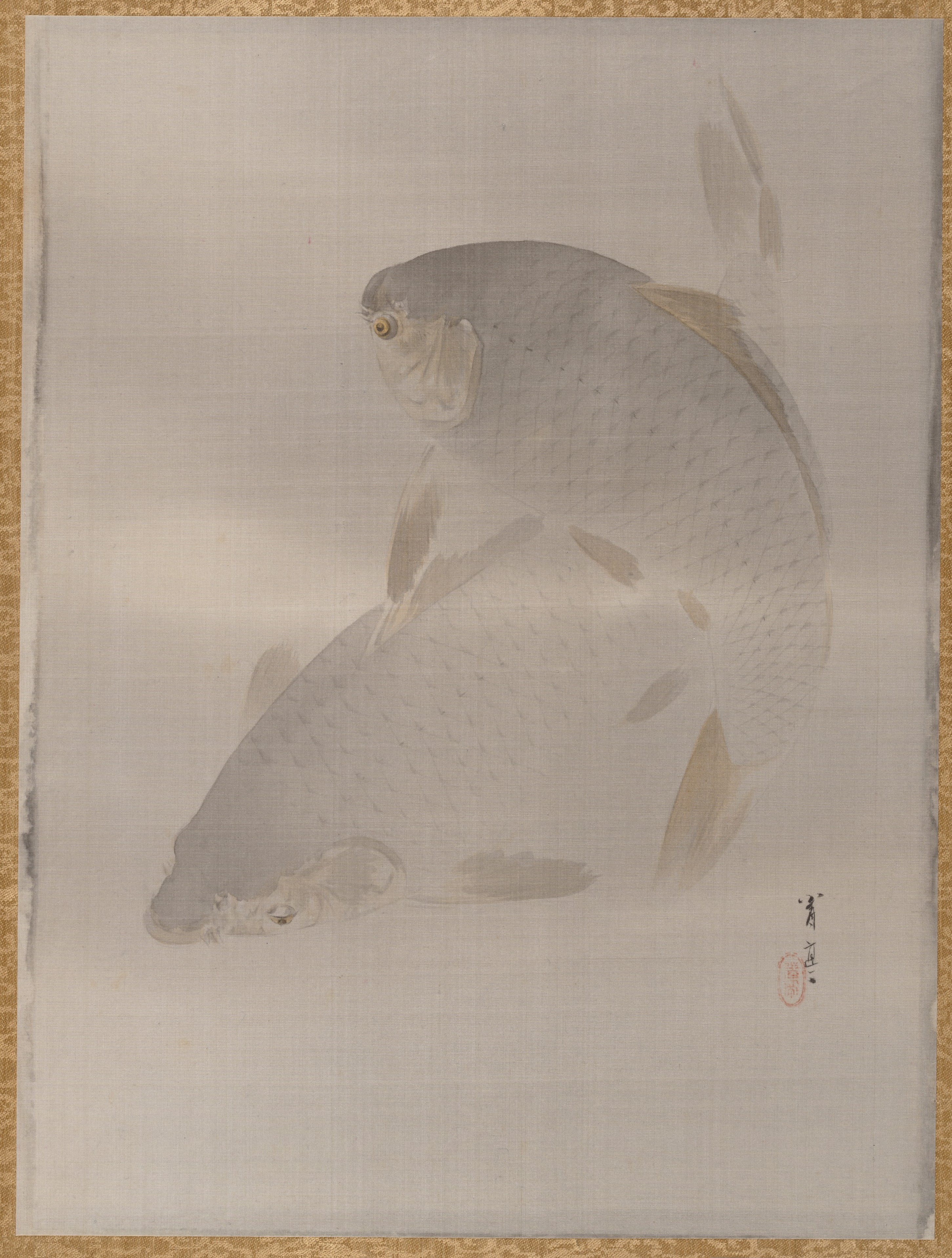
Brazilian Portuguese Nós estamos, em nossa relação com a vida, como um peixinho num imenso oceano, em maravilhosa fruição. Nunca vai ocorrer a um peixinho que o oceano tem que ser útil, o oceano é a vida.
English In our relationship with life, we are like a small fish in a vast ocean, in wondrous fruição. It would never occur to a small fish that the ocean must be useful: the ocean is life.
The fish does not use the water; it is in it. To ask the ocean to be useful would be to ask life to be something other than life. « Why do we insist on turning life into something useful? » Krenak writes. His answer is not rest: one must, he says, « have the courage to be radically alive, rather than haggle over survival. » For « survival is already a negotiation around life »—a deferral, a down payment on a future that excuses us from living now.
This refusal has a precise reverse side, which must be named to avoid softening it. Krenak targets what he calls « the empty thinking of the Whites »—those who cannot live without a purpose, « who believe work is the reason for existence »—and who, having enslaved others, end up enslaving themselves. To live without utility is then seen as laziness, a refusal to civilize. It is from this capture that one must escape.
We must cut before we draw closer. In our language, useless is a lack: what serves no purpose, what we set aside, the residue. Krenak describes this gesture well—the progress that marches toward its horizon, abandoning « everything that does not interest it, what remains »—and consigns entire peoples to the subhumanity of the superfluous. When he says life is not useful, he takes the word from the other end: not a defect, but a plenitude. Life eludes utility not because it lacks it, but because utility is too narrow a measure for it. The ocean is not useless—the category does not reach it.
Our tradition has its counterweights to busyness: the otium of the Ancients, the rest of the seventh day, the beauty we call gratuitous—the occupatio that detaches us from ourselves, we know how to criticize it. But these remedies remain exceptions carved into a world otherwise ruled by productivity: a parenthesis of gratuity, a Sunday between six useful days. Krenak does not plead for the parenthesis. He removes the measure. It is not life that must be returned to fruição at chosen moments: it is utility that never had the right to reign over it.
Krenak is not some timeless sage unearthed: he is a writer and activist of today, one of the great voices of the Brazilian Indigenous movement since the 1970s, the first Indigenous person elected to the Brazilian Academy of Letters. His speech is dated, polemical, alive. And fruição is not a rare word in his language: Portuguese uses it commonly. It is his use of it that reopens something—opposing the verb to serve with the verb to savor.
The question he leaves in our language remains, one we may ask ourselves without answering for others: what we do today—do we do it because it serves, or because it is life?
Sources cited
- Ailton Krenak, A vida não é útil, ed. Companhia das Letras, São Paulo, 2020, trans. trad. maison (du portugais).