The Misery of a Room
Pascal sees restlessness as flight; the desert turns stillness into a cure—two readings of man who cannot remain at rest.
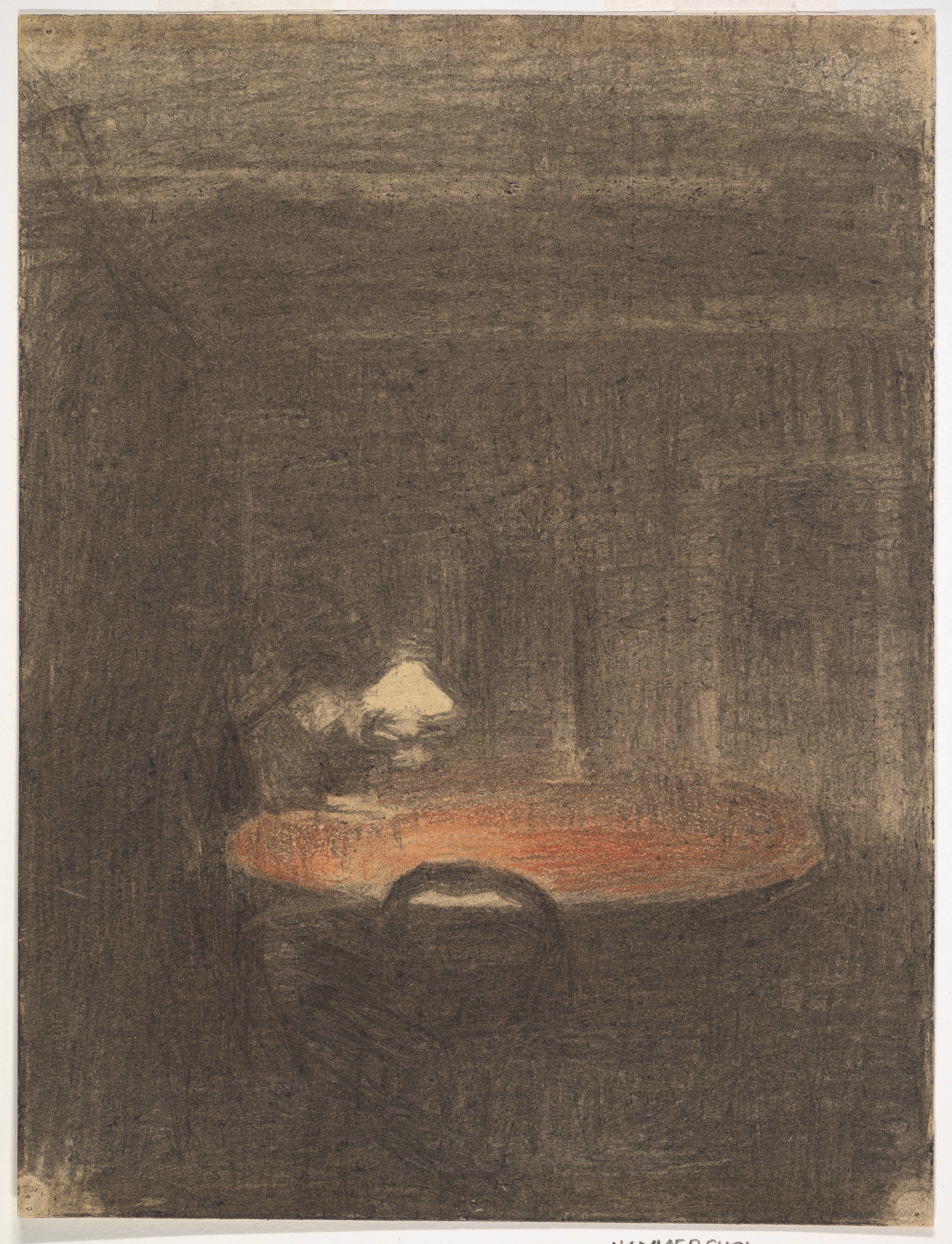
We know the gesture before we know its cause: the hand reaching for something to do, a task, news, anything rather than stay there, seated, idle. We call it distraction, a change of scene, relaxation. Pascal saw something else in it, and from it drew the most unflinching diagnosis ever written of man in his idleness: beneath the restlessness, a flight.
When I have sometimes set myself to observe the various agitations of men, the dangers and hardships to which they expose themselves at court or in war, giving rise to so many quarrels, passions, bold and often misguided ventures, and so on, I have discovered that all human misery stems from a single cause: the inability to remain at rest in a room.
The remark might pass for a moralist’s quip. It is anything but: a mechanism. For Pascal does not stop at the observation; he seeks its spring. Why does a man with enough to live on not stay at home? Why pay so dearly for a military commission, if not because “one would find it unbearable to stay put in the city”? It is not that hunting, war, or gambling are goods in themselves—“we would not want them if they were offered.” It is that they keep us occupied elsewhere. The hunter, he says, does not chase the hare for the hare’s sake: “That hare would not shield us from the sight of death and misery, but the hunt—which distracts us—does.”
What does Pascal mean by divertissement?
Not leisure in the light sense of the word, but diversion itself. Divertir comes from divertere, to turn away. Under this single term, Pascal groups behaviors that seem worlds apart—the game and the war, conversation and state office—because they share a single function: to keep us from thinking of ourselves. Divertissement is not an added pleasure; it is a veil. And what it veils, Pascal names without hesitation: man left “in perfect repose, without passions, without business, without diversion, without application” finds himself delivered to “his nothingness, his abandonment, his insufficiency, his dependence, his impotence, his void.” The empty room is not peaceful; it is where his condition reveals itself. That is what makes him rise, leave, busy himself.
Twelve centuries earlier, in an Egyptian cell, men had encountered the same wall—not by seeking noise, but by seeking silence. The desert monks named the torpor that seized them in the middle of the day, when the hour seemed to stand still: acedia, the noonday demon. Its sign was not rest but restlessness: the cell became unbearable, one persuaded oneself that one would be more useful elsewhere, that the rule would be gentler there. John Climacus wrote it in the first person.
One day, he said, I was sitting in my cell, and I felt such discouragement in my heart that I almost thought of leaving it.
Beneath the good reasons for going, the Fathers recognized a single movement: flight. And the remedy they passed down was not to move, but the opposite—to remain. To Arsenius, who asked how to save himself, a voice answered: “Flee men, keep silence, and abide in stillness.” The same language as Pascal’s, turned inside out. One says all misery comes from not knowing how to abide in stillness; the other makes abide in stillness the first foundation of salvation. The word pivots: what Pascal presents as our incapacity, the desert presents as the way.
Yet here the two perspectives part, and the gap must be held without smoothing it over. For the desert makes stillness a remedy: stay in your cell, the noonday demon will pass in its time; stability heals. Pascal, however, refuses to see it as a remedy. Bare rest consoles nothing—it lays bare. “To tell a man to live at rest,” he writes, is to promise him a happiness he does not have: “This is not to understand human nature.” Rest without diversion delivers him to that nothingness. For the monk, the guarded room is a school; for Pascal, it is first a chasm, which nothing human fills. The desert’s rest and Pascal’s you-cannot-rest do not mark the same threshold.
And it is there, once the gap is held, that they converge on what matters. Neither takes restlessness at face value. The hunter does not want the hare, the monk does not truly want to leave: beneath a thousand pretexts, a single gesture, to turn away from oneself. Neither believes that what is sought outside is what is at stake. Both know that what one flees is not in the next room: it sits with us, it travels with those who leave. Their paths diverge—a void Pascal refers to God alone, a demon the desert lets pass by remaining—but the first step is the same: to stop calling flight by another name, and to stay long enough to see what one was fleeing.
The room remains, and the hand that already seeks something else. The question is not whether one must stay—no one here commands it. It is simpler, and it is asked in a low voice: is this occupation I am about to take the one I want—or the one that buys me not seeing?
Sources cited
- Blaise Pascal, Pensées, ed. Wikisource, éd. Léon Brunschvicg (1897).
- Pères du désert, Vies choisies des Pères des déserts d’Orient, ed. Ad Mame, 1861 (compilation de Michel-Ange Marin), trans. Arnauld d’Andilly.