When the Soul Comes to Smell the Flowers
According to Vine Deloria Jr., community, family, and land form a unity that death does not sever: the dead do not depart for some elsewhere but remain on the soil of their own. A 'continuing unity' against the religion of individual salvation.
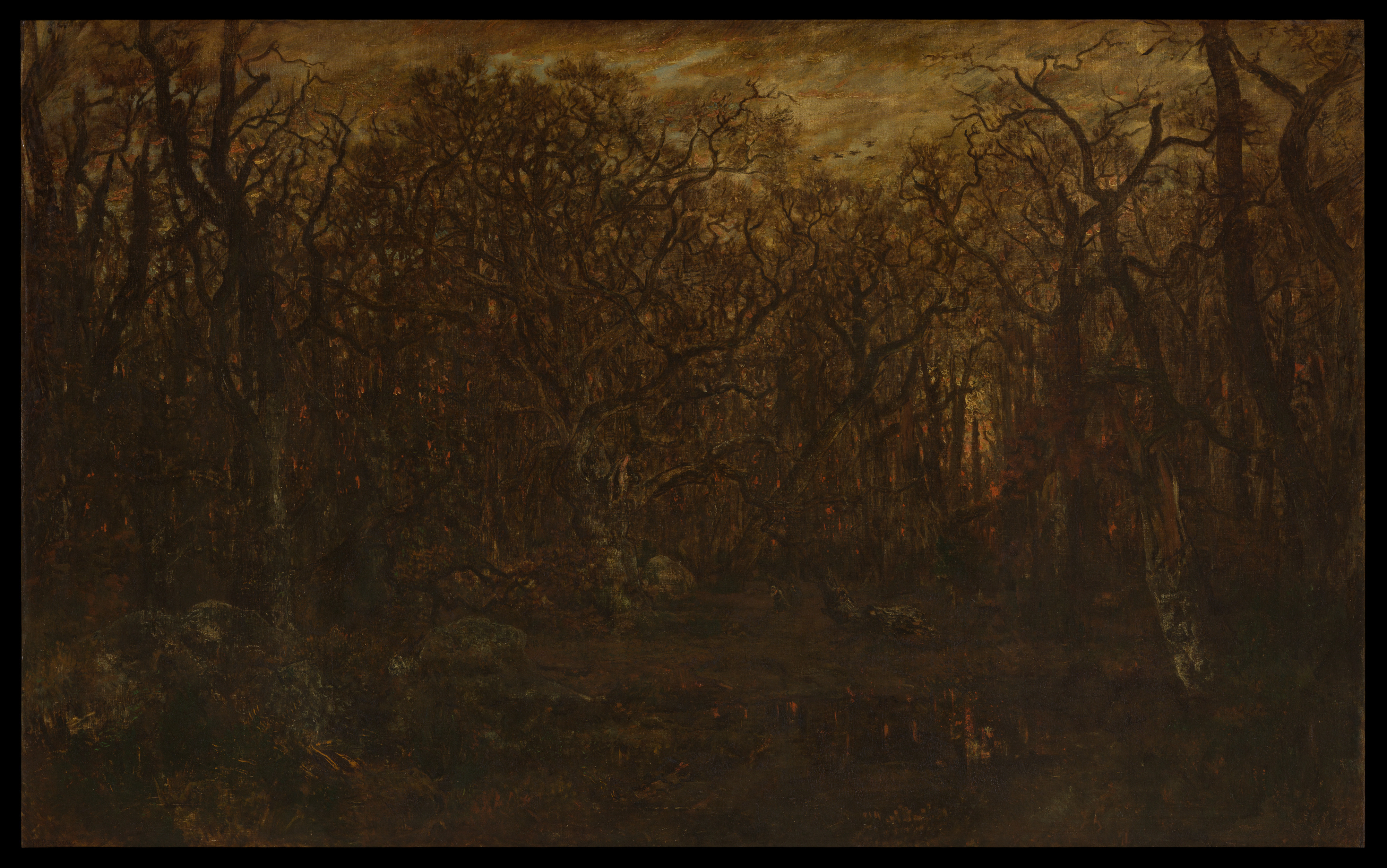
Vine Deloria Jr. recounts a burial in a Christian cemetery in Mission, South Dakota. The body lies in the earth, the mourners still gathered at the graveside, when an elderly woman steps forward and places an orange on the grave. The Episcopal priest who has just officiated rushes over and removes it: “When do you think the deceased will come to eat this orange?” A Sioux man standing there replies: When the soul comes to smell the flowers! No one adds a word. Two ideas of the dead had just crossed paths without understanding—one, that the departed had gone elsewhere and would not return; the other, that they still lingered close by, and a place could be made for them.
Deloria does not offer this scene as a quaint anecdote. It opens the chapter where he explains why, in many of America’s Indigenous nations, death does not wear the face of rupture. Not out of defiance or denial: because it unfolds within an understanding of life broader than the individual who dies.
English Human beings were an integral part of the natural world and in death they contributed their bodies to become the dust that nourished the plants and animals that had fed people during their lifetime. Because people saw the tribal community and the family as a continuing unity regardless of circumstance, death became simply another transitional event in a much longer scheme of life.
English Human beings were an integral part of the natural world, and in death they returned their bodies to become the dust that nourished the plants and animals that, in turn, had sustained them in life. Because people held the tribal community and family as a continuing unity, whatever the circumstances, death became simply one more passage in a far longer unfolding of life.
Two gestures are contained in these two sentences. The first: the body is not lost, it is returned. What had fed upon the earth gives back to it in turn—death enters the cycle instead of breaking it. The second, more subtle but decisive: if community and family are held as a continuing unity, then dying does not remove one from that whole; it merely shifts one’s place within it. The dead do not leave their own or the land of their own—they remain there, differently. This continuity, Deloria posits, is the ground of all the rest: serenity before death is not deduced from a doctrine of the soul but held from the solidity of the whole to which one belongs.
From this unity, he draws a concrete consequence. If the departed remain spiritually alive on the land, then surrendering that land is to abandon the dead. Deloria states it plainly: many nations refused to relinquish their soil because they knew their ancestors were still present there, and feared the newcomers would not honor them. Territory is not a commodity to be exchanged; it is the place where the lineage stands, the living and the dead intertwined. And since nothing truly leaves this whole, death ceases to be an abyss.
English We are not faced with formless and homeless spirits in this idea but with an ordered and purposeful creation in which death merely marks a passage from one form of experience to another.
English We are not dealing here with formless, homeless spirits, but with an ordered and meaningful creation where death marks only a passage from one form of experience to another.
This idea—that community, family, and land are held as a single fabric death does not tear—Deloria names with a sober word: a continuing unity. It extends his sacred geography one step further: space does not merely bear the stories that shaped a people, it also holds their dead. The soil is memory and dwelling.
What remains is the division the orange scene sketched in silence. The religion Deloria confronts locates the fate of the dead in time: a soul departs this world, at a given moment, for an elsewhere without soil—a heaven that can be promised anywhere because it is nowhere. His own locates it in the space of the living and the dead together: one does not go elsewhere, one remains, differently, where one has always been. The first asks when the soul will depart; the second knows where it returns—to smell the flowers, on the land of its own. And perhaps the question his words leave us with is not what becomes of the soul, but this: do we still belong to a whole vast enough for our death to be but a passage?*
Sources cited
- Vine Deloria Jr., God Is Red: A Native View of Religion, ed. Fulcrum Publishing, éd. du 30ᵉ anniversaire 2003 (1ʳᵉ éd. G. P. Putnam's Sons, 1973), trans. texte original anglais ; rendu français maison.