There Is No Power in a Square
Having grown old in a log house with right angles, Black Elk, Oglala Lakota medicine man, told John Neihardt why his people were dying: 'there can be no power in a square.' The sacred hoop against the box.
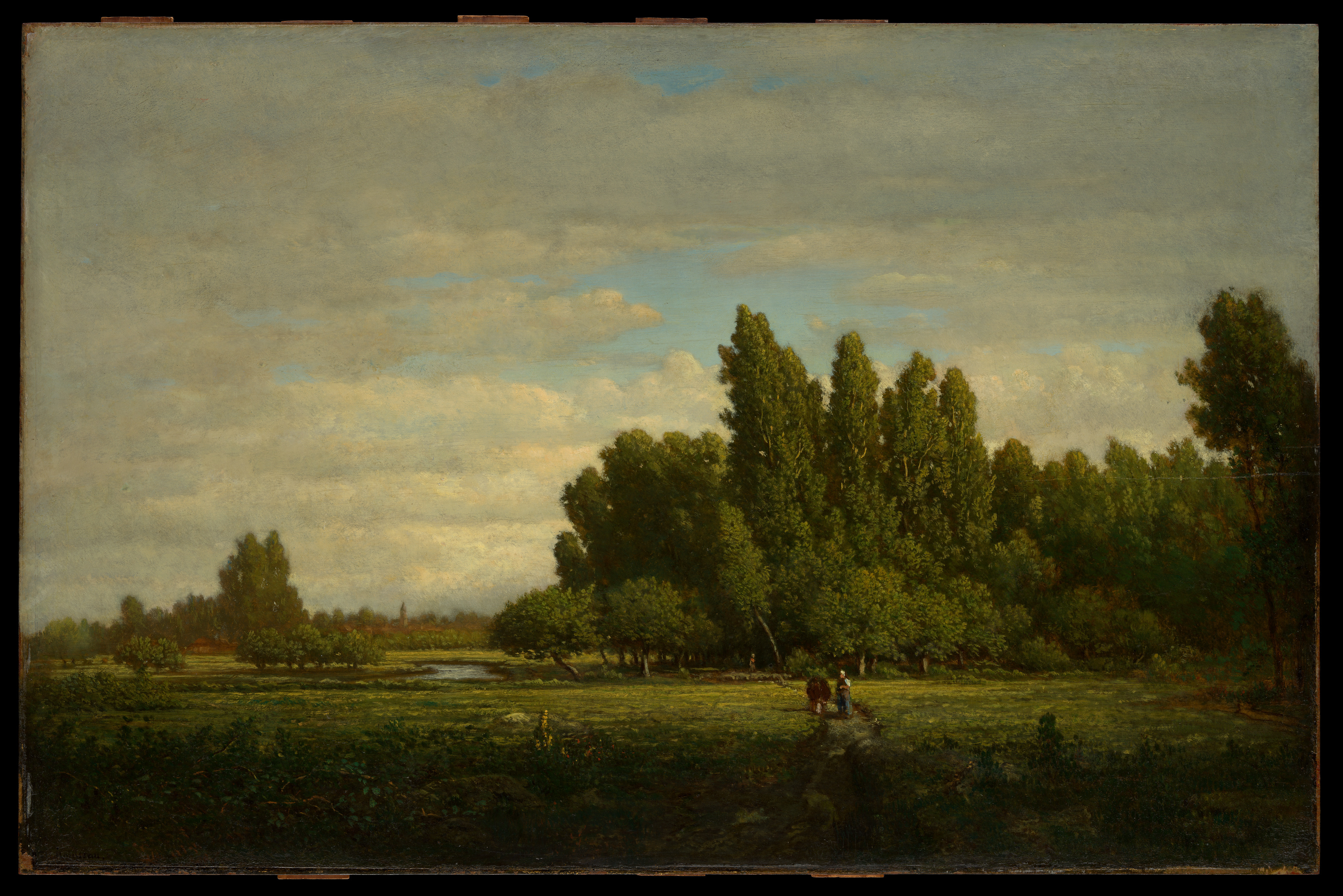
Between Wounded Knee Creek and Grass Creek, at the end of his life, Black Elk lived in a small gray house made of logs—and this house was square. He pointed it out to John Neihardt, who had come to record his story in 1931, as one might indicate a cause of death. The house was not merely ugly or sad: it was, he said, a wrong way to live. And he gave the reason in a single stroke, not as a metaphor to be explained but as a fact about how power moves through the world.
English It is a bad way to live, for there can be no power in a square. […] In the old days when we were a strong and happy people, all our power came to us from the sacred hoop of the nation, and so long as the hoop was unbroken, the people flourished. The flowering tree was the living center of the hoop, and the circle of the four quarters nourished it.
English It is a wrong way to live, for there can be no power in a square. […] Long ago, when we were a strong and happy people, all our power came from the sacred hoop of the nation, and as long as the hoop remained unbroken, the people flourished. The flowering tree was the living center of the hoop, and the circle of the four quarters nourished it.
The word he uses is hoop—the ring, the band. Not the geometer’s circle, a figure traced on emptiness, but an inhabited shape: the camp pitched in a ring, the tipis set like nests, and at the center, a tree. The sacred hoop is not the sum of the people who compose it; it is what holds them together. A community, in the sense we usually mean, remains an addition of individuals who can be counted, separated, moved one by one. The hoop, on the other hand, cannot be added up: it holds as a single whole or it breaks. As long as it remains intact, the people flourish; when it shatters, power departs—not because members have been lost, but because the shape itself has been lost.
This shape, he had seen as a child. At nine years old, ill, he received the great vision that would define his life: carried to the summit of the highest mountain, he beheld the hoop of the world in a single glance. What he understood there went beyond what he saw.
English And I saw that the sacred hoop of my people was one of many hoops that made one circle, wide as daylight and as starlight, and in the center grew one mighty flowering tree to shelter all the children of one mother and one father. And I saw that it was holy.
English And I saw that the sacred hoop of my people was one of many hoops that made a single hoop, as wide as daylight and as the starry night, and at the center grew a great flowering tree to shelter all the children of one mother and one father. And I saw that this was holy.
The hoop of his people was but one among many, and together they formed a single circle. This is a thought one would err in reading too quickly as fusion. The hoops do not dissolve into one another: each retains its outline, its center, its nation; and it is by remaining distinct that they compose the one circle. The vision does not say that peoples are all one; it says they hold within a single roundness without ceasing to be themselves. As for the center, Black Elk at once specified its place: he named Harney Peak, in the Black Hills, the mountain where he stood—then added, but anywhere is the center of the world. The center is not a capital towering over others; it is the place where one stands to see the whole. There is one wherever someone looks straight.
For the vision had a sequel, and it was not a happy one. The old man speaking to Neihardt had seen his people confined, the camp in a ring dismantled, the square houses lined up. The last image he left of himself was that of a man who had failed to preserve what had been shown to him.
English the nation’s hoop is broken and scattered. There is no center any longer, and the sacred tree is dead.
English the nation’s hoop is broken and scattered. There is no longer a center, and the sacred tree is dead.
Broken and scattered: the two words say the same thing. When the circle shatters, its parts do not rearrange themselves—they scatter, because they held together only through it. And then “there is no longer a center”: not that the center has moved elsewhere, but that there is no longer a shape for a center to exist within. This is precisely what the square house says. The box, for its part, has no need of a center: its angles stand alone, its rooms are partitioned, its things are ordered side by side without owing one another anything. The sacred hoop and the square are not two interchangeable settings for the same life; they are two opposing ways of holding a world together—one through the relation of an intact whole to its living center, the other through the clean separation of parts. Black Elk does not say the round is more beautiful than the angle. He says there is no power in a square, and he says it from inside one of them.
Sources cited
- Black Elk, Black Elk Speaks, ed. University of Nebraska Press, éd. annotée 2014 (1ʳᵉ éd. William Morrow, 1932), trans. paroles de Black Elk mises en mots par John G. Neihardt ; rendu français maison.