There Is No Elsewhere
Seneca deems travel futile—what must change is the soul, not the sky. Attâr sends birds through seven valleys only to dissolve the seeker. Two paths, no distance.
Leaving the place where one suffocates: the idea carries the simplicity of an obvious truth. Changing cities, seas, skies; putting the breadth of a continent between oneself and one’s torment. One sets sail light, certain that the weight will remain on the other shore. It boards with us.
Seneca answers a friend surprised that a long journey and varied lands have not dispelled his sadness. His reply fits into a single sentence that overturns the entire project:
What must change is the soul, not the climate.
Movement brings no relief because the weight is not in the place. “You run to and fro to shake off the burden that weighs on you; and this very agitation makes it more unbearable.” What one carries to every shore is oneself—and with oneself, the restlessness one claimed to leave at the harbor. The cure is not in the crossing: it lies in the very place where one stands, in the soul that must be set right. To the one who exhausts himself seeking peace from coast to coast, Seneca opposes a geography without privilege: “you pass from one place to another when the object so ardently sought by you, happiness, is placed everywhere.”
Why does travel not heal, according to Seneca?
Because the evil one flees travels in the luggage. Seneca holds that changing countries does not change the soul that inhabits them: one carries one’s restlessness intact from shore to shore. The remedy is not an elsewhere but an inner conversion—straightening judgment, right there, without moving.
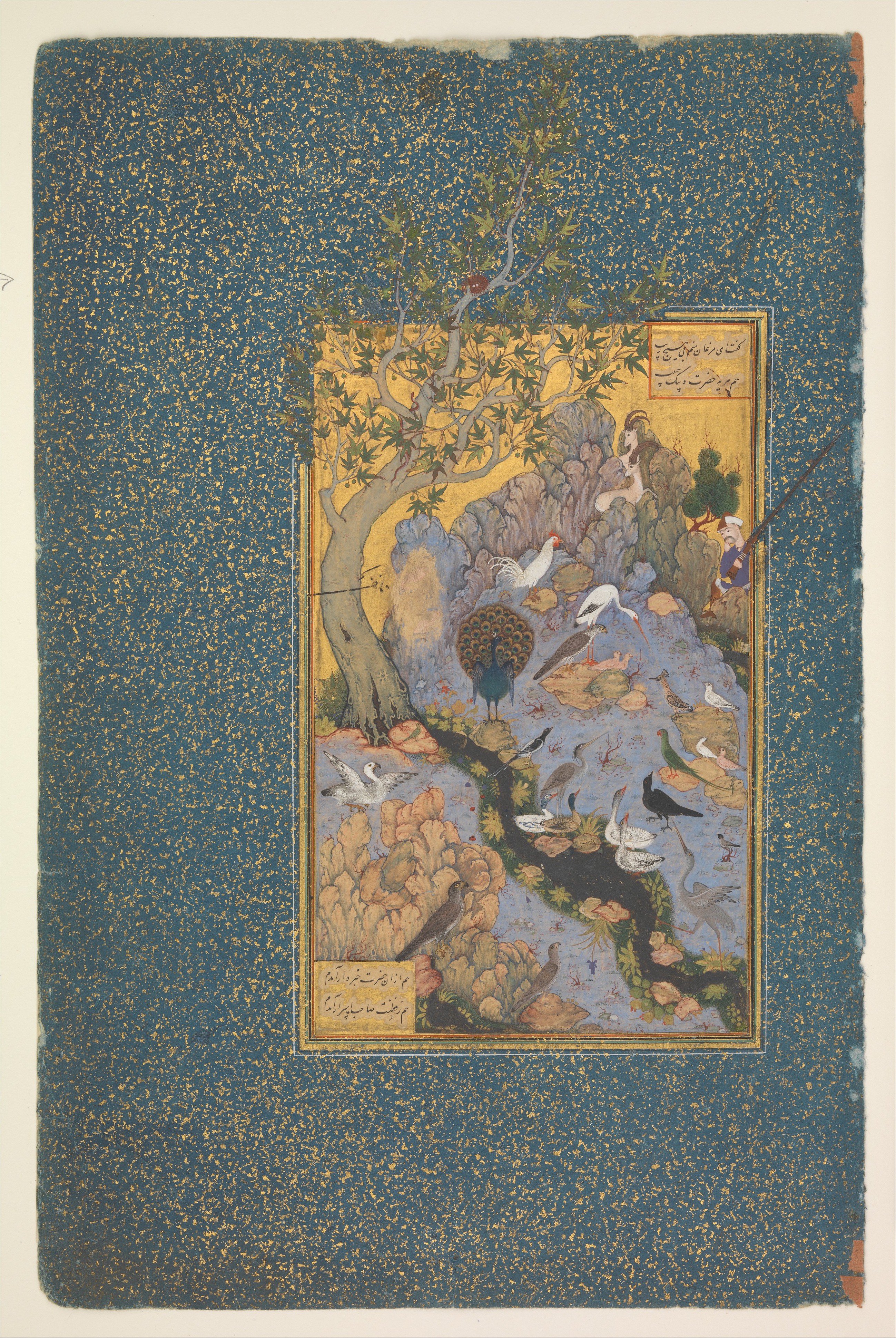
Four centuries later, at the other end of the world of thought, a poet from Nishapur seems to say the exact opposite. The birds of the earth, in Attâr’s tale, have no right to remain. The hoopoe summons them to set out toward their king, the Simurgh, beyond seven dreadful valleys—the quest, love, knowledge, detachment, unity, bewilderment, and at the end, annihilation. Where Seneca restrains, Attâr launches. The path is not a distraction to avoid: it is the trial without which nothing is discovered.
And yet the hoopoe, before any departure, slips in a clue that undermines the distance it commands to cross. It tells of a king so beautiful one would die of his sight, who had a mirror set up so one could bear his face—then applies the image to the seeker:
The Simurgh is not distinct from his shadow… If you discover, on the contrary, that the shadow is lost in the sun, then you will see that you yourself are the sun.
“Make of your soul a mirror to behold the radiance of your friend,” the hoopoe adds. Attâr’s journey is immense, yet it is, word for word, a return: one crosses the world only to discover that the sought was never at the road’s end, but in the heart that set out. What fades along the way is the traveler himself—the self that took itself for a center. The seventh valley bears a name, fanâ, annihilation: one does not reach the Simurgh, one ceases to be separate from him, for no one remains to keep the distance.
Let us not confuse the two gestures. Seneca preserves the self and strips it of its elsewhere: the soul remains, to be set right in place, steadfast as a citadel that needs no exit from its walls to be at peace. Attâr, on the other hand, undoes the self: the crossing does not fortify the seeker, it dissolves him in the light. One says do not go, you follow yourself everywhere; the other says go, and lose yourself. On travel, their advice is opposite; on the fate of the self, they stand in direct opposition—strengthen, or extinguish.
Yet once the distinction is held, what they touch together remains. Neither places the goal in a place. For Seneca, happiness is placed everywhere: no shore holds its key, thus none is to be reached. For Attâr, the Simurgh was never at the road’s end but in the heart’s mirror: distance was the illusion, never the obstacle. The traveler who arrives discovers—or becomes—what he had on board at the moment of casting off. One may hold both movements at once, strengthen and extinguish, without merging them: they meet where the very idea of an elsewhere falls away. The road was real; the distance, never.
What one goes so far to seek has made the entire crossing on board.
Sources cited
- Farîd al-Dîn ʿAttâr, Le Langage des oiseaux (Mantic Uttaïr), ed. Imprimerie impériale, 1863, trans. Joseph Héliodore Garcin de Tassy.
- Sénèque, Lettres à Lucilius (Lettre XXVIII), ed. Wikisource (trad. Joseph Baillard, 1860), trans. Joseph Baillard.