The Land That Teaches
For Leanne Betasamosake Simpson, Michi Saagiig Nishnaabeg writer, intelligence is not hoarded: it is generated through doing, in contact with Aki, the land. There is no degree in Nishnaabewin.
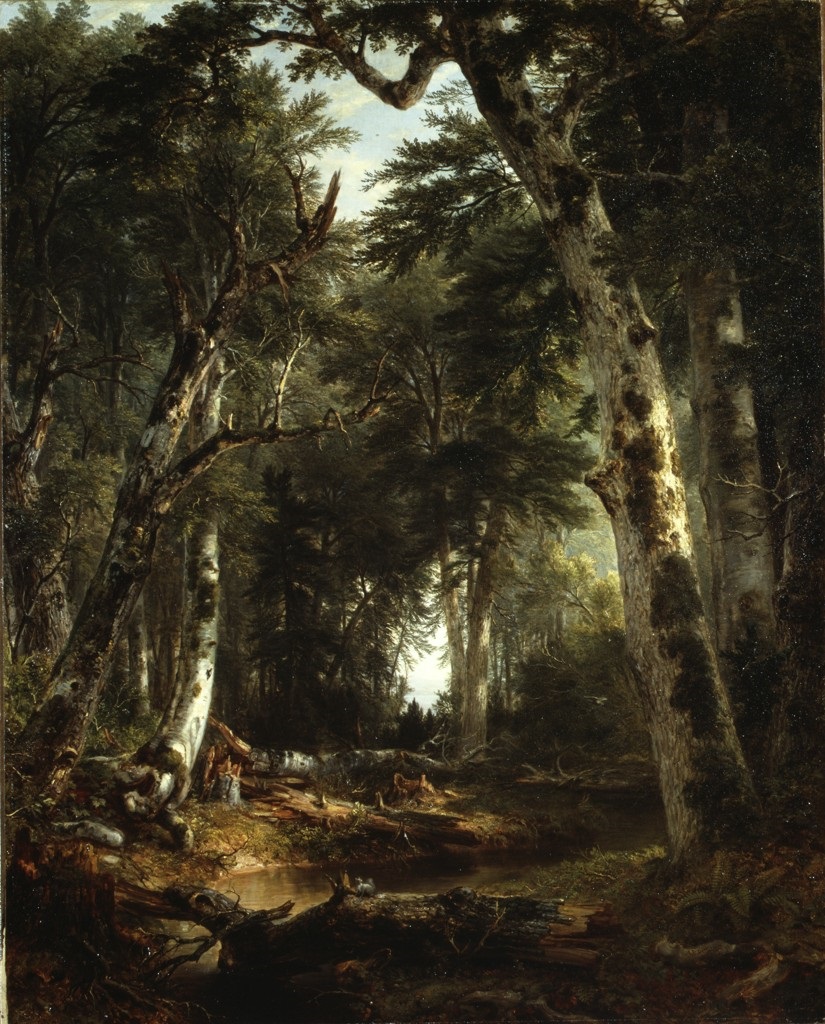
In the sugarbush, at winter’s end, a child lies at the foot of the maples. The snow melts, the lake thaws, the first warm sun touches her cheeks. Above, on a branch, a squirrel busies itself—not storing food, not building its nest: it nibbles the bark, then laps up what seeps through. Nibble, lap. Nibble, lap. The child, curious, mimics it on a low branch and tastes sweet water. That is how, in the story Leanne Betasamosake Simpson retells, her people came to maple sugar: not in a classroom, not through a lesson, but in the woods, beside a small animal who already knew.
For Simpson, Michi Saagiig Nishnaabeg writer, this scene is no charming anecdote. It is a thesis on what it means to know.
English the context is the curriculum, and land, Aki, is the context.
English le contexte est le programme, et la terre, Aki, est le contexte.
Reversing the usual order has consequences. If the land is the curriculum, there can be no standard curriculum: one cannot draw up in advance a list of what each person must know, because the land, Aki, is both the context and the process—it poses the questions and is the place where answers are found. The child did not receive “maple sugar” as information; she was placed in a world—the maples, the squirrel, the season, hunger—that led her to discover it. Knowledge was not transmitted: it was generated.
And it is generated through action, not thought alone. Simpson takes the idea to its limit: doing produces more knowledge; mistakes produce knowledge, failure produces knowledge; and—this cuts deep—the only thing that produces no knowledge is thought in and of itself, because it is a construct born of dislocation, isolation, without movement. Thinking apart from the world, motionless, creates nothing: at best, a piece of data severed from what would give it substance.
This is where the word that holds the whole structure comes from. The sum of these practices, this knowledge, and this ethics—language, fishing, wild rice, ceremony, governance—Simpson calls Nishnaabewin: all of the associated practices, knowledge, and ethics that make us Nishnaabeg and construct the Nishnaabeg world. It is not a body of doctrine one possesses, but a continuous generation, remade by living it.
English You can’t graduate from Nishnaabewin; it is a gift to be practiced and reproduced.
English On n’obtient pas de diplôme de Nishnaabewin ; c’est un don qui se pratique et se reconduit.
What Is Nishnaabewin?
Nishnaabewin is a word in Nishnaabemowin that Leanne Betasamosake Simpson translates as “all of this”: the entirety of practices, knowledge, and ethics that make the Nishnaabeg and build their world. Not a corpus to memorize, but an intelligence generated by living it, in contact with the land. There is no degree in it; it is renewed by practice.
Let us place our own idea of education alongside it—not to condemn it, but to measure the distance. For us, to know is first to receive content: a predetermined curriculum, the same for all, transmitted by a teacher and eventually mastered; school is an institution one graduates from, equipped with portable knowledge to take anywhere. Seated thought, withdrawn from the world, is taken as the very seat of theory. Education grows from the roots upward; it comes from being enveloped by the earth, Simpson answers: there is no Indigenous education unless it passes through the land. The content of maple sugar can be copied—boil the sap, make syrup; what is lost in the copy is the world of relations where a child learns it. A recipe can be exported; a sugarbush, a season, a squirrel, a family cannot.
Here lies the divide, and it must be kept clear. On one side, knowledge-as-thing, accumulated in a mind and poured from one mind to another; on the other, an intelligence that exists only in action, in a place, among living beings. One can be stored and carried; the other stands outside, and unravels the moment we stop doing it.
One question remains, left open by the sugarbush, unanswered for us. When we want to know something, where do we go to find it: to a mind at rest, thinking apart from the world—or outside, beneath the maple, beside the squirrel who already knew?
Sources cited
- Leanne Betasamosake Simpson, As We Have Always Done: Indigenous Freedom through Radical Resistance, ed. University of Minnesota Press, 2017, trans. texte original anglais ; rendu français maison.