A Gaze, Not a Grasp
For Simone Weil, true attention is not the will that seizes, but the gaze that makes itself available. The Bhagavad-Gītā, though it commands action, unclenches the same hand.
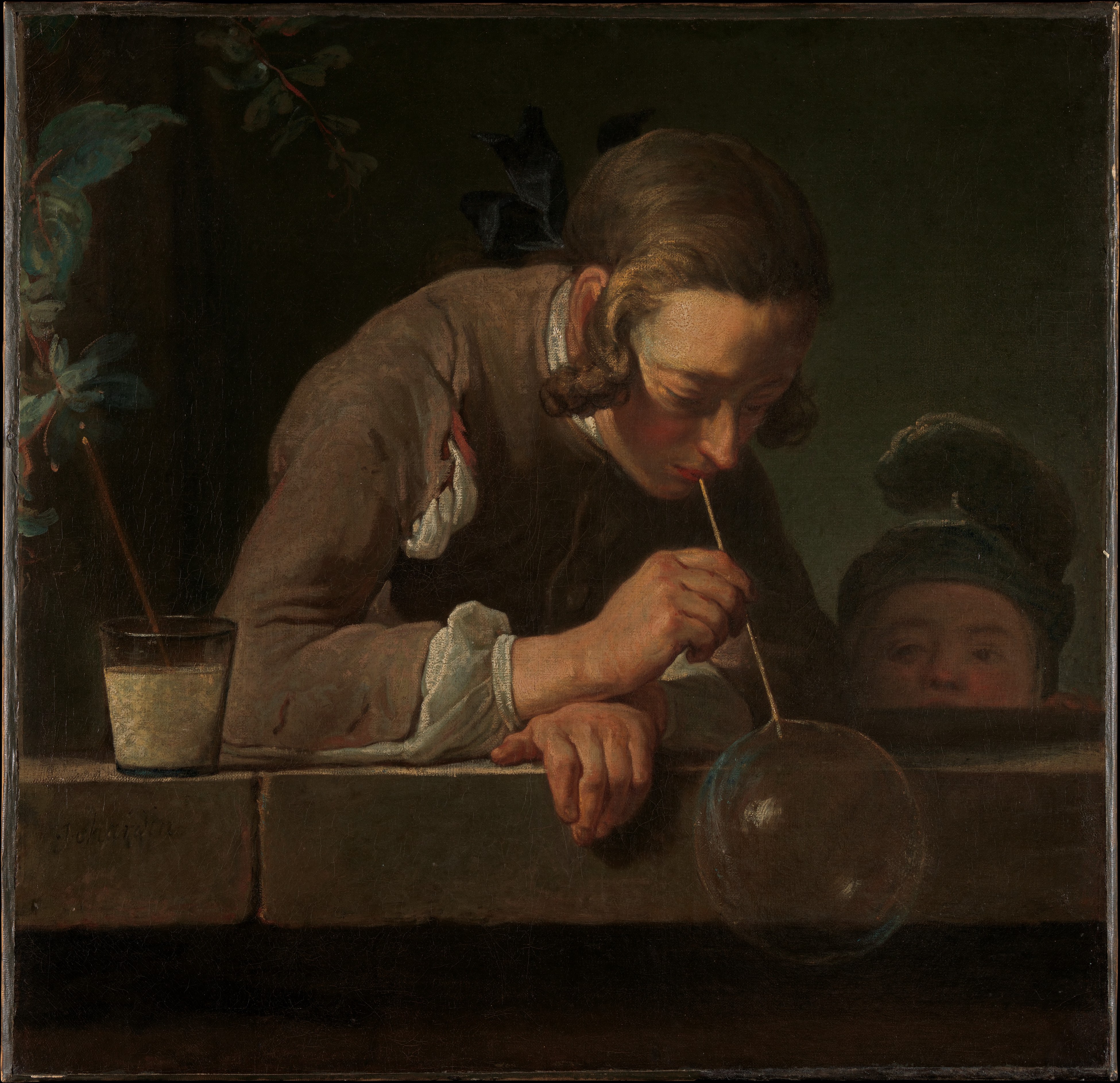
 The hand that closes too quickly on what it covets only makes it slip away. You squeeze, and the object eludes you. This holds true for a bubble that bursts at the slightest excess of breath, for sleep that flees when pursued, for a truth that resists when wrested. Some things cannot be taken. They yield only to an open hand, to a gaze that does not snatch its object.
Simone Weil takes the most ordinary word—attention—and turns it against what it is usually reduced to: effort, tension, the will straining toward its target. In the notebooks Gustave Thibon compiled after her death under the title Gravity and Grace, true attention is the very opposite of a grasp.
Attention, absolutely pure, is prayer.
To measure the leap, consider what she rejects. The will, she says, “has purchase only over a few movements of a few muscles”: I can will my hand to lie flat on the table, but I cannot will purity, the truth of a thought, or love. Clenching one’s jaw “over virtue, or poetry, or the solution to a problem” produces only sterile rigidity. True attention is negative: it suspends thought, holds it available, vacant, and imposes nothing on the object. One does not assault reality; one lets it come. Faced with an image one does not understand, her method is distilled into a few words: “look at them until the light breaks forth.” And the eagerness to find spoils everything: “By tugging at the cluster, one scatters the grapes to the ground.”
What is attention, for Simone Weil?
It is not a concentration that clenches upon an object, but its opposite: the suspension of thought, which makes itself available, empty, ready to receive. One does not seek; one waits. One does not seize; one welcomes. Pushed to its extreme, without admixture of greed or purpose, this pure availability coincides with prayer.
The gesture finds its exact counterpart in a text that does not call for the suspension of action—it commands it. On the battlefield, Arjuna lets his bow fall: he no longer wishes to fight. Krishna does not counsel withdrawal; he orders him to act. And the verse that knots the entire doctrine also employs the word attentive.
Be attentive to the performance of works, never to their fruits; do not act for the fruit it yields, but do not seek to avoid action.
First, keep them at a distance—without which the approach is worthless. Weil withdraws from doing: her attention is passive, the “I” fades within it, one waits for the light to come. The Gītā, by contrast, keeps the hand at work—“do not seek to avoid action”—and even urges it into battle. One ascends through the withdrawal from action, the other through its full exercise. Where Weil removes the hand from the task to do nothing but watch, Krishna leaves it at the task and removes only the other grasp: the one already reaching for the result. Receptivity versus engagement—these two gestures cannot be merged into one.
And yet they untie the same knot. What both paths cut away is the grip on the outcome—the hand that would possess the fruit, the gaze that snatches to have. Weil puts it in a single phrase: “The condition is that attention be a gaze and not an attachment.” The Gītā says it in three words—“never to their fruits”—and names this inner gesture what the tradition will call action without desire for the fruit, niṣkāma-karma. In both cases, attention ceases to be a grasp on what it seeks to obtain. The “I” that demanded its reward unravels: in Weil, it “disappears” into full attention; in the Gītā, it acts without claiming the result. Two inverse hands—one that withdraws, the other that remains at work—and the same open palm.
The image from the beginning remains. The bubble holds only to a precisely measured breath, and only so long as the hand does not close: too much eagerness bursts it, too much absence lets it fall. Between the two, a gaze that accompanies without seizing. Perhaps it is there, in that narrow interval where one ceases to want to take, that something at last gives itself.
Sources cited
- Simone Weil, La Pesanteur et la Grâce, ed. Librairie Plon, 1948 (recueil établi par Gustave Thibon).
- Anonyme (Mahābhārata), La Bhagavad-Gîtâ, ou le Chant du Bienheureux, ed. Wikisource (Librairie de l'Institut, 1861), trans. Émile-Louis Burnouf.