The Wild Fruit and the Unhewn Wood
Montaigne turns the word 'barbarian' back on the one who speaks it; Laozi returns to the block before it was carved. Two forms of distrust toward the gaze that takes the worked for the measure.
 A verdict often falls before the eye has even looked. “Barbarian,” “savage”—the word is spoken, and judgment is already passed. When King Pyrrhus first sees the Roman army in Italy, described to him as barbarian, he halts in his tracks: “I do not know,” he says, “what these Barbarians are […] but the dispositions I see before me are anything but.” The word had promised foreign disorder; the reality, standing before him, belied it. Montaigne draws from this a stark rule: “it is our reason, not what is said, that must determine our judgment.”
The entire essay “Of Cannibals” works this gap between received word and seen thing. Montaigne lived for years alongside a man returned from the New World; he listens as this man describes a people, and finds nothing to condemn—save the bias of his own gaze.
I find nothing barbarous or savage in what I am told of this nation, except that each man calls barbarous whatever is not his own practice.
The “barbarian,” then, is not a quality of the other: it is the distance between the other and my custom. We take the ways of our own country as the measure of truth and reason, and name as defect all that departs from them. Montaigne does not correct the verdict with another—he dismantles the instrument itself. The image he chooses reverses in a single stroke the ordinary relation between the natural and the altered:
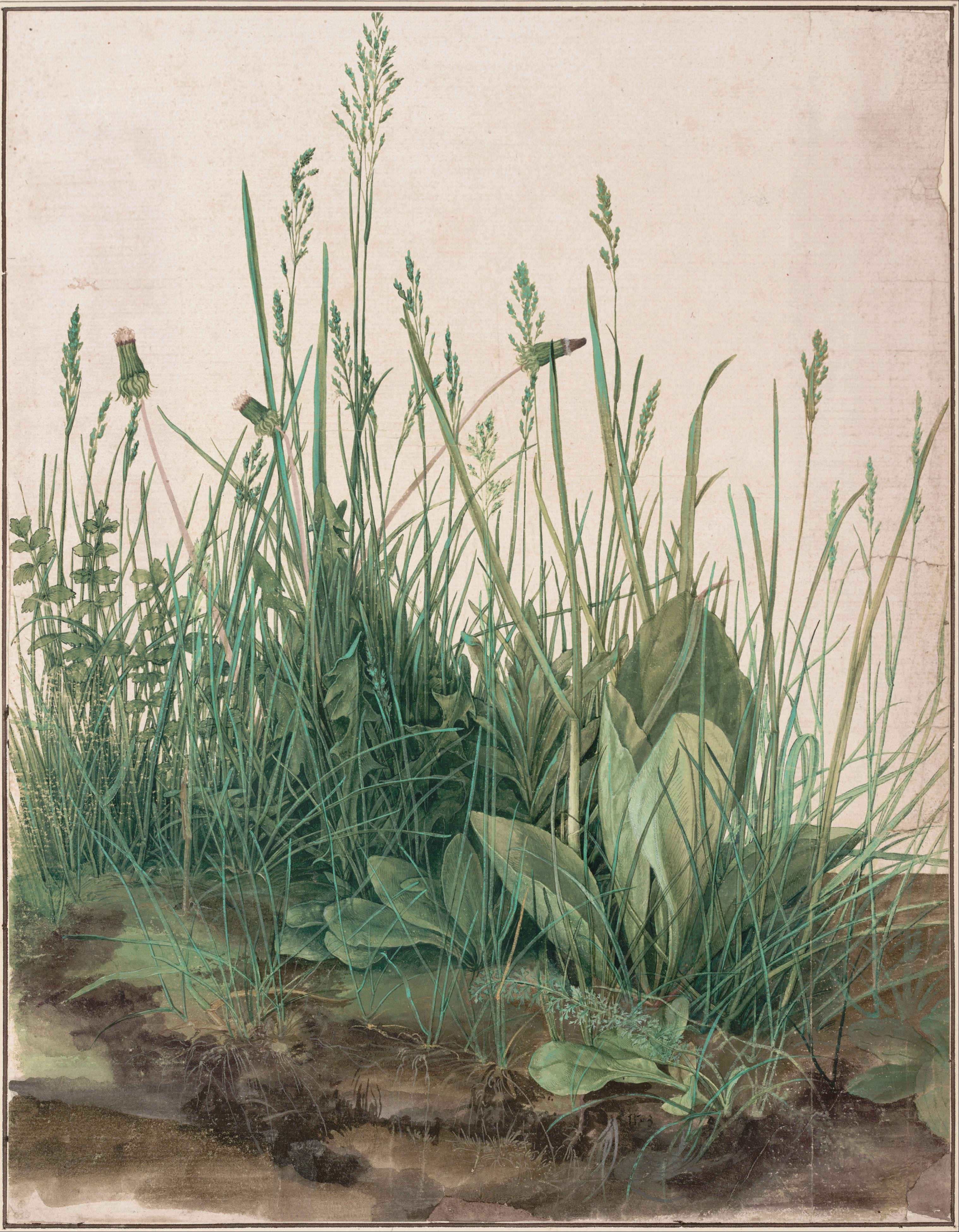
These people are wild in the same way that fruits we call wild are—fruits nature produces of herself, without human intervention. Are they not rather the ones we alter through cultivation, bending their natural growth to our corrupted taste, to whom the term should apply?
“Wild,” in the orchard, names the fruit no hand has grafted: not the flawed, but the whole. Its qualities, Montaigne writes, are “lively, vigorous, true”; we only “debase” them to suit “our own corrupted taste.” Here, work does not add—it subtracts. And the pride of art collapses before a bird’s nest no hand can replicate—“for there is no reason why art should surpass the works of nature, our great and powerful mother.”
What does Montaigne call “barbarian”?
What has received little of our hand and lost none of its original integrity. These peoples, he writes, seem “barbarous” only “for having been but slightly modified by human interference.” The word, thought to describe a defect in the other, in fact reveals a closeness we ourselves have unlearned. The reversal is complete when Montaigne finally turns the same measure against his own world:
We may then call these people barbarians by the standard of reason, but not when compared to ourselves, who surpass them in every kind of barbarism.
The edge of the sentence is not to crown the other and condemn one’s own—that would be the same crude gaze, merely inverted. It is subtler: it strips custom of its claim to be reason. The judging eye learns it is itself subject to judgment. This is the entire gesture of the Périgordian skeptic—what do I know?—which suspends not to see nothing, but to stop confusing what lies at hand with the nature of things.
Far from there, in a language that knows neither New World nor cannibals, another text works the same distrust of the worked—but through a different door. Laozi does not reverse any gaze upon others. He does not compare two peoples; he returns to what lies before shaping. Where Montaigne humbles the eye that names, the Tao Te Ching undoes the hand that carves.
Chinese
English Abandon wisdom, discard prudence, and the people will be a hundred times happier. […] Abandon skill, discard profit, and thieves and robbers will disappear. […] Let them strive to show their simplicity, preserve their purity, have few private interests and few desires.
The “simplicity” and “purity” of the closing lines translate a single character, the word that carries the entire chapter.
The pu is the inverse image of the tool. As long as the block remains uncut, it can become anything; to carve it is to fix it as one object and lose all others. The wisdom, skill, and profit Laozi urges us to set aside are so many cuts: each specializes, thus subtracts. To return to the unhewn wood is not to impoverish oneself—it is to ascend toward the whole state, before fabrication.
The two paths do not resemble each other. Montaigne begins with the other—the “savage” people whose sight makes his own custom suspect; his gesture is critical, turned outward, and ends in suspension: he does not preach a return to the woods, he only removes from received custom its badge of measure. Laozi looks at no one from afar; his gesture is ontological, turned toward the source: the unworked precedes the worked as the block precedes the vase, and one returns to it. One doubts a judgment, the other unravels a shaping.
Yet both refuse the same thing: that the worked, the cultivated, the refined should be the measure of the good. For Montaigne, the grafted fruit is a fruit “corrupted” to our corrupted taste; for Laozi, the carved vase is a diminution of the whole wood. In both cases, what presents itself as a gain—culture, skill, the polish of manners—may be only a subtraction unaware of itself, and the untouched natural, a plenitude mistaken for a defect. The wild fruit and the unhewn wood name the same thing under two skies: not the rough that lacks form, but the whole before it was cut to our use. Not the same door—humbling the eye, undoing the hand—but the same room.
There remains the question neither doubt nor unhewn wood settles for us: when I call something coarse, savage, barbarian, is it the thing I describe—or the distance that separates it from a work I have, without knowing, taken for nature itself?
Sources cited
- Michel de Montaigne, Essais, ed. Édition Michaud, 1907 (Wikisource, orthographe modernisée).
- Lao-Tseu, Tao Te King, ed. Imprimerie royale, 1842 (Wikisource), trans. Stanislas Julien.