What Is Woven Together
Edgar Morin proposes to reconnect what knowledge has torn apart; Marcus Aurelius invites us to contemplate an interlacing already sacred. To mend, or to remember—two gestures toward the same fabric.
 A clock taken apart can be reassembled: gear by gear, nothing is lost in the disassembly. A bird dissected cannot be sewn back together—what made the bird was never in any of its parts. Between these two disassemblies lies a boundary knowledge often crosses without seeing: there is what can be understood in pieces, and there is what dies of being detached. For the latter, thought lacked a word. Edgar Morin reintroduced one, borrowed from sociology: reliance.
The reform of knowledge calls for a reform of thought. The reform of thought calls for a thought of reliance capable of connecting knowledge to itself, parts to the whole, the whole to its parts, and of conceiving the relationship between the global and the local, the local and the global.
What does Edgar Morin mean by reliance?
The word names its own gesture: re-link. Not to accumulate more knowledge, but to reunite what the very act of knowing has separated—the discipline cut off from its neighbors, the fact severed from its context, the part severed from the whole that gives it meaning. Morin calls disjunction this fold in knowledge that isolates to better master: each fragment gains in precision what the whole loses in life. Reliance is neither a mood nor the nostalgia for a lost totality; it is labor, in the way one speaks of the labor of a needle. And it has a reverse side he rejects with equal clarity: fusion. One only connects what remains two—confusing is not connecting, it is losing both threads in one.
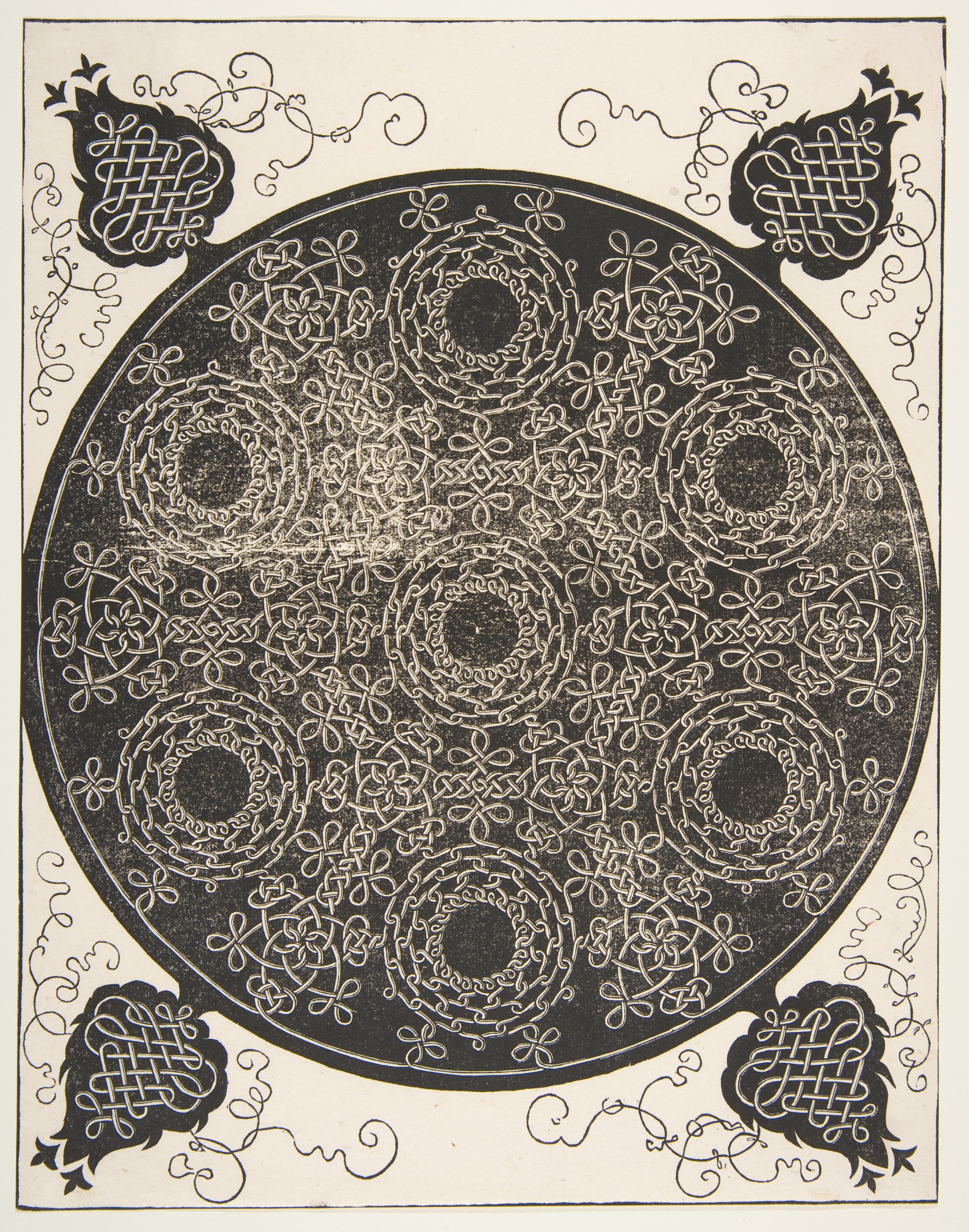
Behind this labor stands the master word of his entire work. “Society is a complexus in the Latin sense of the word complexus, meaning ‘what is woven together,’” he writes in the same book. The reality reliance aims at is not a stack to be inventoried: it is a fabric. Whoever thinks it thread by thread has yet to see the fabric.
Eighteen centuries earlier, a man writes in Greek, for himself alone, at night, in a camp on the Danube. He has no fabric to mend: he finds it already sewn.
All things are intertwined; their mutual bond is sacred, and nothing, so to speak, is isolated from relation to some other thing. They are all coordinated, and together they contribute to the order of the same world.
Under his pen, interlacing is not a program: it is a fact, and a sacred fact. The world is one; nothing drifts unattached. Thus, the exercise he sets for himself is not to repair this fabric, but not to lose sight of it: “Apply yourself often to reflect on the close interconnection of all things in this world and their correlation” (VI.38). He even dares this unexpected word: things “share a kind of intimacy.” Stoic meditation here is a reminder—a gaze renewed each day, just as he practices inner retreat: not to flee the world, but to see it whole again.
The two gestures do not merge. For Marcus Aurelius, the bond is primary and assured: the same passage continues—God is one, substance is one, law is one. Nothing can unravel this weave; only our attention can miss it. Separation is never a wound in the world, only a lapse of sight. Hence a gesture of memory: to remember, to contemplate, to consent. For Morin, no providence holds the fabric. Disjunction is not an optical illusion: it is a real state of knowledge, produced by our way of knowing—and since it was by thinking that we undid the fabric, it is for thought to reweave it. Hence a workshop gesture: to reform, to resew, without guarantee the work will hold, and without it ever being finished. One contemplates a fabric nothing has torn; the other mends a tear our own hand made.
Yet at the summit, both gazes see the same thing—and this summit is precise. For the emperor as for the sociologist, the isolated thing does not exist: “nothing, so to speak, is isolated,” writes one; nothing is understood in detached pieces, answers the other. What each proposes, by paths that do not meet along the way—the reminder of a given order, the reform of a broken knowledge—is the same realization: a gaze for which isolation is not a state of the world but an artifact, of inattention in one, of method in the other. The summits retain their difference: Marcus Aurelius’s unity is cosmic and assured, Morin’s remains a fragile task in our hands. But whoever looks from either slope sees the same landscape: no islands, threads everywhere.
What remains is an experiment within anyone’s reach, requiring neither system nor doctrine: take something you hold as separate—a piece of knowledge, a being, a suffering you believe local—and seek its threads. Not: to what should this be connected? But: what interlacing have I ceased to follow?
Sources cited
- Edgar Morin, La Voie. Pour l’avenir de l’humanité, ed. Fayard, 2011.
- Marc Aurèle, Pensées pour moi-même, ed. Germer-Baillière, 1876 (trad. Barthélemy-Saint-Hilaire), trans. Jules Barthélemy-Saint-Hilaire.