Ovoo
Among the Tuvans of the Altai, as told by Galsan Tschinag, one dismounts before a pile of stones to greet the master of a place—a gesture a hurried world has sought to erase.
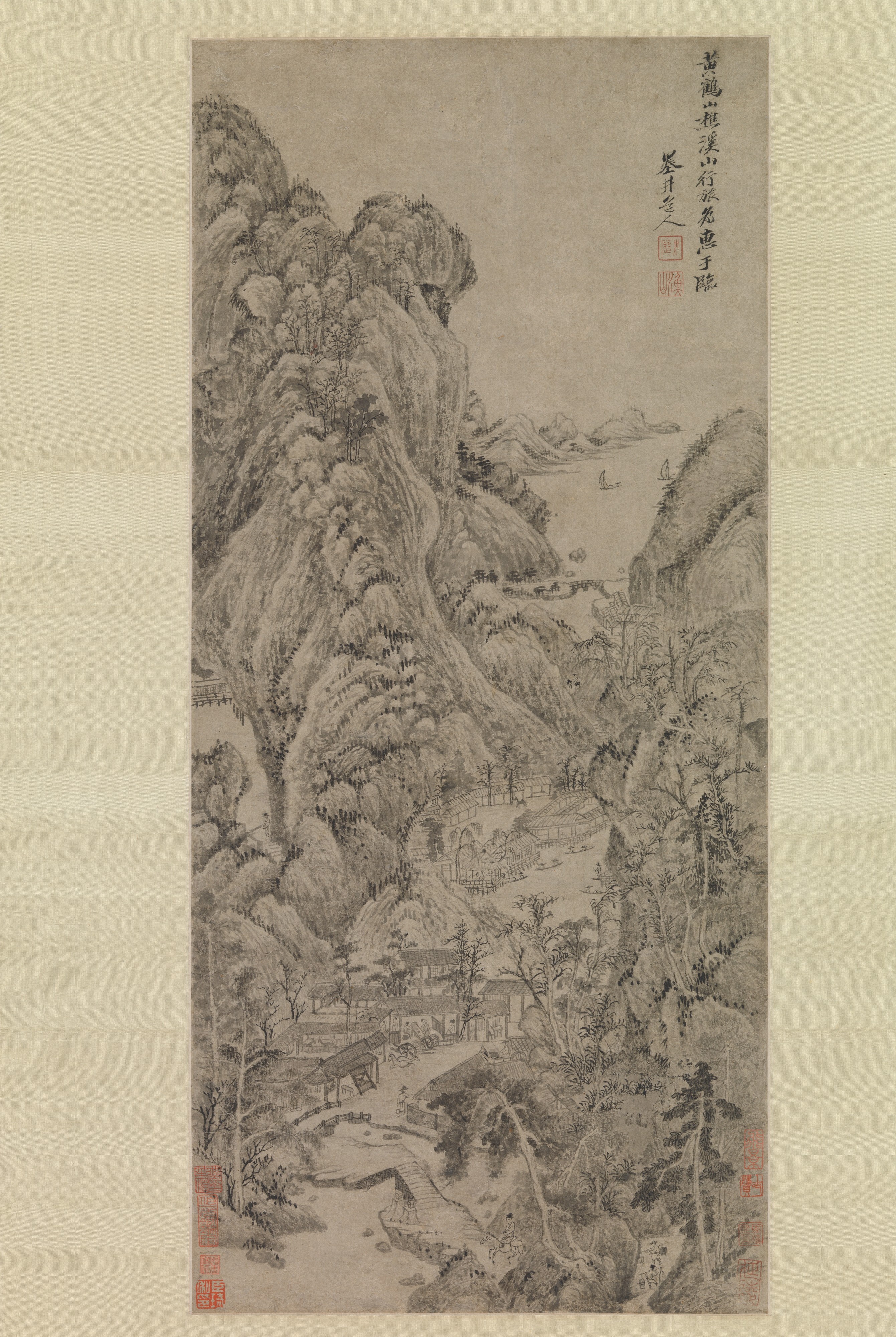
At the crest of a pass in the High Altai, where the trail tips from one slope to the other, the Tuvan rider dismounts. He adds a stone to a pile that already holds thousands, ties a ribbon to a branch planted at its peak, and circles it sunwise. The pile is called an ovoo. It is the world of childhood that Galsan Tschinag, once a shepherd and now a writer, recounts from within in the second volume of his trilogy. At the threshold of his book, a glossary offers its most austere definition.
English (translated from German) cairn of sacred stones, erected for the spirits of the respective location and used for offerings and other religious ceremonies
English sacred stone cairn, erected for the spirits of the place and used for offerings and other religious ceremonies
The word is no tourist marker. An ovoo does not point to a scenic overlook: it signals that a place has a master. The pass, the spring, the treacherous crossing are inhabited by a presence to whom one owes, in passing, a greeting and a gift. Hence the elemental gesture Tschinag ascribes to his ancestors—a gesture measured in reverse by the conversion of an old man, won over by the spirit of the age: Mijtik, the grandfather, now swears off all superstition, never again dismounting at an ovoo or making offerings elsewhere—never again setting foot on the ground before an ovoo or leaving a gift anywhere. What he renounces reveals what the gesture once did: acknowledge, with one’s body, that one does not cross a place as one crosses empty space.
What one offers at an ovoo is never trivial. Tschinag notes that the ribbons tied there can be of any length and width and of any color except black—any length, any width, any color but black, reserved for mourning. A grammar of deference, where even the hue of a scrap of cloth carries meaning. And which, by symmetry, makes desecration conceivable: in the same book, a schoolgirl hardened by the boarding school declares she would no longer hesitate to crap on an ovoo—to defile an ovoo, burn a shaman’s cloak, smash his drum. One can only offend what one takes to be someone. Contempt, here, is the inverted proof that the ovoo faced a presence, not a stone.
For the world of the ovoo holds the earth to be a body. When schoolchildren, picks in hand, set upon a riverbank to dig a ditch, the narrator does not describe a construction site but a wound.
English (translated from German) we are full of bluster as we launch our attack on the Mother Earth’s body. We pry it open, drive our steel tools inside, poke around, and begin to dig a ditch.
English Full of bravado, we launch our assault on the body of Mother Earth. We force it open, drive our steel tools inside, rummage within, and begin to dig a ditch.
Then comes an earthquake. The narrator hears it as the wrath of Mother Earth, wounded, and his brother will be held accountable—not for digging, but for having received word from the spirits that the earth would tremble and keeping silent: that someone stayed silent instead of passing on the message from the spirits—that is cause for blood. In this way of thinking, the cardinal sin is not to touch the earth, but to feel its pain and remain mute.
Here, one must draw a line before drawing parallels. We, too, build cairns—at the top of a pass, to mark a crossing, signal a view, guide a path. But our cairn faces a landscape: a spectacle spread before the eye, a surface to admire, to photograph, inhabited by nothing. The ovoo faces a subject. It is not raised to see, but to be seen; one does not add another stone, but pays respects to someone who can receive them—or take offense. Where our landscape is an exterior without anyone, the Tuvan pass is full of a gaze. Only once this difference is established does the slender common ground emerge: in both cases, a place can cease to be mere location. The question remains, when one dismounts, before what one halts—a viewpoint, or someone.
Sources cited
- Galsan Tschinag, The Gray Earth (Die graue Erde), ed. Milkweed Editions, 2010 (orig. allemand, Insel Verlag, 1999), trans. Katharina Rout (de l'allemand vers l'anglais) ; rendu français maison.