Resurgence as Cognitive Reoccupation: Leanne Betasamosake Simpson and Land-Anchored Normativity
Portrait of a Nishnaabeg Thought in Action
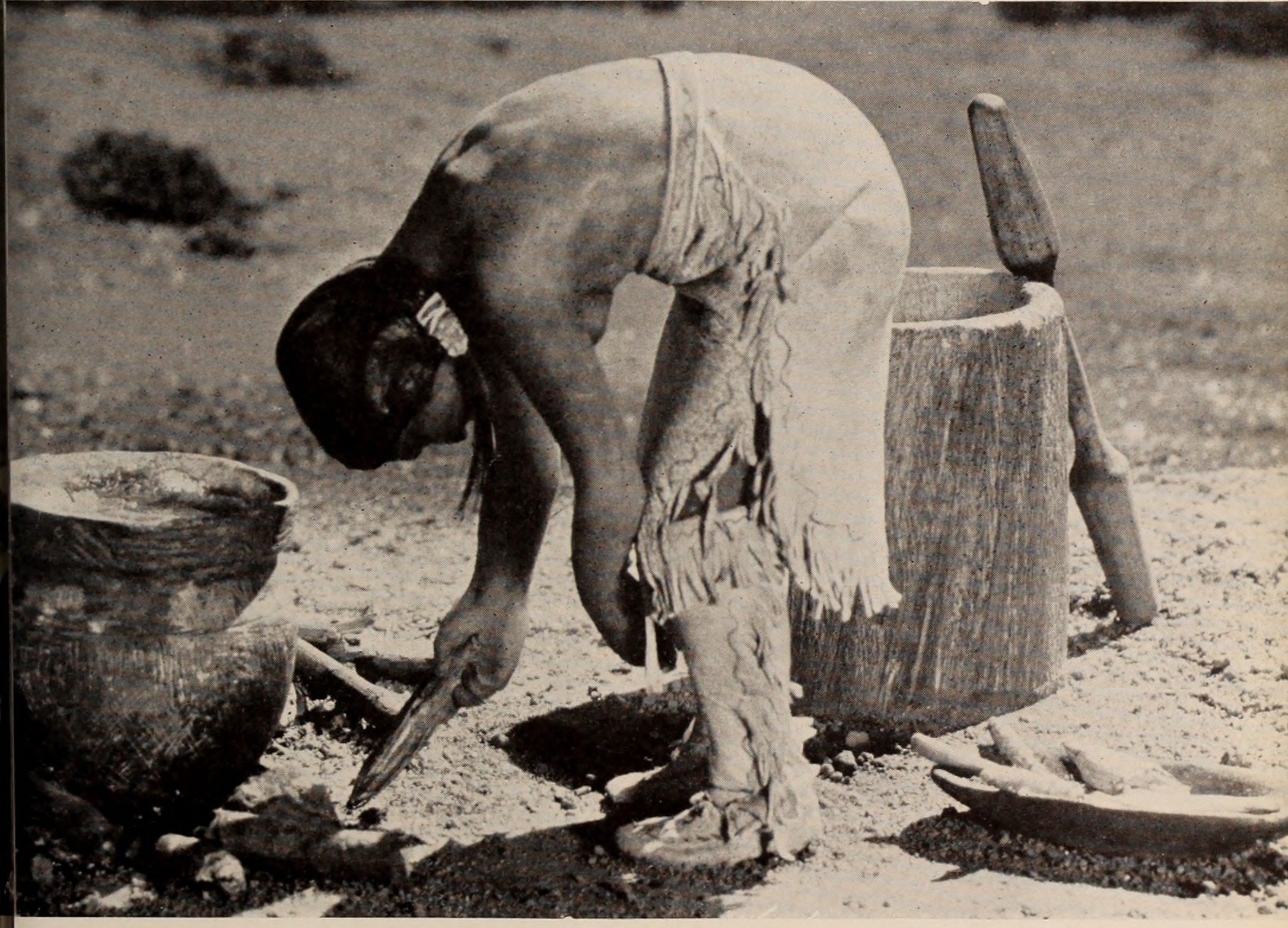
The Urgency of a Grounded Generation
For Leanne Betasamosake Simpson, the Michi Saagiig Nishnaabeg people face a vital task: to raise a generation of individuals bound to the land and committed to living by the modes of knowledge that are culturally their own. Without this, she warns, the risk is profound—losing what it means to be Nishnaabeg even within their own systems of thought. The resurgence of Indigenous nations cannot take root if no one is capable of thinking through the emergent networks of Nishnaabeg intelligence. The radical transformation Simpson envisions cannot rest solely on state-sanctioned or state-managed educational systems. Decolonization, as initiated by the Ancestors, demands the cultivation of a generation of intellectuals and cultural producers grounded in land and community, accountable to their nations, and whose work is to regenerate these systems rather than serve the crushing demands of the Western academic complex.
English Our Ancestors’ primary concern in “educating” our young people was to nurture a new generation of elders—of land-based intellectuals—philosophers, theorists, medicine people, and historians who embodied Nishnaabeg intelligence in whatever time they were living in because they had lived their lives through Nishnaabeg intelligence.
English Our Ancestors’ primary concern in “educating” our youth was to raise a new generation of elders—land-anchored intellectuals—philosophers, theorists, healers, and historians embodying Nishnaabeg intelligence in whatever era they lived, for they had conducted their lives through that intelligence.
For Simpson, the Ancestors did not aim to produce individuals credentialed by Western standards, but elders—thinkers, healers, historians—whose entire lives were steeped in this collective intelligence. These figures were not specialists detached from their context, but practitioners whose knowledge emerged from their daily relationship with the land and community. Their role was not to adapt to their time, but to live it through Nishnaabeg principles, ensuring the continuity of a system of thought and action.
This vision of education as the formation of elders rather than professionals marks a fundamental rupture with colonial models. State-run educational systems, whether residential or contemporary, have historically served to distance Indigenous peoples from their lands and ways of knowing. By refusing to rely exclusively on these structures, Simpson underscores that resurgence cannot be satisfied with mere inclusion in existing institutions. It requires, instead, a strategic withdrawal from these spaces to reinvest in places and practices where Nishnaabeg intelligence can flourish without submission to colonial logics.
Land as the Foundation of Thought
Leanne Betasamosake Simpson insists that land is not merely a backdrop or resource, but the very bedrock of Nishnaabeg thought. She uses the term aki to describe this profound relationship, where land is simultaneously place, power, and relation—opposed to a commodified conception of territory. Practices rooted in aki are not abstract knowledges, but ways of life that emerge from reciprocity with the land and the beings who inhabit it.
This understanding of land as an intellectual and ethical foundation implies a radically different approach from that promoted by colonial systems. Where Western academia tends to separate knowledge from its context, fragment it into disciplines, and validate it according to external criteria, Nishnaabeg intelligence is built through action and relationship. Knowledges are not objects to be acquired, but processes to be lived, shared, and regenerated. For Simpson, this approach is inseparable from Indigenous freedom and sovereignty: land is both the site where this freedom is exercised and the means of protecting it.
This vision has concrete implications for resurgence. Rather than seeking to “Indigenize” the academy by integrating Indigenous knowledges on the institution’s own terms, Simpson proposes refocusing efforts on revitalizing Indigenous intellectual systems within their original context. This means creating spaces where knowledges can be transmitted and practiced without submission to colonial validation. These spaces need not be physical—they can be networks of relations, cultural practices, or modes of thought—but they are always anchored in land and community.
Refusing Colonial Recognition
One of the most radical aspects of Simpson’s thought lies in her call to cease begging for recognition from colonial institutions. She observes that efforts to have Indigenous knowledges validated by Western academia only reinforce power asymmetries between Indigenous and Western knowledge systems. By agreeing to play by the institution’s rules, Indigenous peoples find themselves in a subordinate position, where their knowledges are either folklorized or instrumentalized to serve colonial agendas.
For Simpson, this dynamic is particularly visible in university programs that claim to integrate Indigenous knowledges while maintaining colonial structures intact. These initiatives, often led by Indigenous or non-Indigenous academics hired on the basis of Western credentials, perpetuate a hierarchy in which Indigenous knowledge remains subordinate. Rather than seeking to reform these institutions, Simpson advocates a categorical refusal: to stop fighting for an inclusion that only legitimizes the colonial system.
This refusal is not an abdication, but a strategy of reappropriation. By withdrawing their efforts from colonial institutions, Indigenous peoples can focus on revitalizing their own intellectual and political systems. This involves raising generations of land-anchored intellectuals whose work is not to serve the academy’s needs, but to regenerate the knowledges and practices that sustain Indigenous sovereignty. For Simpson, this approach is the only one capable of truly advancing the resurgence of Indigenous nations.
Constellations of Resistance
Leanne Betasamosake Simpson develops a powerful metaphor to describe the networks of Indigenous resistance and resurgence: that of constellations. These constellations, visible at night and incomprehensible to those not grounded in land-anchored normativity, serve as guides, much as stars do for migratory birds. They are not abstract theories, but emergent relations between practices of resurgence, refusal, and reciprocal recognition.
These constellations do not separate past, present, and future. For Indigenous peoples, time is not linear, but cyclical and relational. The future is already present in current practices, just as the past continues to shape the present. The constellations of resistance are not escapes toward a distant future, but pathways to Indigenous worlds already emerging, though often invisible to colonial eyes.
Simpson draws on the work of Jarrett Martineau to explore this idea. Martineau describes these constellations as mechanisms of flight and fugitivity—strategic movements to evade the terms of colonial subjection. They do not seek to confront the Empire head-on, but to create elsewheres that are already here, though hidden. For Simpson, these elsewheres are spaces where land-anchored normativity can flourish, where reciprocal relations with the land and living beings can be restored.
This approach is deeply rooted in land. Constellations are not abstract concepts, but place-based relations, where land is the foundation of thought and action. For the Nishnaabeg, these relations lie at the heart of their collective intelligence—an intelligence that has been violently attacked by colonialism through processes such as forced education, territorial dispossession, and environmental destruction. Yet, despite these assaults, Indigenous peoples have always resisted by practicing this intelligence, wherever they are.
An Intelligence in Practice
Nishnaabeg intelligence, as Simpson describes it, is not a theory to be applied, but a way of living. It emerges from relationships with land, other living beings, and community. This intelligence is diverse, adapting to the contexts and needs of each era while remaining anchored in fundamental principles. For Simpson, this diversity is a strength: it allows the Nishnaabeg to draw from the knowledges of their Ancestors while integrating the lessons of contemporary struggles.
This approach does not exclude external contributions. Simpson emphasizes that Nishnaabeg intelligence is open to teachings from other traditions, provided these exchanges are mutually ethical, consensual, and reciprocal. If a writer like Dionne Brand or a thinker like Fred Moten resonates with her as a Nishnaabekwe, it is because her collective intelligence compels her to learn, share, and embody whatever can nourish her practice. This openness is not syncretism, but a recognition that Indigenous knowledges are rich enough to integrate other perspectives without dilution.
For Simpson, this intelligence is also a response to colonial trauma. Living as a Nishnaabeg in a context marked by centuries of gendered violence and territorial occupation requires a critical attention to colonial structures. This acute awareness enables the generation of theories of resistance and liberation, both from within her own knowledge system and through exchanges with other oppressed peoples. In this perspective, land is not only a site of suffering, but also a space of freedom, where relations of reciprocity can be restored.
Dreaming Resurgence
For Leanne Betasamosake Simpson, resurgence begins with a dream. Even if this dream is carried by only a few individuals, it has the power to reactivate a context where Indigenous sovereignty and self-determination can be exercised. This context is not a distant utopia, but a reality already emerging through the daily practices of Indigenous peoples.
Simpson insists that resurgence cannot be satisfied with territorial claims or symbolic reparations. It demands cognitive reoccupation, where knowledges, ethics, and practices are re-anchored in relationships with land and living beings. This reoccupation is not a return to the past, but a reinvention of the present, where future generations can live by Nishnaabeg principles while confronting contemporary challenges.
To achieve this, theorizing is not enough. It requires practice, transmission, and the embodiment of this intelligence in every aspect of life. The elders the Ancestors sought to raise were not detached scholars, but practitioners whose knowledge emerged from their daily engagement with land and community. It is this approach that Simpson calls to reactivate—not as a nostalgic ideal, but as a vital necessity for the survival and flourishing of Indigenous nations.
Conclusion: A Thought in Motion
The work of Leanne Betasamosake Simpson is a call to rethink Indigenous resurgence not as a simple return to an idealized past, but as a constant reinvention of the present. This reinvention requires breaking with colonial logics that seek to control, folklorize, or instrumentalize Indigenous knowledges. It involves refusing recognition from colonial institutions and refocusing efforts on revitalizing Indigenous intellectual and political systems within their original context.
For Simpson, land is the foundation of this resurgence. It is not an object to possess, but a subject with which to enter into relation. Indigenous knowledges are not knowledges to be extracted, but practices to be lived, shared, and regenerated. By raising generations of land-anchored intellectuals, Indigenous peoples can not only resist colonial oppression, but also reinvent a present where Indigenous freedom and sovereignty are a lived reality.
This vision is not an abstraction, but a daily practice. It manifests in moments when individuals connect their personal traumas to colonial structures, when they refuse to play by the academy’s rules, and when they reinvest in spaces of transmission anchored in land. For Simpson, these moments are the seeds of a resurgence that does not merely survive, but reinvents a world where Indigenous peoples can finally live on their own terms.
Sources cited
- Leanne Betasamosake Simpson, As We Have Always Done, ed. University of Minnesota Press, 2017, trans. texte original anglais ; rendu français maison.