Puhpowee
Robin Wall Kimmerer, botanist and Potawatomi citizen, captures in three syllables what science cannot name.
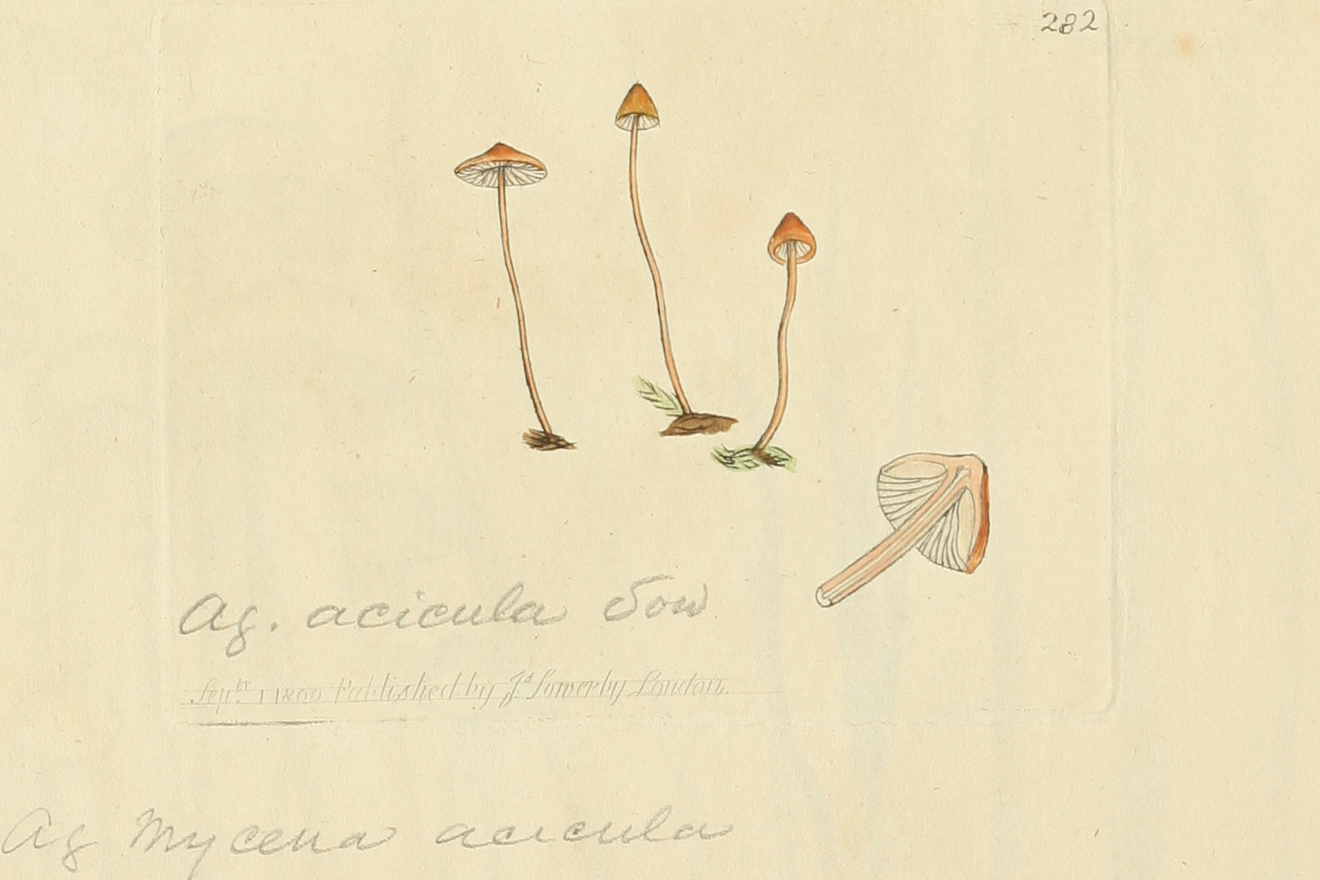
One morning, a mushroom stands where, the evening before, there was nothing. Creamy white, risen from between the pine needles, still damp from its passage from night and earth into daylight. Robin Wall Kimmerer—biologist and citizen of the Potawatomi Nation—knows a word for the force that pushed it up during the night. English, her language as a scientist, has none.
Puhpowee, she explains, means “the force by which mushrooms rise from the earth in the night.”
She first encounters it in Keewaydinoquay, an Anishinaabe ethnobotanist, in a treatise on the traditional uses of fungi. The shock for the biologist is not small: despite the abundance of her technical vocabulary, her science has no term for this. She can describe turgor pressure, hyphal elongation, but not the rising force. Where English sees a process, Potawatomi names a power.
Kimmerer does not attribute this absence to a lag in science but to its grammar. The English of laboratories, she says, is a “language of objects”: it files the world away among things. Potawatomi, by contrast, conjugates much of the living as one conjugates a subject—a berry, a mountain, water can be in the way a person is. This is what she calls the grammar of the living.
The creators of this word understand the world as a living whole, traversed, filled with invisible energies that breathe life and animate.
We must resist the temptation to read this as mere poetry, or as an “animist” belief to be shelved in the museum of worldviews. Kimmerer’s claim is drier, more radical: it is grammatical. Puhpowee does not adorn the observation of the mushroom; it determines its status—subject that acts, not object to be measured. The question it leaves us with is not “should we believe it?” but: what would we see of the world if our own languages, too, conjugated the living as someone, not something?
Sources cited
- Robin Wall Kimmerer, Tresser les herbes sacrées, ed. Le lotus et l'éléphant, 2021, trans. Véronique Minder.