Illusion and Its Crossing: Three Paths to Freedom
Desire, Revolt, Interdependence — The Illusions of Self and World in Schopenhauer, Camus, and Dōgen
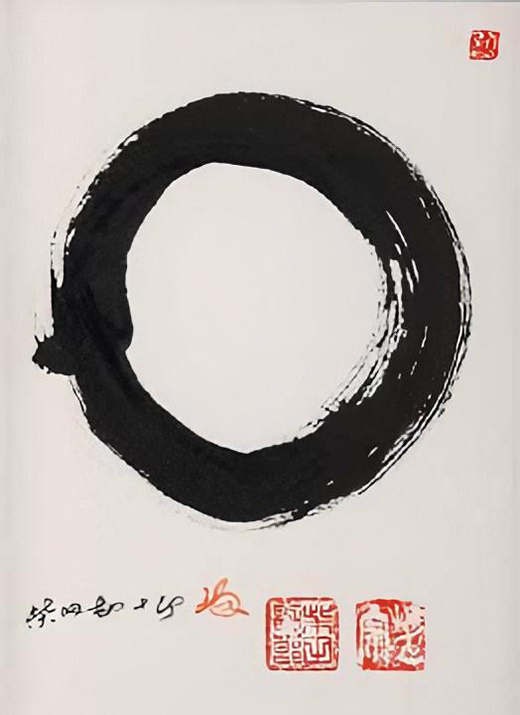
Freedom is not a state, but a movement. It is not possessed—it is traversed. Three voices sketch its contours through negation: not what it is, but what it frees us from. For Schopenhauer, illusion begins with the self, that theater where desires chain us. For Camus, it is social, a veil cast over the world’s absurdity by the ambitions that structure it. For Dōgen, it is ecological, the forgetting of our interdependence with the living. Each offers an exit: negation, revolt, dissolution. Their paths diverge, yet their starting point is the same—recognizing illusion for what it is.
Schopenhauer: Illusion as Desire and Freedom as Negation
Schopenhauer does not speak of freedom, but of happiness. Yet what he describes is indeed liberation. In his Aphorisms on the Wisdom of Life, happiness is not a goal, but a side effect of dissolving the conditions that make us unhappy. These conditions are personal, and among them, physical and intellectual qualities hold a central place. The
Throughout this discussion of the personal conditions that contribute to our happiness, I have had in mind physical qualities and, above all, intellectual ones.
Schopenhauer’s illusion is metaphysical. It resides in the belief that the self is an autonomous substance, capable of fulfillment through the accumulation of satisfactions. Yet the self is but a bundle of desires, and these desires are endless. To seek their fulfillment is to embark on a race with no finish. Wisdom, then, does not lie in self-assertion, but in self-limitation. Schopenhauer does not propose an ethic of action, but an ethic of restraint. Freedom comes when desire dries up—not through force, but through lucidity. To understand that happiness lies not in the object of desire, but in its absence, is already to be free.
This negation is not passive surrender. It is active, for it demands seeing the world as it is: a place where suffering is the rule, and pleasure the exception. Intellectual qualities, by revealing this truth, become both the problem and the solution. They intensify suffering by refining desires, yet they also make their transcendence possible. Schopenhauer’s freedom is thus liberation through knowledge—not abstract knowledge, but embodied knowledge, altering how we inhabit the world.
Camus: Illusion as Ambition and Freedom as Revolt
Camus does not speak of happiness, but of life. And in The Myth of Sisyphus, life is first a question of lucidity. The illusion he denounces is not metaphysical, but social. It takes the form of ambition, that “way toward a greater life” which, in truth, diverts us from the only thing that matters: the present moment. The
conqueror will be diverted to ambition, which was but a way toward a greater life.
For Camus, freedom does not pass through the negation of desire, but through its redirection. Ambition is an illusion because it assumes happiness lies elsewhere, in a future always deferred. Revolt, by contrast, is an act of presence. It consists in refusing the narratives that enslave us—those of success, progress, transcendence—to affirm the value of the present. Sisyphus, condemned to roll his boulder for eternity, is free when he accepts his condition. His freedom is not in completing the task, but in the consciousness he brings to it. Likewise, the absurd man is free when he ceases to seek meaning beyond existence, creating it instead in the moment.
This freedom is political, for it implies a rejection of the structures that confine us. Ambition is a collective illusion, a lure that keeps individuals obedient. Revolt, however, is a solitary act that becomes collective when it spreads. It is not pure negation, as in Schopenhauer, but a paradoxical affirmation: affirming life’s value by refusing the lies that deny it. Camus does not propose an ethic of resignation, but an ethic of lucidity. Freedom comes when we stop believing the world’s promises to invent new ones.
Camus’s illusion is thus social, yet it carries a metaphysical dimension. Ambition is a flight forward, a way of denying existence’s fundamental absurdity. Revolt, by contrast, is a way of embracing it. It does not erase absurdity, but transforms it into a force. Freedom, here, is not in the negation of desire, but in its reappropriation. It demands seeing the world as it is—without God, without destiny, without preordained meaning—and finding in it a reason to act.
Dōgen: Illusion as Separation and Freedom as Dissolution
Dōgen, finally, speaks neither of happiness nor of life, but of the Way. And in the Shōbōgenzō, the Way is a practice. The illusion he denounces is neither metaphysical nor social, but ecological. It lies in the belief that the self is an entity separate from the rest of the living. This illusion is both the oldest and the most tenacious, for it structures our relationship to the world. The
Do zazen regularly with your kashaya on. There is a precedent for attaining the way in the second next lifetime as the result of wearing a kashaya in this lifetime.
Dōgen’s illusion is that of separation. It takes the form of a self that believes itself autonomous, when in truth it is the product of a thousand interactions—with other beings, with the earth, with time. Zazen, seated meditation, is a practice of dissolution. It does not aim to erase the self, but to situate it within a larger web. The kashaya, worn regularly, is a way of remembering this interdependence. It is not a garment, but a new skin, a way of clothing oneself in the world.
Freedom, here, is neither in the negation of desire, as in Schopenhauer, nor in its redirection, as in Camus. It lies in recognizing that the self is not a prison, but a passage. The “second next lifetime” Dōgen speaks of is not a promise of reincarnation, but a metaphor for continuity. Freedom comes when we cease to identify with an individual existence, instead inscribing ourselves in a broader flow. It is not liberation from something, but liberation into something—into interdependence, into time, into the living.
This freedom is ecological, for it implies reconciliation with the world. It is not an escape, but an immersion. Zazen is not evasion, but a way of standing at the heart of existence. Dōgen does not propose an ethic of negation or revolt, but an ethic of presence. Freedom, here, lies in acceptance—not passive acceptance, but active, transforming how we inhabit the world.
The Common Summit: Illusion as Veil and Freedom as Crossing
Three illusions, three paths. Schopenhauer sees desire as the source of alienation, Camus ambition, Dōgen separation. Yet their proposals converge on one point: freedom is not in the assertion of the self, but in its crossing. For Schopenhauer, it lies in the negation of desire; for Camus, in revolt against social illusions; for Dōgen, in the dissolution of the self into interdependence. Each offers a way of seeing the world as it is, without the veils that separate us from it.
For all three, illusion is a veil. In Schopenhauer, it is the veil of Māyā, the appearance that makes us believe happiness lies in satisfying desires. In Camus, it is the veil of collective ambitions, which make us forget existence’s fundamental absurdity. In Dōgen, it is the veil of the ego, which makes us believe we are separate from the rest of the living. Freedom, in each case, lies in the gesture that tears this veil.
That gesture is not the same. Schopenhauer proposes an intellectual asceticism, a way of detaching from desires through knowledge. Camus proposes an existential revolt, a way of refusing the world’s lies to invent new ones. Dōgen proposes a bodily practice, a way of inscribing oneself in a continuity that transcends the individual. Yet these gestures share a common structure: they demand seeing illusion for what it is, and crossing it.
Freedom, here, is not a state, but a movement. It is not in arrival, but in crossing. Schopenhauer, Camus, and Dōgen do not offer a doctrine of liberation, but a practice. For one, it is negation; for another, revolt; for the third, dissolution. But in all three cases, it is a matter of freeing ourselves from the illusions that enslave us—not to reach some elsewhere, but to fully inhabit the here.
Sources cited
- Arthur Schopenhauer, Aphorismes sur la sagesse dans la vie, ed. , trans. Jean-Alexandre Cantacuzène.
- Albert Camus, Myth of Sisyphus, ed. .
- Dogen, dogen-shobogenzo-treasury-true-dharma-eye-tanahashi, ed. .