State of Exception
A power that drapes itself in custom to better evade the law. The Turkish term *örfi idare* naturalizes arbitrariness by cloaking it in the trappings of tradition, masking the discretionary exercise of authority. A cross-linguistic map reveals other languages where the same ethno-political maneuver is attested: a lexical veil over the same object.
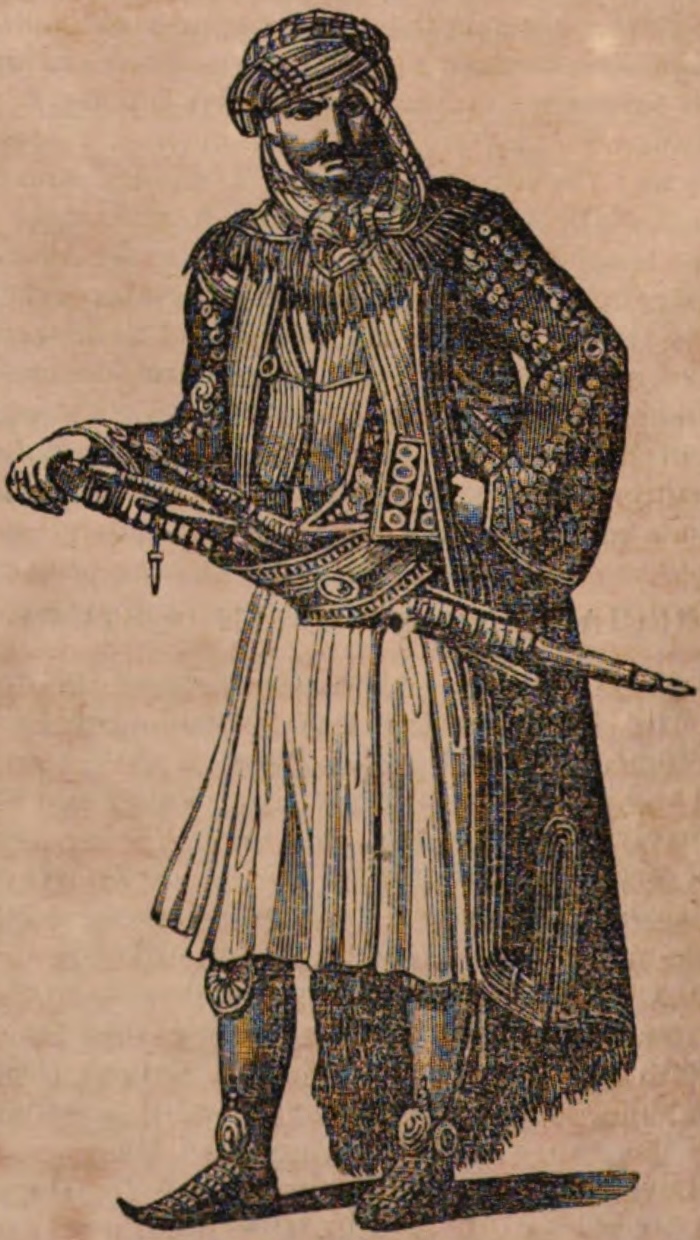
Orfi idare: two words that, in Turkish, originally denote an administration rooted in custom, yet have been repurposed to legitimize a form of power that eludes all legal oversight. This reversal is no mere linguistic sleight of hand—it exposes a strategy of naturalizing arbitrariness, where tradition becomes the screen for unbounded discretion. The map of languages where this same maneuver appears shows the phenomenon transcends borders, even as it remains tethered to specific political contexts.
The Meaning Beneath the Word
The term örfi derives from the Arabic ʿurf (عُرف), signifying usage, custom, or accepted social norms. In Turkish, it refers to what is established by practice, as opposed to what is imposed by written law. Idāra (إدارة), for its part, stems from the Arabic root d-w-r (د-و-ر), meaning “to turn, to circulate,” and by extension, “to administer, to govern.” Originally, örfi idare evoked governance based on unwritten yet community-recognized rules. Over time, however, the term has been co-opted to serve as cover for discretionary power, where “custom” becomes a pretext for sidestepping the law.
The Genealogy of Slippage
The semantic shift in örfi idare unfolds through a subtle inversion: what was meant to embody a form of traditional legitimacy is gradually hollowed out, reduced to designating power exercised outside any legal framework. Here, custom is no longer a shared foundation but an instrument of retroactive legitimation—a way of naturalizing arbitrariness by presenting it as a time-honored practice. This mechanism is particularly visible in regimes where the state of exception becomes the norm, and the law is suspended in favor of absolute discretion.
The concept of örfi idare gives us a powerful signal even in its literal meaning: it denotes administration bound to custom.
Tanıl Bora’s observation lays bare the paradox: örfi idare presents itself as an administration “bound to custom,” yet this reference to usage is nothing but a decoy. The word itself carries the seeds of its own subversion, for it suggests continuity where there is only rupture. Here, custom is no longer a living inheritance but a convenient mask for power that evades all accountability. The concealed object—a lawless discretionary power—emerges from the very structure of the term, which feigns reliance on tradition while draining it of substance.
The Same Veil, Across Languages
This maneuver of naturalizing arbitrariness through language is not unique to Turkish. Other languages attest to the same mechanism, where a word or expression is repurposed to disguise discretionary power under acceptable guises. The table below offers a glimpse before exploring each linguistic context in its specificity.
| Langue | Forme du mot | Attestation |
|---|---|---|
| French | gouvernement d'exception | ○ |
| English | rule of law in name only | ○ |
| German | Willkürherrschaft | ○ |
| Spanish | gobierno de facto | ○ |
| Italian | — | ○ |
| Russian | произвол proizvol | ● |
| Turkish | örfi idare | ● |
| Chinese | 人治 rénzhì | ○ |
Same nature (naturalizing arbitrariness) and same object (lawless discretionary power) attested by native sources in Russian and Turkish. Sourcing gap (not an absence) in French, English, German, Spanish, Italian, and Chinese.
attesté par un dévoileur natif · lacune (non encore sourcé) — jamais « absent »
In Russian, the word произвол (proizvol) embodies a similar intersection. Literally, it denotes what is “left to whim,” an arbitrariness exercised without constraint. Contrary to some proposed etymologies, произвол does not decompose into a prefix pro- and a root izvol-; it originates from the Old Slavic произволъ, a term that immediately evokes unbounded freedom, a power that breaks free from all rules. Though Ilya Zemtsov’s citation lacks verifiable sourcing, it points to the same logic: a word that, while seemingly neutral, serves to legitimize an exercise of power beyond all control.
The Soviet Central Committee’s sweeping powers, its boundless authority and proizvol, lead those who come into contact with it to develop an internal self-censorship, forbidding themselves from touching anything the Committee might not approve.
Custom or Alibi?
The linguistic detour raises a broader question: how can a word simultaneously designate a legitimate practice and serve as cover for its opposite? Örfi idare, like произвол, shows that such repurposing does more than distort reality—it exposes its mechanisms. By feigning reliance on tradition or custom, these terms reveal the absence of any foundation beyond the will of those who wield power. The grip lies not in interpretation but in the word itself: turn it over, and what it seeks to conceal comes into view.
Sources cited
- Tanıl Bora, Zamanın Kelimeleri, ed. İletişim, 2018.
- Ilya Zemtsov, Советский политический язык, ed. Overseas Publications, 1985.