The Three-Pronged Demon
Among the Desert Fathers, vainglory is the only vice that feeds on victories won over all others—including the contempt one directs at it.
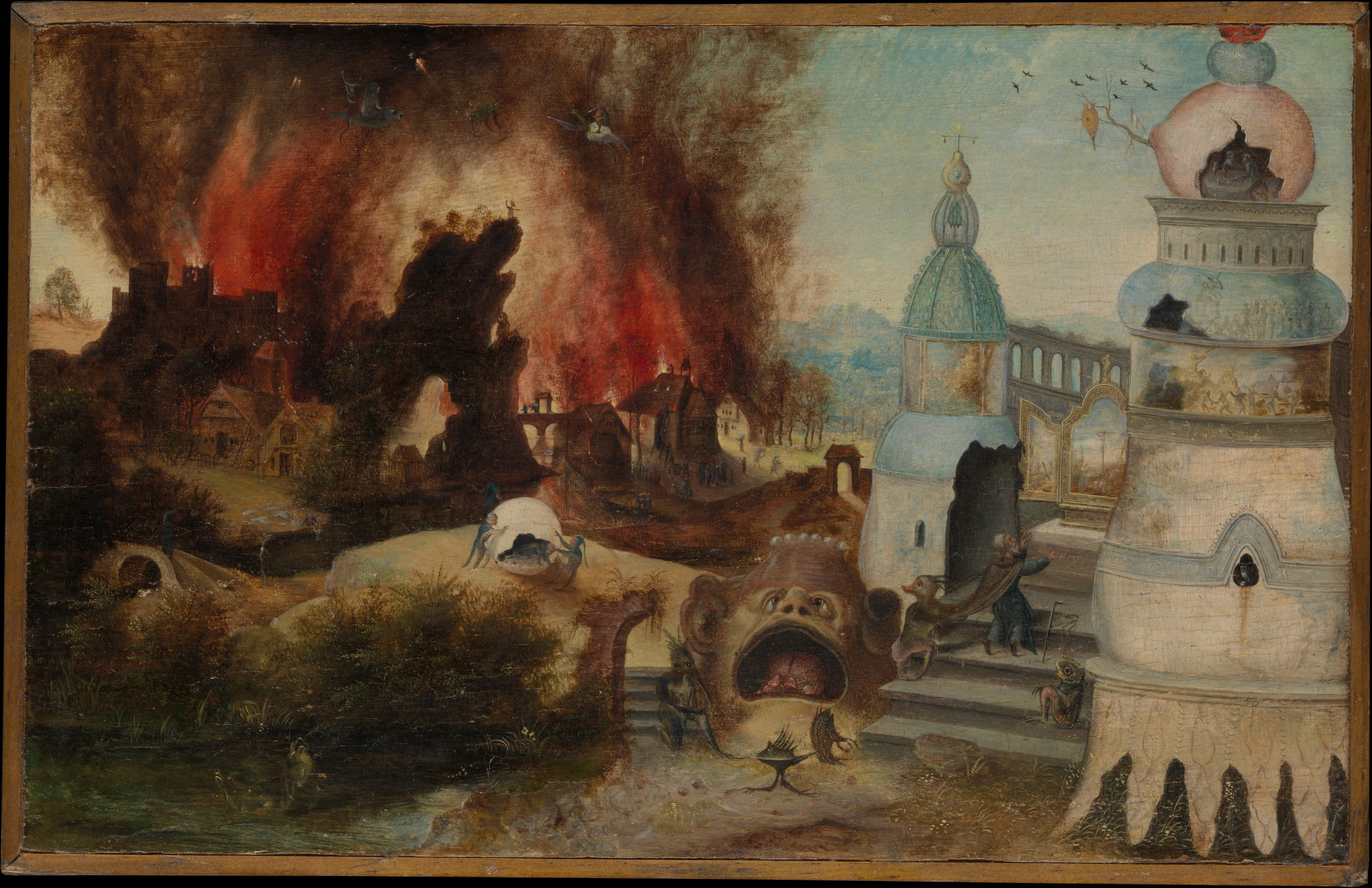
A lone monk in his cell on Mount Sinai was on the verge of abandoning everything. The account is his own. Despair gnawed at him, the tedium of solitude, the longing to return to the world. Visitors arrived. They praised aloud the bliss of a life so withdrawn, so filled with God. And in an instant, the black mood lifted—not through consolation, but because another passion had taken the place left vacant.
“I was sitting in my cell one day,” he said, “and felt such deep discouragement in my heart that I nearly resolved to leave. Some strangers arrived just then and began extolling the happiness of my life in solitude so highly that my thoughts of weariness and despair were at once driven out by those of vainglory. I marveled at how the demon of vanity, like a caltrop that always lands spike-up, wages war on all other demons.”
John Climacus, who records the scene in his Ladder of Divine Ascent, is not surprised to have been flattered. What astonishes him is the mechanism. The sorrow was not overcome: it was replaced. One vice displaces another, and the monk finds himself further from peace than before the visit, yet without realizing it, for the newcomer presented itself as relief.
The image is so precise it unsettles. The caltrop is an iron trap scattered in the path of horses, which, however it falls, always points a spike upward. Such, for Climacus, is the demon of vainglory. You think you have struck it down on one side, and it rises on another. You fast: it admires your fast. You weep for your sins: it praises your contrition. You shun praise: it congratulates you for shunning it. No fall ever lays it fully low, for each offers it a new foothold.
What is Vainglory Among the Desert Fathers?
It is not ordinary pride, which is self-sufficient. It is the hunger for others’ gaze—the need to be seen, esteemed, recounted. Its perversity lies in this: other passions aim at some worldly object, food, a body, vengeance; vainglory has no object of its own. It grafts itself onto everything, and preferably onto the good. The more one renounces, the more there is to boast of having renounced. This is why it “wages war on all other demons”: it thrives on their defeats. The solitary who has mastered all else discovers he must still conquer the satisfaction of having mastered—and that this victory, once won, immediately supplies its own material for vanity.
Climacus derives a paradoxical discipline from this: he counters, his biographer says, retreat and silence against vainglory. He withdraws into a cave to weep beyond earshot, lest even his groans draw praise. The monk’s vigilance is never at rest, for the enemy here hides within the sentinel.
Another tradition approaches the same observation from the opposite angle. Laozi sees no demon to fight.
He does not put himself forward, and so he shines. He does not approve of himself, and so he stands out. He does not boast, and so he is credited. He does not glorify himself, and so he is exalted above others.
The formula seems a twin to that of the desert, yet it is not. For Climacus, effacement is a strategy of war: one hides because an enemy lies in wait, and the struggle never ends, since the caltrop always lands spike-up. For Laozi, there is no enemy. The sage does not put himself forward, and radiance comes of itself, as effortless effect—not because he has vanquished the desire for radiance, but because he no longer bears it. Julien’s commentator puts it plainly: “the sage does not contend, for he is free of the self.” Where the monk defends a besieged I, the Taoist has dissolved the front: he has no self to nourish, nothing for glory to cling to. One holds the line; the other has made it vanish.
The point where the two converge is narrower than it appears, yet firm: to seek to be seen corrupts what one is. On this single truth, Sinai and China agree—and it is this truth that our age has methodically inverted.
For we have industrialized the gaze of others. We are told to “build a personal brand,” to document our solitude, to stage even our retreats. The attention economy is, structurally, a culture of kenodoxia: it converts esteem into metrics and metrics into revenue. And the most contemporary trap is precisely the one Climacus identified: the renunciation of glory itself becomes glory. Displayed humility, the ostentation of discretion, the public narrative of one’s withdrawal from the world—the caltrop lands spike-up. The monk of Sinai retreated into a cave to weep unheard. We film the cave.
The image of the caltrop is darker than a moral lesson. It says no victory over vanity is final, for the victory itself becomes the next thing to boast of. There is no position from which one has finally escaped the gaze. The monk still had the cave where none could hear him—and even that, he knew, the demon could turn to its advantage.
Sources cited
- Jean Climaque, Vies choisies des Pères des déserts d'Orient, ed. Ad Mame et Cie, 1861 (compilation du R. P. Michel-Ange Marin).
- Lao-Tseu, Tao Te King, ed. Wikisource (trad. Stanislas Julien, 1842), trans. Stanislas Julien.