The Breath of Words: Shigeru Kayano and Language as Resistance
When Indigenous Narrative Unravels Colonial Myths
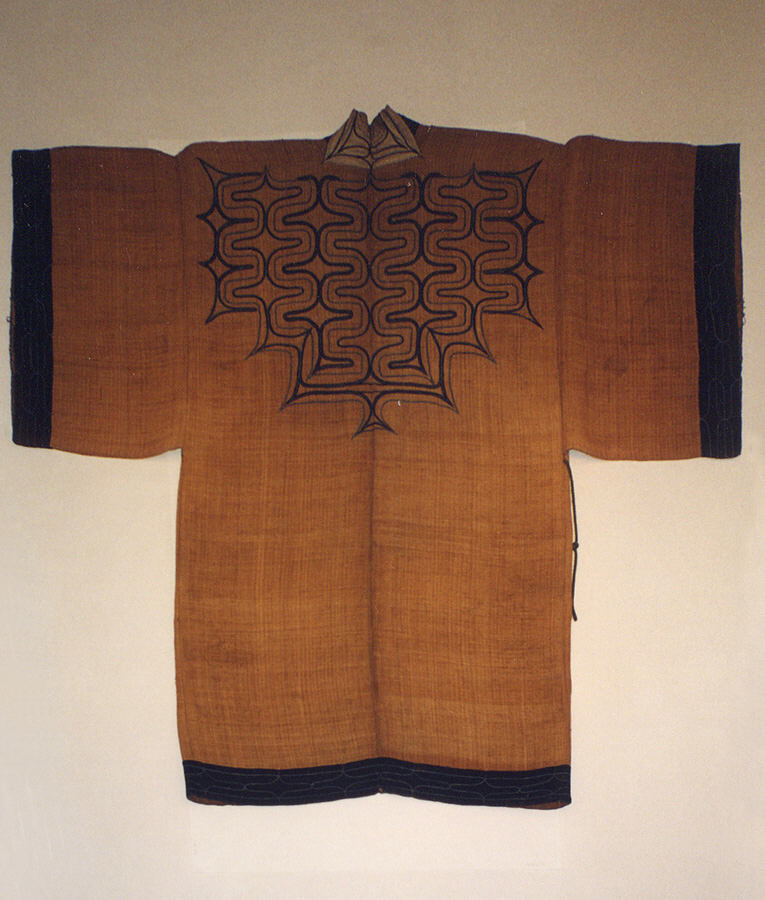
The Voice That Dispels Ghosts
For Shigeru Kayano, his people had long been reduced to a series of phantom images, endlessly repeated like mantras in books and travelogues. These representations, frozen in time, had turned his kin into spectral figures, relics of a supposedly bygone era. Yet in his work, he does not merely correct these distortions—he shatters them. He demonstrates how such narratives, far from neutral, were wielded to justify the erasure of a culture, a language, a way of being in the world. His is not a simple autobiography, but an act of resistance. By speaking, he refuses to let his people be defined by others.
Kayano observes that these stereotypes—those that cast his people as “vanished,” “savages,” or exotic curiosities—were never innocent mistakes. They were the product of a system that sought to deny their very existence, to relegate them to the status of artifacts. His narrative, by contrast, is a living response to this violence. It is not a plea for abstract recognition, but a demonstration, through concrete examples, of what it means to live while carrying this memory. Language, in particular, occupies a central place. It is not merely a means of communication, but the vessel of a collective history, a way of thinking and feeling the world.
Storytelling as Political Act
Kayano recounts how, at a precise moment in his life, he was compelled to take a path he had not chosen: local politics. It was not personal ambition that drove him, but the fact that he was the last who could represent his people in a decision-making body. His election, though modest in appearance, was symbolic. It showed that Indigenous presence could no longer be ignored, even in spaces where it had been systematically erased. This gesture, however simple, was a crack in a system that had long operated without them.
Yet his commitment extended beyond this role. Kayano also describes more intimate moments, where speech becomes an act of transmission and mourning. At a funeral, he finds himself writing words in his ancestors’ language—not to observe a ritual, but because those words carry an emotional and spiritual weight that Japanese cannot express. These phrases, improvised in urgency, are a tribute to a departed woman, but also a reminder that this language, though threatened, remains alive. It does not belong to the past, but continues to resonate in the present.
Language as the Breath of Memory
Kayano insists on a fundamental point: language is not merely a tool, but the very breath of collective memory. It holds stories, knowledge, ways of naming the world that have been passed down through generations. When a language is attacked, it is not just a means of communication that vanishes, but an entire universe of meaning. The efforts to erase it, whether overt or insidious, aim to sever the ties between the living and their ancestors, to make the transmission of this memory impossible.
Yet despite these attempts, the language endures. Kayano offers a striking example when he recalls the words he wrote for that funeral. Though imperfect, they were charged with a power only the context could reveal. They were not mere translations, but a reactivation of that memory. In uttering them, he did not only honor the deceased—he also affirmed that this language, though marginalized, had never ceased to exist. It is there, ready to be revived, if only given the space to breathe.
An Invitation to Listen
At the end of his narrative, Kayano addresses his readers directly. He does not ask for pity or compassion, but for attention. He invites them to recognize that the survival of this culture does not depend solely on his people, but on all who choose to listen. This invitation is not a plea, but a call to responsibility. It reminds us that decolonization is not only a matter of laws or policies, but of shifting perspective, of active listening.
His work, in this sense, is a mirror held up to those who long believed the Ainu were nothing more than a memory. It shows that this culture, far from dead, is still in motion, still reinventing itself. And that language, far more than a tool, is the thread connecting the living to their ancestors, and the ancestors to future generations.
English Dower author of War Without Mercy “The Ainu people of Japan have long haunted travelogue and anthropology textbooks alike in the guise of ‘the vanishing Ainu,’ ‘the hairy Ainu,’ and ‘the aborigines of Japan.’ In this slim volume, skillfully translated by the able motherdaughter team of Kyoko and Lili Selden, Kayano Shigeru banishes the mythical Ainu who never were.
English The Ainu of Japan have long haunted travelogues and anthropology textbooks as the “vanishing Ainu,” the “hairy Ainu,” and the “aborigines of Japan.” In this slender volume, skillfully translated by the mother-daughter duo Kyoko and Lili Selden, Kayano Shigeru dispels the myth of the Ainu who never existed.
Sources cited
- Shigeru Kayano, Our Land Was a Forest, ed. Sarah M. Strong, Ainu Spirits Singing, University of Hawai'i Press, 2011 (manuscrit de 1922, publié en 1923), trans. Sarah M. Strong (de l'ainu et du japonais vers l'anglais) ; rendu français maison.