What Anger Burns First
Seneca sees in fury only a brief madness dispelled by delay; the Dhammapada proposes conquering it through gentleness. Two remedies for a passion that, lacking an adversary, tears itself apart with its own hands.
 His hand remains raised. Plato, enraged at a clumsy slave, has ordered him to bare his back for a beating—with his own hand. Then he halts, arm suspended in midair, frozen in the posture of a man about to strike. A friend who enters asks what he is doing. He is punishing a man in the grip of anger, he replies—and the man in the grip of anger is no longer the slave. He hands the whip to another:
Correct this wretch; as for me, I am angry.
The master has caught himself no longer master of himself. This is pure Seneca: anger begins where self-possession ends. Some sages, he recalls, have called it “a brief madness”—not a passing weakness, but a full derangement for as long as it lasts, one that “ignores the most sacred bonds” and strikes before judging. The furious man loses not only measure: he loses himself.
What does anger burn first?
It burns first the one who bears it. Seneca describes it as a fire that, lacking fuel outside, turns back against the hand that holds it: deprived of an adversary, it does not go out—it devours itself. Not the weapon of the strong, but the fever that consumes its own foundation before reaching anyone else.
Repelled, it is not subdued; if fortune snatches away its adversary, it will tear itself apart with its own hands.
Deprived of a target, fury does not subside: it turns inward. The adversary was but a pretext; what it wants is to consume itself, even if the harm falls back on the one who strikes. Here lies the reversal: what one took for strength, ardor, fighting energy, is the passion that founders in the same shipwreck as what it sought to destroy.
Against this fire, Seneca does not oppose another fire. He opposes delay. Anger needs the instant; one disarms it by refusing it that.
The greatest remedy for anger is time: it dampens the first flame, and dissipates—or at least clears—the cloud that obscures reason.
Delay, then. Keep the arm raised until judgment returns. A day, sometimes an hour, is enough to make the reasons that seemed to call for thunder vanish. The remedy is not gentleness: it is time restored to reason, which takes the helm once the first surge has passed.
Another tradition holds the same thread by the other end. The Dhammapada does not propose waiting: it proposes responding. Where Seneca interposes delay, Buddhism opposes a contrary quality.
Anger must be conquered by gentleness; evil by good.
The gesture is not to buy time but to change the force. Against anger, one does not oppose judging reason, but disarming gentleness—and, further upstream, the release of attachment: he who has “no attachment to name and form,” says the same chapter, suffering no longer pursues him. Remove the grip, and the source dries up; nothing remains for anger to sink its teeth into.
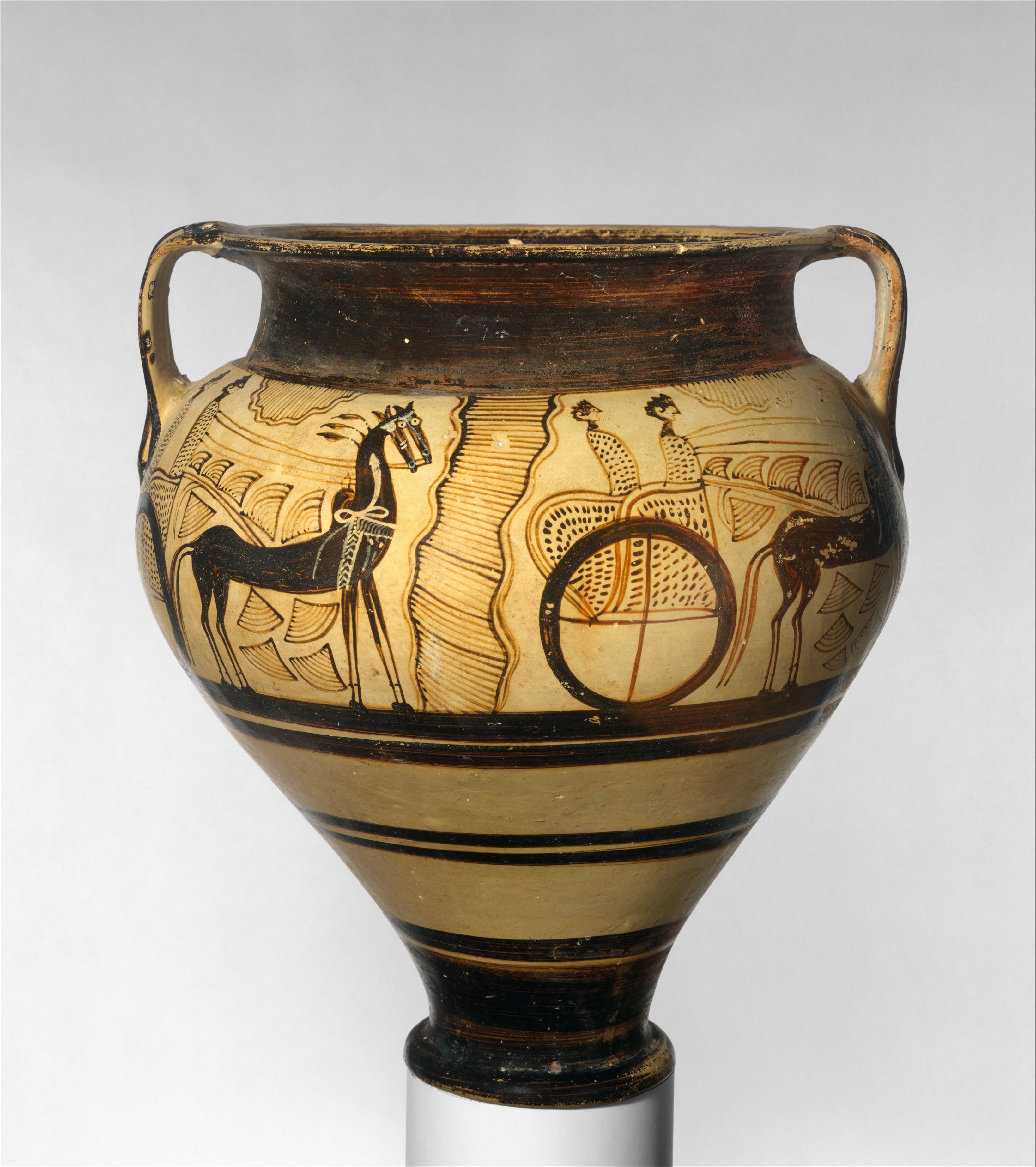
Hence the image of the driver, who is not a man who represses, but a man who guides:
He whose anger has run its course, yet contains it as a moving chariot—him I call a charioteer. The rest merely hold the reins.
Do not stifle the chariot, nor let yourself be dragged by it: hold it. The charioteer does not deny the impulse, he maintains its course. To hold the reins without guiding is still to be led.
Two gestures, then, which it would be lazy to confuse. Seneca restores time to reason; the Dhammapada substitutes gentleness and removes the grip. One gains the instant, the other changes the very substance of the response. They cannot be merged into a single counsel.
And yet both paths ascend toward the same summit. Each sees that anger consumes first its bearer; each proposes, in the end, not to be moved. Seneca finds his figure in the stone: “a vast rock defies the assaults of the impotent wave.” The Dhammapada names the goal “the unshakable dwelling where affliction is absent.” The battered rock and the unshakable dwelling say one thing in two languages: a center that opposites no longer reach. Restoring time or removing the grip are two paths; the place they lead is one—where the wave breaks without leaving a mark.
Plato’s hand had remained raised. It comes down, empty. What would have struck the slave would have wounded no one as much as the one who held the whip.
Sources cited
- Sénèque, De la colère, ed. Œuvres de Sénèque le philosophe, Garnier Frères, 1860 (Wikisource), trans. Joseph Baillard.
- Bouddha (attrib.), Dhammapada, ed. Bibliothèque orientale elzévirienne XXI, Ernest Leroux, 1878 (Wikisource), trans. Fernand Hû.