What Nature Demands
Epicurus distinguishes the desires nature calls for from those opinion invents; Seneca tests this distinction against the body; the Dhammapada refuses to classify—it sees only a root to uproot.
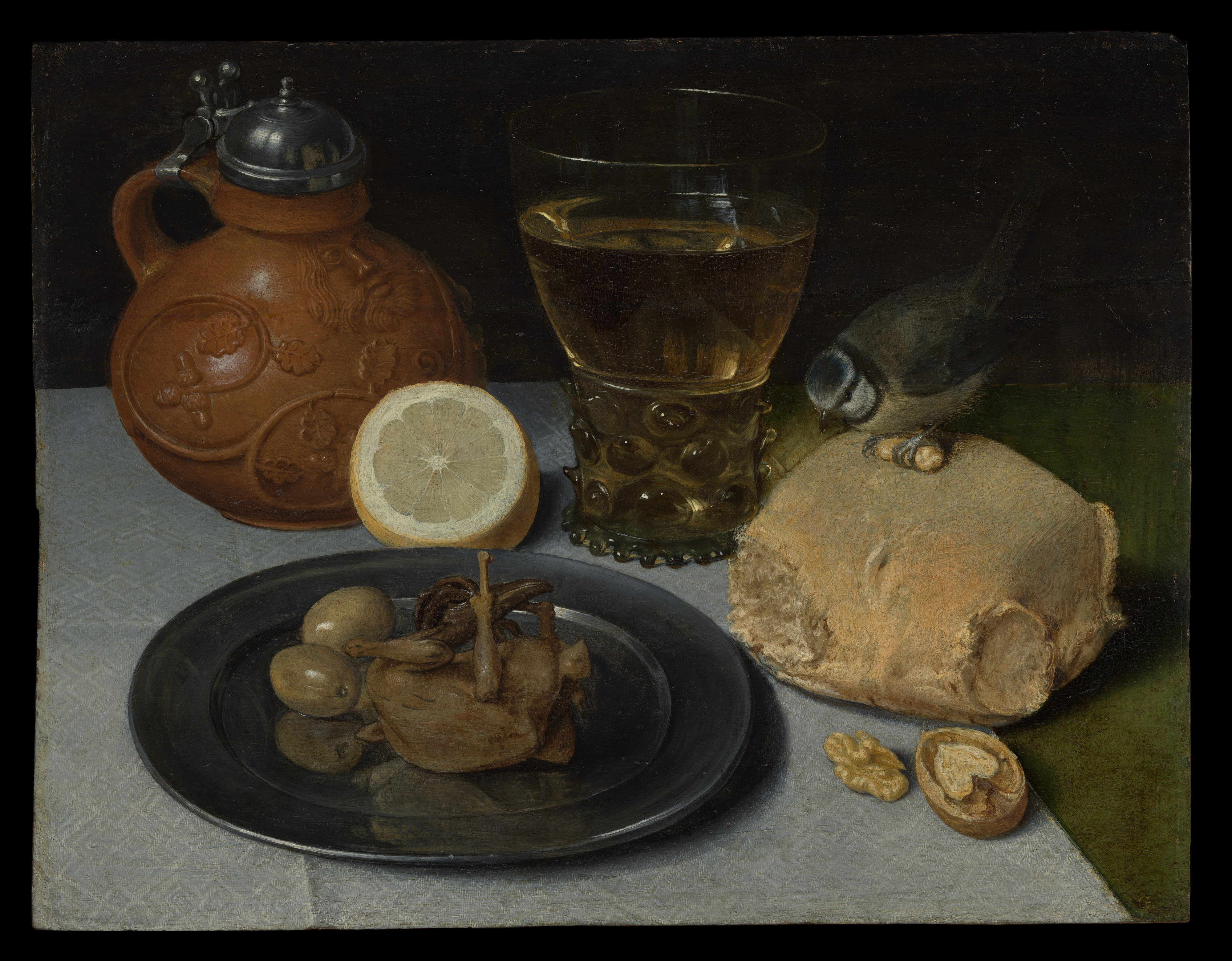
Nothing seems easier to measure than what we need—and yet nothing slips so quickly beyond all measure. We think we know, more or less, what it takes to live; then another desire appears, dressed in the garb of necessity, and we no longer remember where the boundary lay. Need, we say, comes from nature; but nature demands almost nothing, while our lives overflow with things demanded. Between the two, someone—habit, opinion, the richer neighbor—has slipped in a long list no one remembers signing; we have seen elsewhere how a long habit manufactures our necessities, without our ever choosing it.
Three texts, separated by centuries and worlds, took this boundary seriously—but none draws it in the same place or with the same tool. A garden master in Athens drafts a cold classification of desires and cuts short all confusion. A Roman tutor, centuries later, does not content himself with classification: he tests it on his own body, a few days each month, eating like a pauper to verify its worth. A text born in India and transmitted in Pali refuses to classify anything at all: it sees in desire neither necessity nor vanity, but a root—and one does not argue with a root—one uproots it. It would be convenient to say the three say the same thing in different words. That is not true, and saying it too quickly would lose what each has of its own.
I. Epicurus: Sorting Desires
Epicurus writes to Menoeceus as one writes to someone whose life one truly wishes to change, not merely their mood. After setting aside the fear of the gods and the fear of death—the two great terrors that, in his view, poison all thought before it can turn to anything else—he comes to what occupies the greater part of our days: wanting. And his method is no exhortation. It is a division, almost an exercise in logic applied to appetite.
Consider also that different things are the object of our wishes and desires; some are natural, others are superfluous; among the natural, some are absolutely necessary, while others, though inspired by nature, can be done without. The necessary ones are of two kinds: some secure our happiness through the body’s freedom from pain, and others sustain life, like drink and food.
Three classes, then, not two: what is neither natural nor necessary (the vain—seeking honors, rare delicacies, endless goods); what is natural without being necessary (a preference of taste that could be satisfied otherwise, without harm); what is natural and necessary—the hunger stilled by bread, the thirst quenched by water, the rest demanded by a weary body. The gesture is not moral, but almost clinical: before judging a desire good or bad, one first asks to which class it belongs. A vain desire is not fought by heroic deprivation; it dissolves as soon as one sees it never had a foundation in nature—it was merely an opinion that had passed itself off as a need.
Epicurus goes further than mere classification: he derives from it a practice of frugality, and a remarkable reevaluation of pleasure itself.
Nature, for its subsistence, requires only things very easy to find; those that are rare and extraordinary are useless to it, serving only vanity or excess. Common food gives as much pleasure as a sumptuous feast, and water and bread are a marvelous repast when one finds them in time of hunger and thirst.
The argument deserves attention, for it does not say what it is often made to say. Epicurus does not preach renunciation for its own sake—he is not the enemy of pleasure, but its most attentive analyst. What he observes is that pleasure does not grow with the object: bread, when one is hungry, satisfies as fully as a feast; beyond that, it is not pleasure that increases, but only complication. Hence this consequence, which structures the entire letter: accustoming oneself to little is not a deprivation one endures, but an assurance one gives oneself against fortune’s whims, since one ceases to depend on what it can take away. This is not the question of how much—the one opened elsewhere by Epicurus and Lao Tzu on the threshold of sufficiency—but the one, upstream, of what kind: before knowing how much is needed, one must first know to which family what one desires belongs.
What strikes one in this division is its serene, almost bookish clarity. Epicurus does not rail against superfluous desire; he simply assigns it to its proper category, and that category is enough to strip it of its urgency. One question remains, which he does not ask himself: how does one know, in the heat of desire, to which category what one is wanting belongs? The classification is clear on paper. It is much less so in the moment of hunger, or the fear of hunger one day. It is this very question that another reader of Epicurus will take up, centuries later, addressing it no longer to the mind, but to the body.
II. Seneca: Testing the Measure
Seneca cites Epicurus so often in his letters to Lucilius that one might suspect a doctrinal complicity—nothing could be further from the truth: the Stoa and the Garden agree neither on the gods, nor on providence, nor on the end of man. But on this precise point—what nature demands is little, what opinion adds is groundless—Seneca adopts the Epicurean classification as one adopts a tool that works, without embracing the entire doctrine. What he adds, however, is distinctly his own: he does not content himself with sorting desires in thought; he puts them to the test on his own body.
“But I shall lack the necessities!” I say first, no: that cannot be, so little does nature demand; and the wise man adapts himself to nature.
The phrase might pass for a mere echo of Epicurus. It is, in a sense—but Seneca writes to a friend tempted to postpone philosophy until his fortune is made, and it is this very postponement he attacks. His own movement begins where Epicurus’ sorting ends: rather than abstractly asking which desires are natural, he proposes to verify, in practice, what the body truly requires when one stops feeding it superfluity.
I shall prescribe for you certain days on which you will content yourself with the most modest and common fare, with rough and coarse clothing […] you will thrill with joy when for two asses you are sated, you will see that for peace of mind one needs no help from Fortune; for she owes us the necessities, even in her harshness.
Here is the decisive shift. Epicurus demonstrates; Seneca experiments. The Roman Stoic transforms a classification into a dated bodily discipline—a few days each month, a pallet, coarse bread—whose purpose is not asceticism for its own sake, but the empirical verification of a fact one never truly believes until one has experienced it: that the necessary is available, and poor. The rich man who has never been hungry does not know the value of his opulence; he does not know by how much it exceeds what keeps him alive, because he has never touched that floor—that floor, neither fortune nor its harshness can take away, since it never depended on them.
And Seneca goes further than Epicurus on one point: he shifts the question of desire toward the soul itself, refusing to locate it in the object.
The evil lies not in things, but in the soul. What made poverty so heavy for it is what makes riches weigh upon it.
The sentence changes everything, quietly. Epicurus classified desires by their object—this need is natural, that one superfluous, and nature itself draws the line. Seneca, without rejecting this division, indicates that it is not enough: a sick soul will suffer from wealth as it suffered from poverty, because it is not the category of the object that decides, but the disposition that receives it. One may have correctly sorted one’s desires and remain unhappy, if the soul itself remains restless. Epicurus’ sorting becomes in Seneca a necessary, but not sufficient, preparation; one must still heal what truly harbors the evil—not things, but the soul that judges them.
III. The Dhammapada: A Root, Not a Sorting
Let us change terrain entirely. The twenty-fourth chapter of the Dhammapada, which its French translator Fernand Hû titles “Craving,” classifies no desire. It never asks whether a given desire is natural or vain, necessary or superfluous. It looks elsewhere: at the dynamic by which a desire, whatever it may be, sustains and grows itself.
He who is enslaved here below by this perverse and poisonous craving—his suffering grows as rapidly as the dense bīraṇa grass.
The chapter’s imagery is botanical, and it deserves to be taken seriously rather than dismissed as mere poetic ornament. A vine, a dense weed, a tree: these are not objects one could sort, natural on one side, superfluous on the other—they are growths. And a growth is not classified; it is cut or it continues.
Just as a sap-filled tree, though cut, sprouts anew as long as its root remains intact, so too, as long as the tendency to craving is not extirpated, this cause of suffering returns again and again.
Here the fundamental difference with what precedes becomes unmistakable. Epicurus might have said: is this craving natural and necessary? Then satisfy it simply, with water and bread, and it will fade for lack of fuel. The Dhammapada refuses this outcome, because it does not believe any fuel ever extinguishes craving—it reignites it.
When a man, consumed by cares, given over to violent passions, seeks only his own pleasure, craving grows in him. And it is he himself who tightens his bonds.
No classification, then, but a diagnosis of a wholly different order: what binds is not this or that over-desired object, but the very structure of grasping—and this structure has no acceptable version. Where Epicurus isolated, within desire, a legitimate part that nature itself calls for, the Dhammapada concedes this legitimacy to no part: craving for the necessary sprouts as surely as craving for the vain, if its root is not extirpated. One does not prune a vine; one uproots it, or it keeps spreading.
What Can Be Sorted, What Must Be Uprooted
It would therefore be false, and lazy, to say these three texts simply converge on “one must desire less.” They do not even agree on what to do with desire. Epicurus sorts: there exists a part of wanting that comes from nature itself, and this part one can and must satisfy without scruple—the sorting is enough to set aside the rest. Seneca adopts this sorting, but adds a test: the body must verify what the mind asserts, lest one believe it only halfway; and he shifts, at a crucial point, the locus of evil—not the object one covets, but the soul that covets. The Dhammapada sorts nothing: it observes a dynamic of growth that knows no legitimate version, and whose only outcome is total extirpation, at the root.
And yet, beneath this real disagreement, something echoes from one text to another, without ever merging. Epicurus and Seneca, seeking what nature truly demands, discover that it demands little—infinitely less than what habit has come to pass off as indispensable. The Dhammapada, observing craving grow, discovers that it has no natural stopping point—that nothing in the desired object itself limits its expansion. These two discoveries touch beneath the surface: in both cases, what threatens does not come from without, nor from the world’s scarcity, but from an inner dynamic that, left to itself, knows no measure. Seneca speaks of the sick soul weighed down by wealth as by poverty; the Dhammapada speaks of the root that always makes the tree sprout anew, though one thought it cut. The evil, in either case, is never in the thing one looks at—it is in the movement that clings to it and that, if nothing stops it from within, will never stop from without.
On the outcome, however, the paths diverge irrevocably, and one must resist the temptation to merge them. Epicurus and Seneca arrive at a self that has correctly measured its needs and, this measure taken, can rest, satisfied, within the limits it has recognized as its own—tranquility and self-sufficiency are still states of a subject that possesses, even if little. The Dhammapada promises no such rest to a self that has finally measured itself well: it aims at the extinction of the root that, in every self, produces grasping itself—not a better-regulated desire, but the end of what desires thus. One regulates the measure of a possessor; the other undoes possession as an act.
What Remains, Once the Account Is Settled
Let us return to the simplest image, the one Epicurus offers in passing and which already contains everything: water, bread, a real hunger meeting what will calm it. At that precise moment, he says, nothing is lacking—neither for the poor nor for the rich, for hunger knows no rank. What comes after, the demand for a rarer dish, fresher water, bread of another flour, no longer answers to hunger: it answers to something else, born one knows not where, which has taken a real need as its pretext to settle under its name. Seneca would verify, a few days each month, that bread still suffices. The Dhammapada would look further: not the bread, nor the desire for bread, but what in us has already begun to want a different bread before even finishing the first.
Sources cited
- Épicure, Lettre à Ménécée, ed. Lefèvre, 1840 (Wikisource), trans. Jacques Georges de Chauffepié.
- Sénèque, Lettres à Lucilius (XVII, XVIII), ed. Charpentier, 1860 (Wikisource), trans. Joseph Baillard.
- Bouddha (attrib.), Dhammapada, ch. XXIV (La Convoitise), ed. Ernest Leroux, 1878 (Wikisource), trans. Fernand Hû.