Thinking in Patterns: The Intelligence of Living Systems
Storytelling as the Weaving of Relations, According to Tyson Yunkaporta
For Tyson Yunkaporta, knowledge is not preserved in inert archives but in the very movement of relations. What he observes is a way of thinking where knowledges circulate through living networks, where each element—human, terrestrial, mnemonic—becomes a node in a broader web. The durability of information does not lie in its fixation on a medium but in its anchoring in bonds that span generations. These bonds are not passive channels: they transform knowledge into something dynamic, shared, where memory feeds on the presence of others.
This approach does not reject writing but places it in dialogue with orality. The two systems, far from opposing each other, reinforce one another. Their relationship matters as much as their content. Yunkaporta emphasizes that oral traditions, when rooted in deep relations, function like cognitive ecosystems. Knowledge is distributed not as an object to possess but as energy to circulate. This circulation creates a form of resilience: if one link fails, the network persists, for memory does not depend on a single storage point.
Oral traditions rooted in deep relations constitute a way of thinking where knowledge relies on biological networks of equanimous partnership—providing a firewall against the potential actions of dictators who might one day decide to burn our libraries.
What Yunkaporta calls the spirit of kinship is not a metaphor but a concrete practice. Learning with or through someone means inscribing knowledge in the space that unites you. Memory then becomes relational: it awakens in the presence of the other, or even in evoking their image, their name. This way of retaining is not limited to humans. It extends to everything that participates in these networks of connection, as if thought itself were a form of symbiosis.
Pattern Over Line
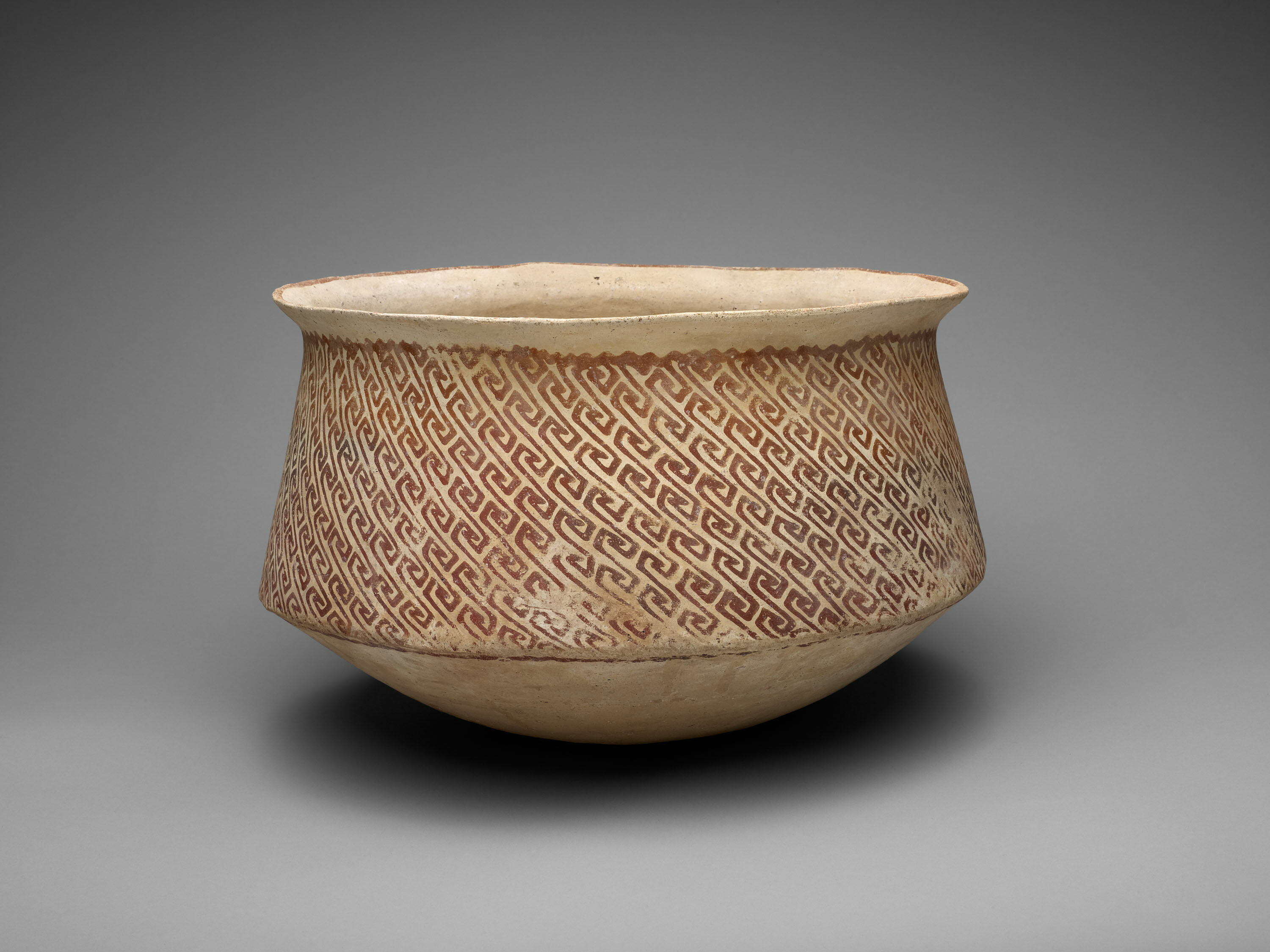
In this vision, knowledge is not an arrow moving from point A to point B. It traces patterns, loops, interlacings. Each element of a living system—a person, a story, a landscape—derives meaning only through its relations with others. Yunkaporta insists on this systemic dimension: thought is not reduced to the analysis of isolated fragments but emerges from their interconnection. It is an intelligence of connections, where understanding arises from how things come together rather than from their dissection.
This approach offers an alternative to modes of thought that privilege linearity or fragmentation. It suggests that memory, transmission, even cognition itself gain robustness when they rely on networks rather than separate units. Libraries may burn, material supports may vanish, but as long as relations persist, knowledge remains alive, accessible, in motion.
Cognition in Equanimity
What Yunkaporta describes goes beyond a memorization technique. It is a way of inhabiting the world where thought is always shared, always in dialogue. Knowledges are not individual possessions but common goods, kept alive by circulation and reciprocity. This equanimity—this partnership without hierarchy—creates a space where knowledge is not a power to hold but a force to grow together.
The spirit of kinship, as he presents it, is not a nostalgia for the past but a proposition for the future. In a world where knowledge systems are often weakened by their dependence on centralized infrastructures, this approach offers a path to rethink resilience. It invites us to consider that true intelligence lies not in accumulation but in the capacity to weave bonds—between humans, between generations, between forms of knowledge.
Sources cited
- Tyson Yunkaporta, Sand Talk, ed. Éditions Véga (Guy Trédaniel), 2021 — éd. originale Text Publishing, 2019, trans. Anne Delmas.